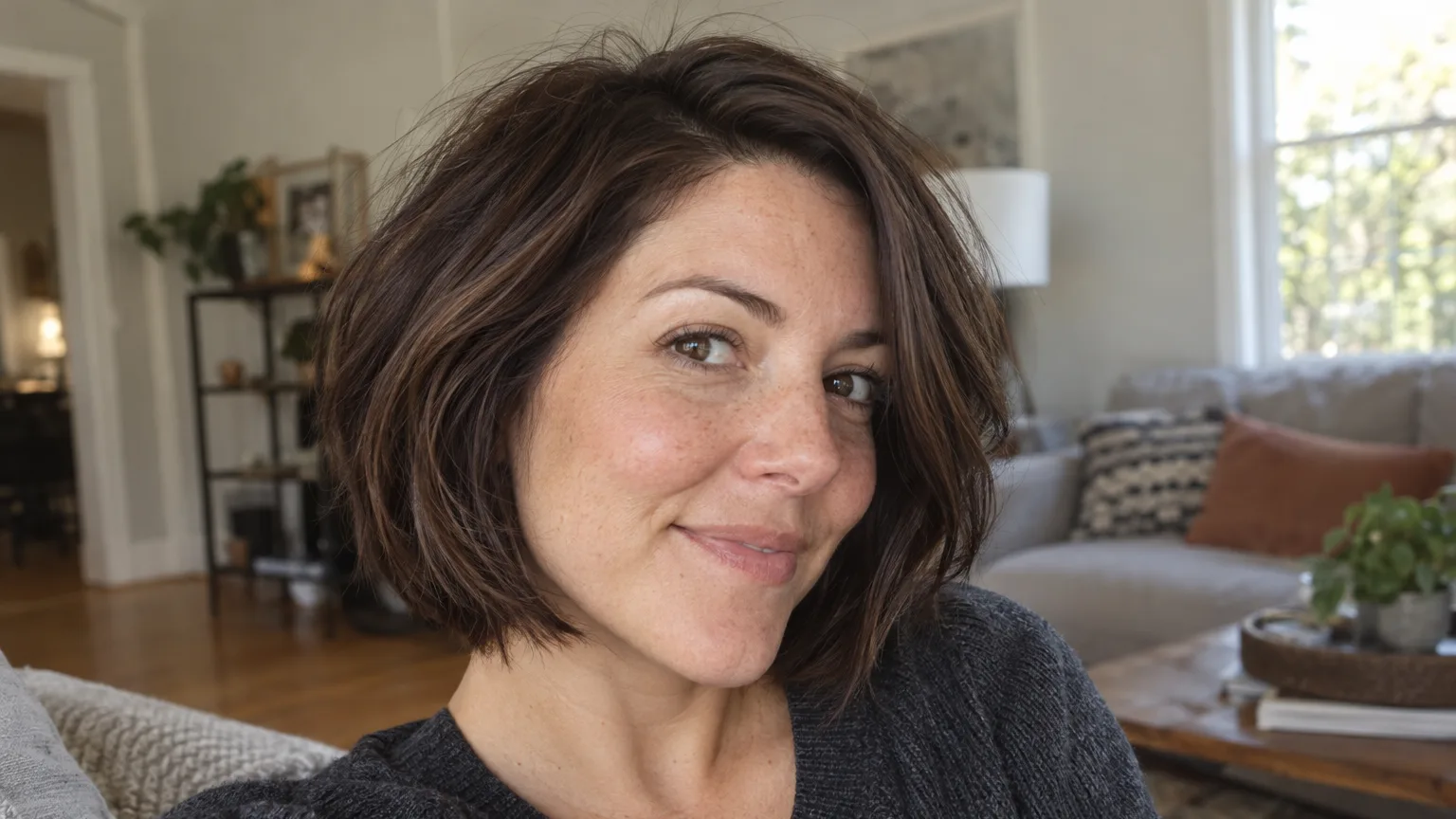
14 Easy Layered Shoulder Length Haircuts
Shoulder-length hair sits in an awkward spot. Left in one blunt length, it can flip out at the shoulders, collapse at the roots, and feel heavy by the end of the day. Layers fix most of that by removing weight in specific places, so the ends move and the crown lifts.
The catch is that layers behave differently on fine, thick, straight, and curly hair. A cut that adds body to fine, flat hair can make a dense head of hair puff out, and the reverse is also true. Each cut below says who it suits, who should skip it, and what the upkeep looks like in minutes and weeks.
Table of Contents
1. Long Layers With Face-Framing Pieces

This is the gentlest way into layers. The back stays close to one length while shorter pieces start around the chin and curve away from your face. It suits straight to wavy hair of medium thickness, and it softens round and square jawlines by adding angles near the cheekbones.
It is a poor fit for very fine hair that is already thin at the ends, since the shorter front pieces can look wispy. Plan a trim every 8-10 weeks to keep the face-framing pieces from growing into the main length, and spend about 10 minutes with a medium round brush to turn them outward.
2. Shoulder-Length Shag With Curtain Bangs
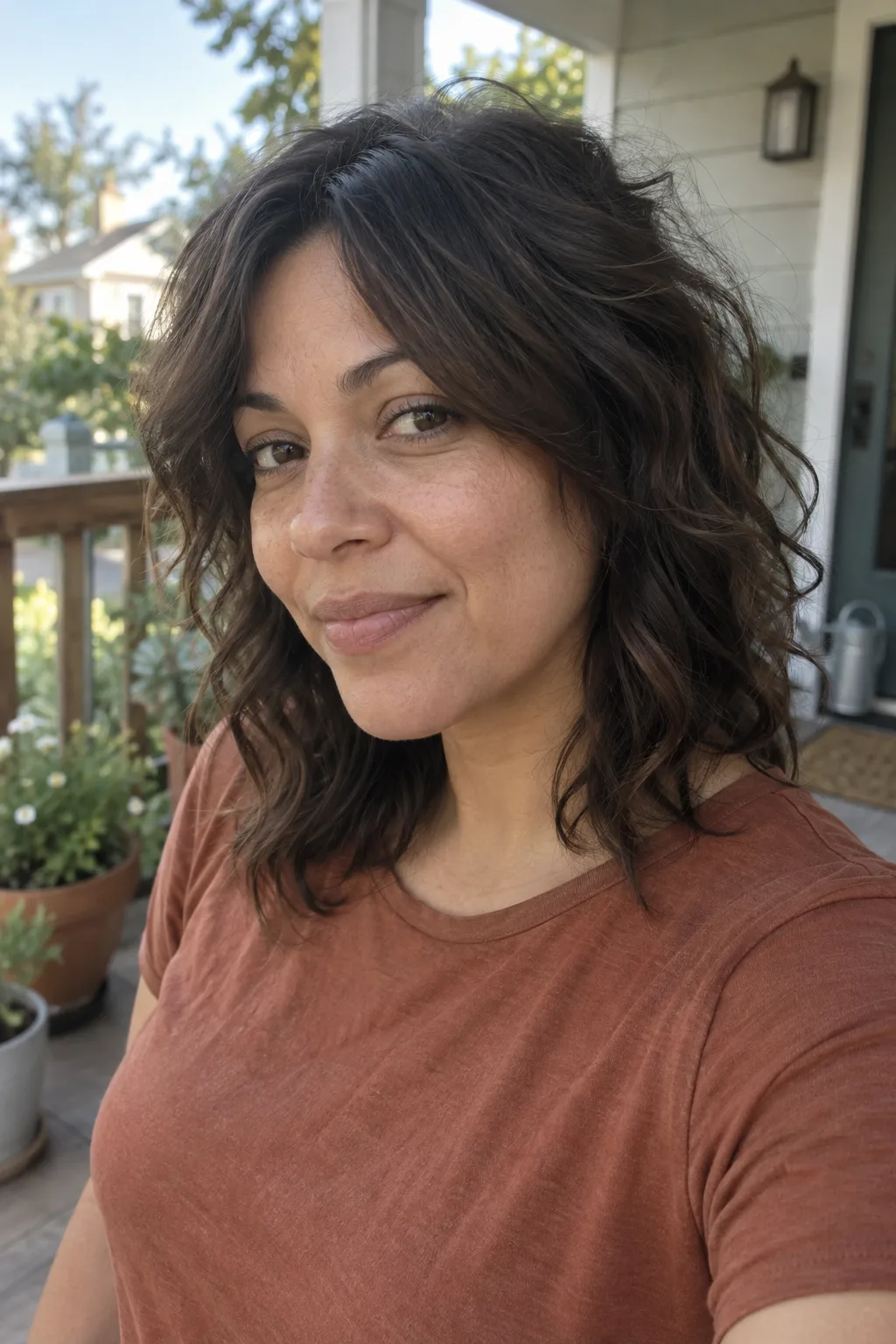
A shag stacks short layers through the crown and leaves longer, wispier lengths below, with bangs parted in the middle that sweep toward your temples. It works best on wavy hair, which fills in the choppy layers naturally, and on oval or heart-shaped faces.
Skip it if your hair is pin-straight and very fine, because the layers can look sparse instead of textured. Bangs need a tidy-up every 3-4 weeks, which many salons do for free, and a texturizing spray worked through damp hair gives the shape its grit.
3. Choppy Layered Lob

A lob that ends right at the collarbone with visibly uneven, point-cut layers. The broken edge makes straight hair look fuller and hides the bluntness that can make a lob feel heavy. It suits medium to thick straight or slightly wavy hair.
It is less forgiving on very curly hair, where choppy cutting can leave shelves instead of a smooth shape. Book a trim every 6-8 weeks and style with a 1-inch flat iron, bending the ends slightly inward or outward, which takes roughly 10 minutes.
4. Feathered Layers With a Center Part
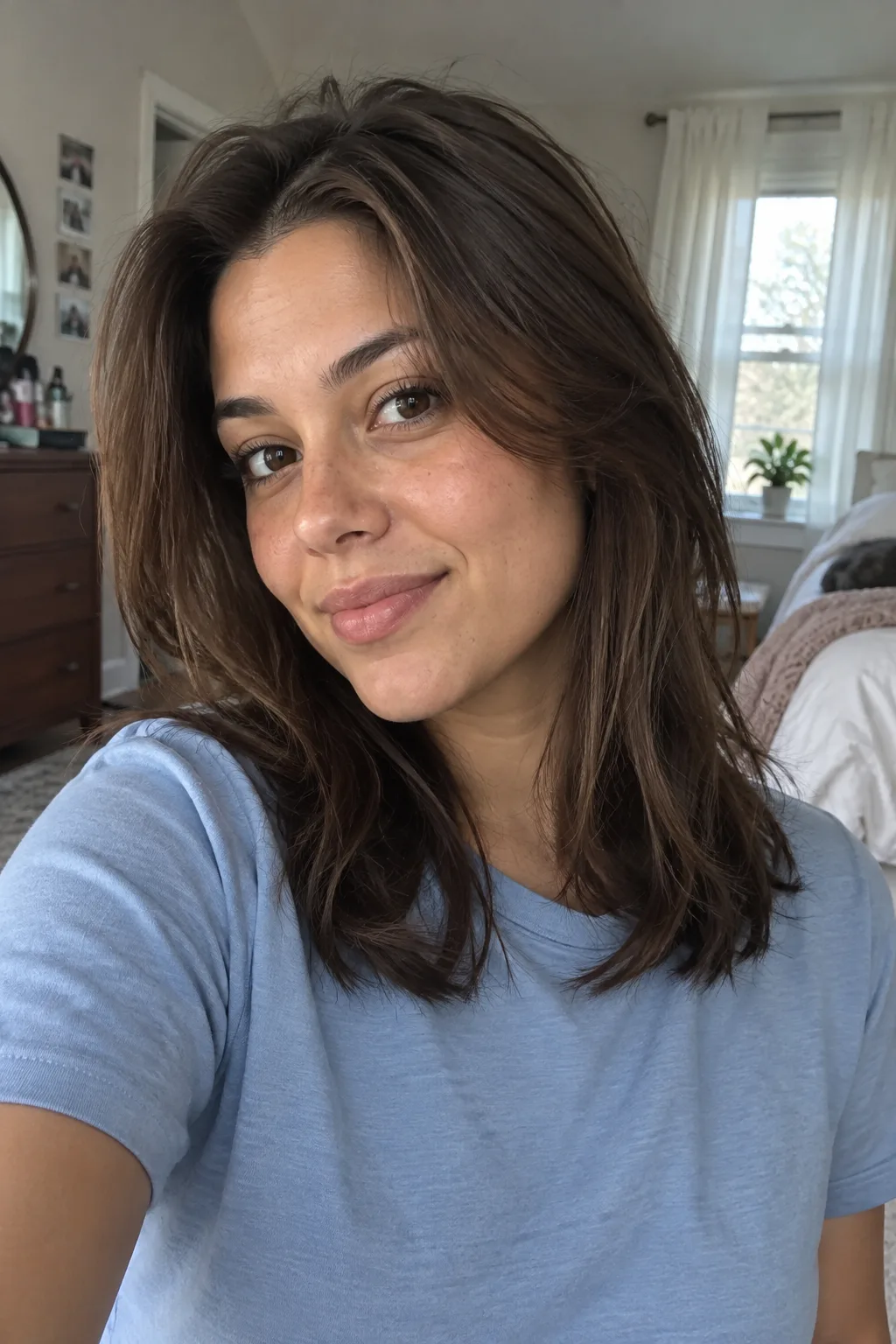
Long, soft layers are cut to graduate on each side of a middle part, so the front sweeps away from the face in light, airy wings. This works well on straight and fine hair because the gradual shortening adds movement without removing much density.
It looks off on very coarse or tightly coiled hair, which does not lie in thin feathered sections. Blow-dry the front sections away from your face with a round brush for about 8 minutes, and trim every 8 weeks so the feathered tips keep their shape.
5. Layered Cut With Wispy Bangs
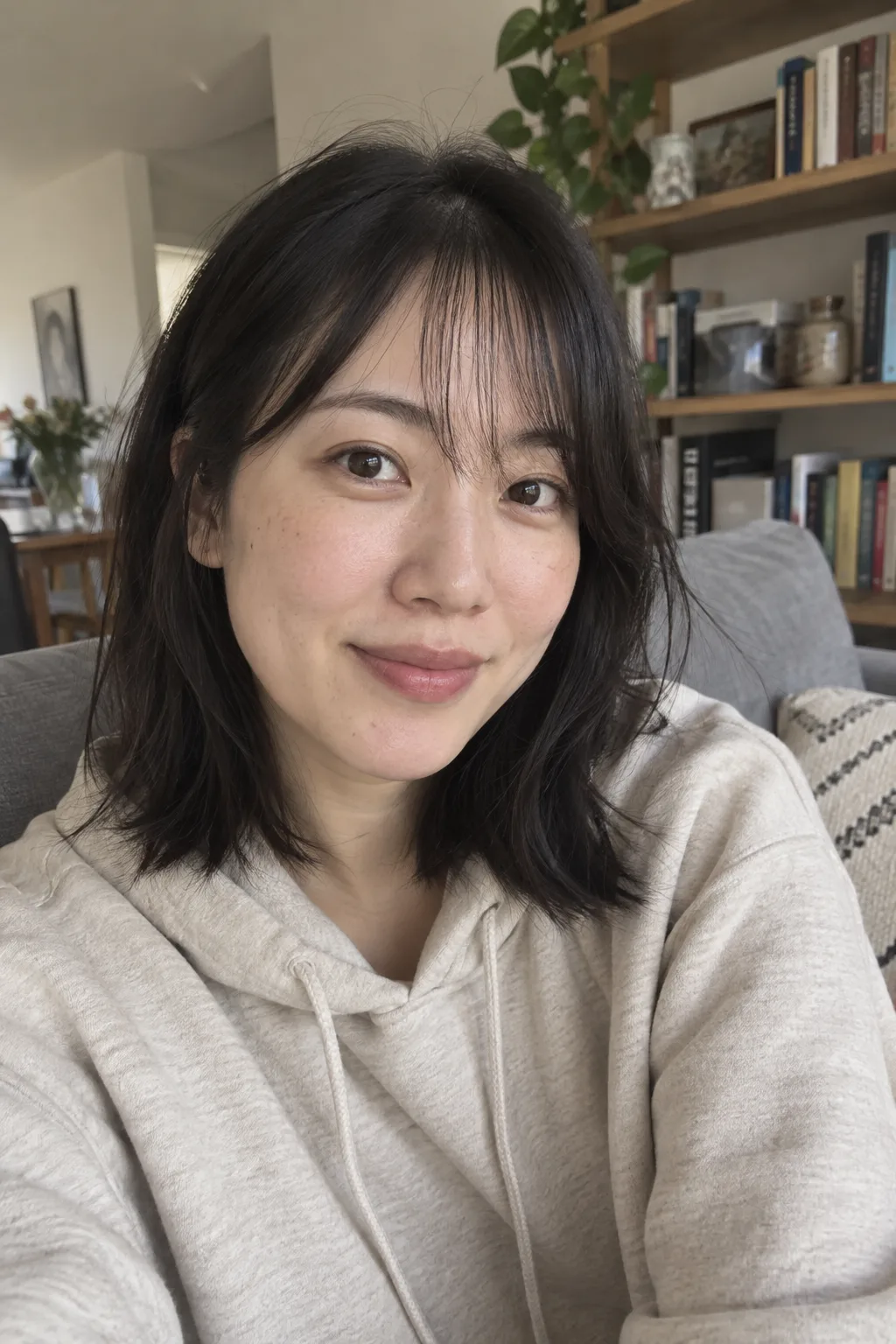
Light, see-through bangs sit just above the brows and blend into long layers around the face. They suit straight or slightly wavy hair and long or oval faces, since they shorten the forehead without covering it.
Avoid this if you have a strong cowlick at the hairline or very curly hair, because wispy bangs will lift or spring up. Rinse the bangs separately in the sink between full washes, since oil shows up there within a day or two, and trim them every 3-4 weeks.
6. Shoulder-Length Butterfly Cut
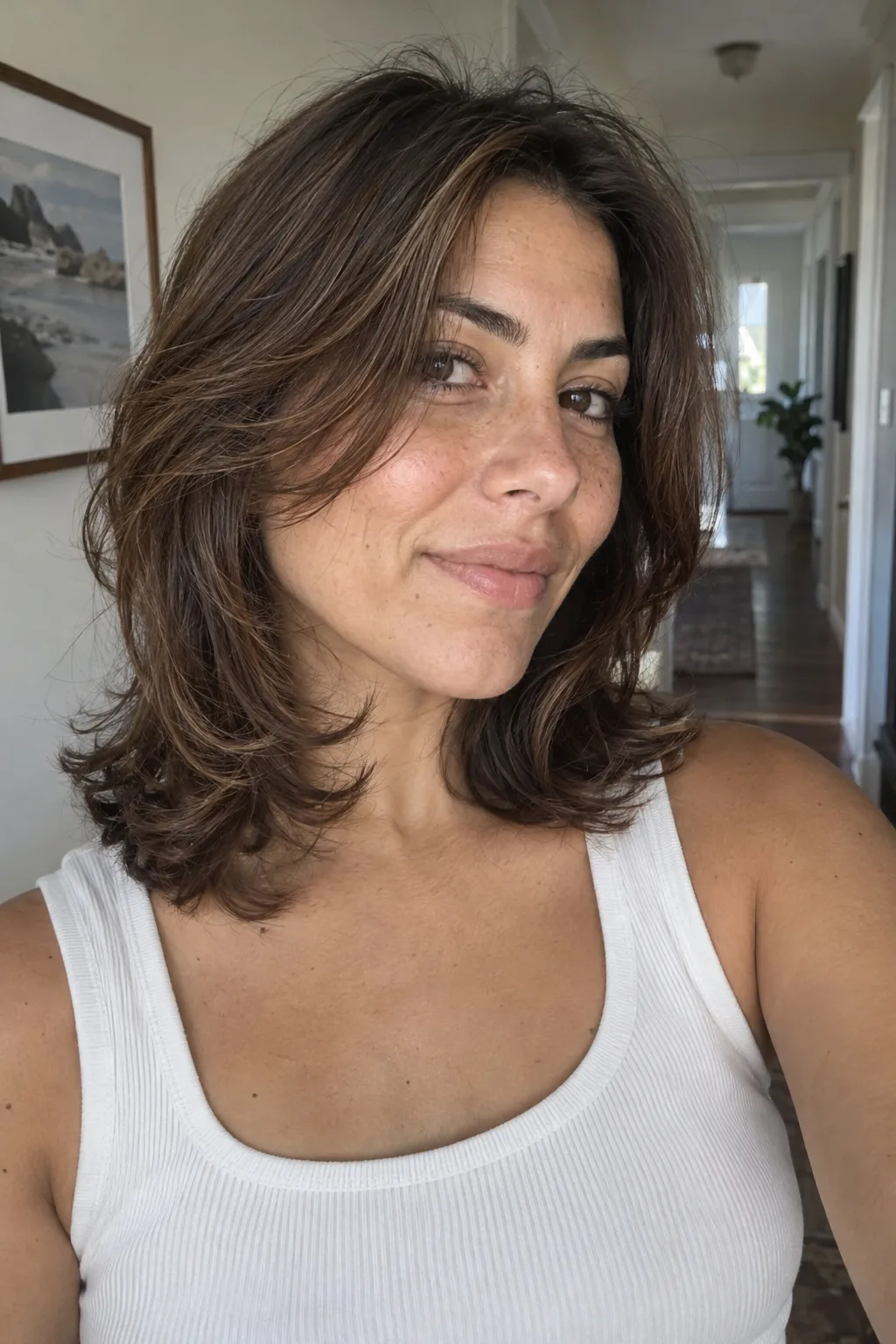
The butterfly cut combines long, blended layers with shorter ones around the face, creating two tiers of shape that look like wings when the hair is blow-dried out. At shoulder length, it adds a lot of volume to fine or medium straight hair.
It does not suit very thick hair, since the extra short layers add bulk at the cheeks. Expect about 15 minutes of blow-drying with a large round brush, and a trim every 8-10 weeks to keep the two tiers distinct.
7. Soft U-Shaped Layers
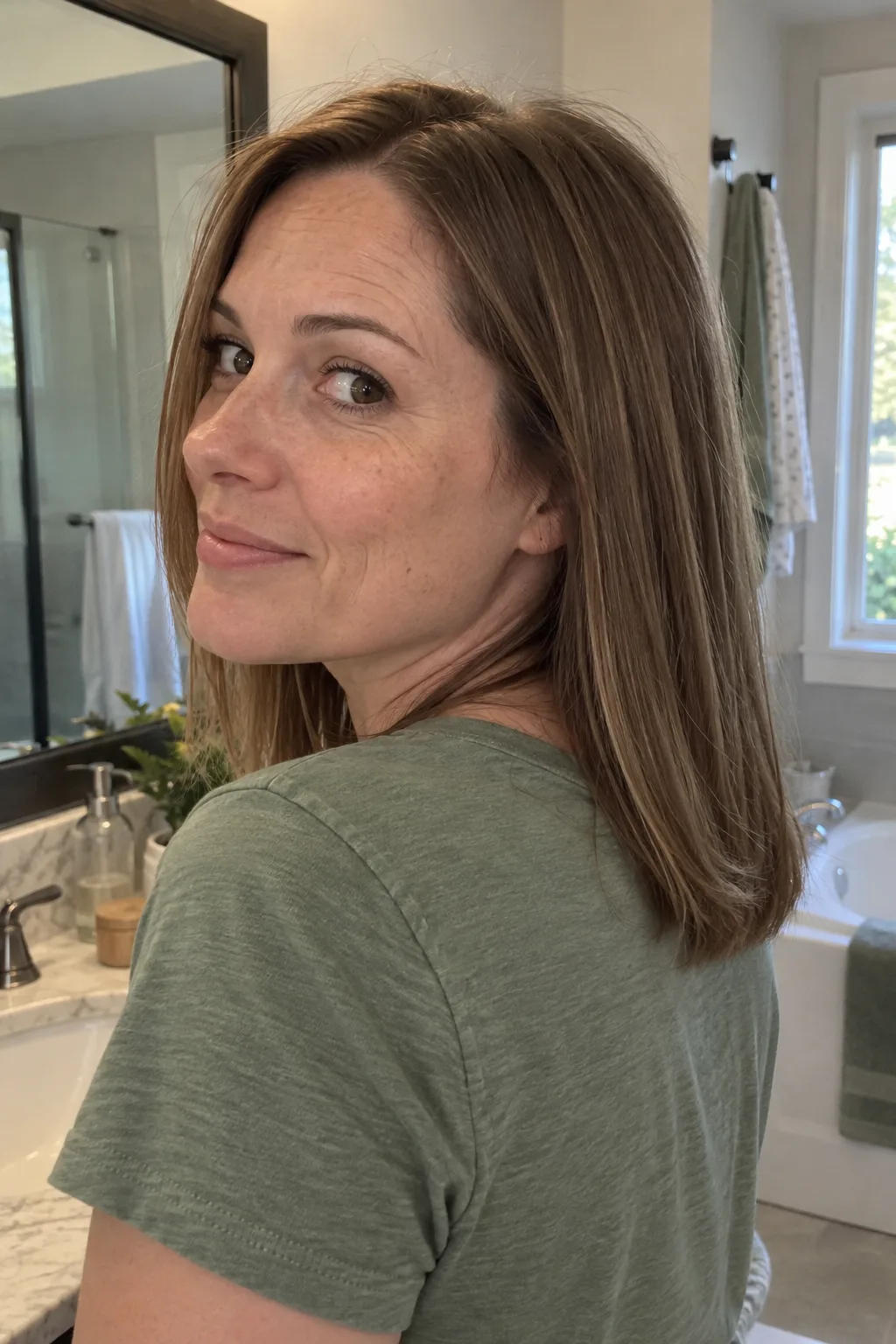
The back is cut in a rounded U, with the center a little longer than the sides, and the layers are kept long and soft. It is a low-maintenance choice for straight and wavy hair of any thickness, and it keeps the ends looking full without visible steps.
It is not the right pick if you want a sharp, graphic outline, since the curve reads as relaxed. It grows out gracefully, so you can stretch trims to every 10-12 weeks, and air-drying with a little lightweight cream is usually enough.
8. Layered Curly Shoulder-Length Cut
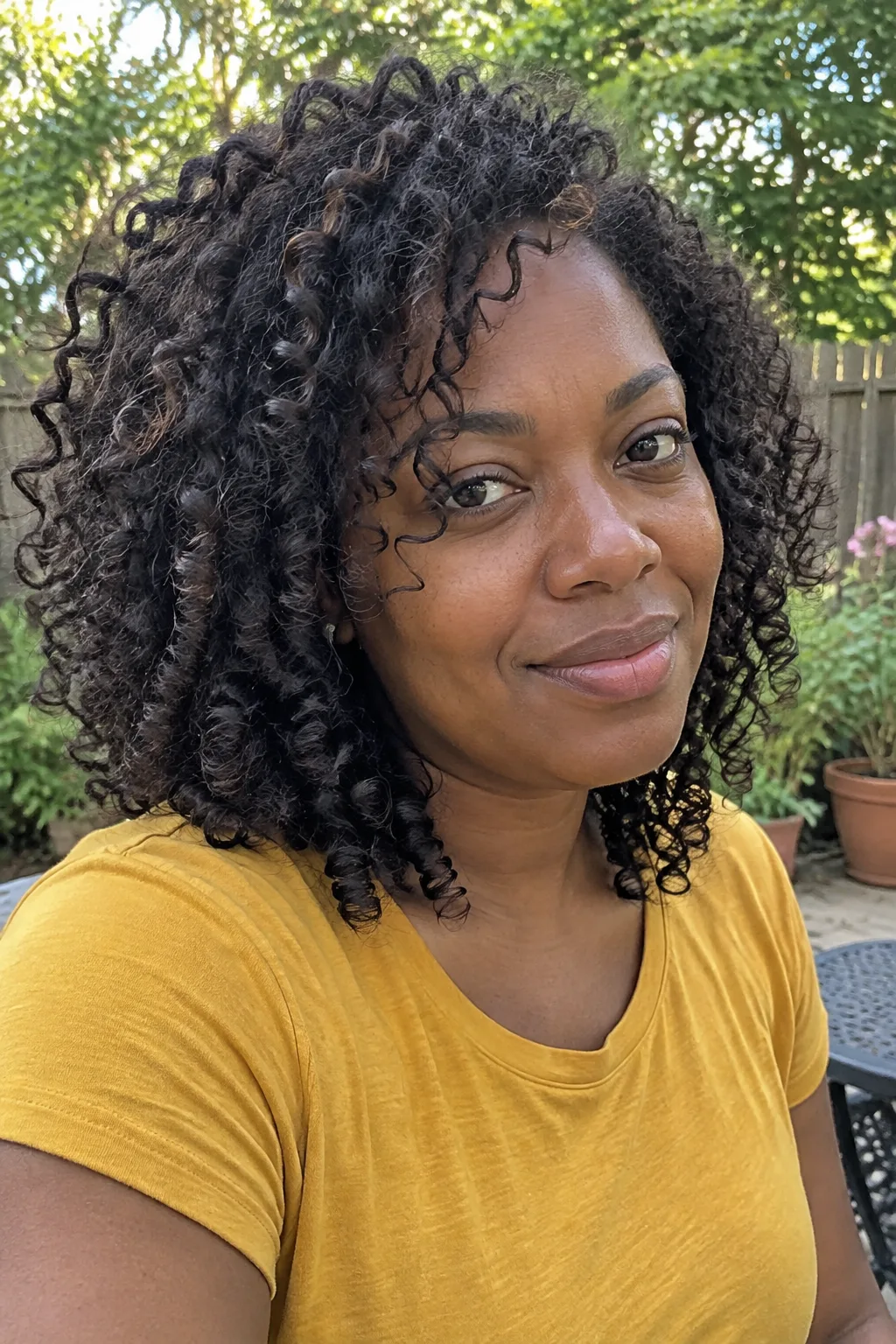
Curls are cut in layers so they stack into a rounded shape instead of a triangle. It suits Type 2C to 3C curls, which tend to look wide at the bottom and flat on top when uncut. Ask for a stylist who cuts curly hair dry or curl by curl.
It is risky on very fine curls, where heavy layering can leave the ends thin. Plan on a trim every 10-12 weeks, and use a diffuser on low heat for about 15 minutes, or air-dry with a curl cream and gel.
9. Soft Textured Wolf Cut
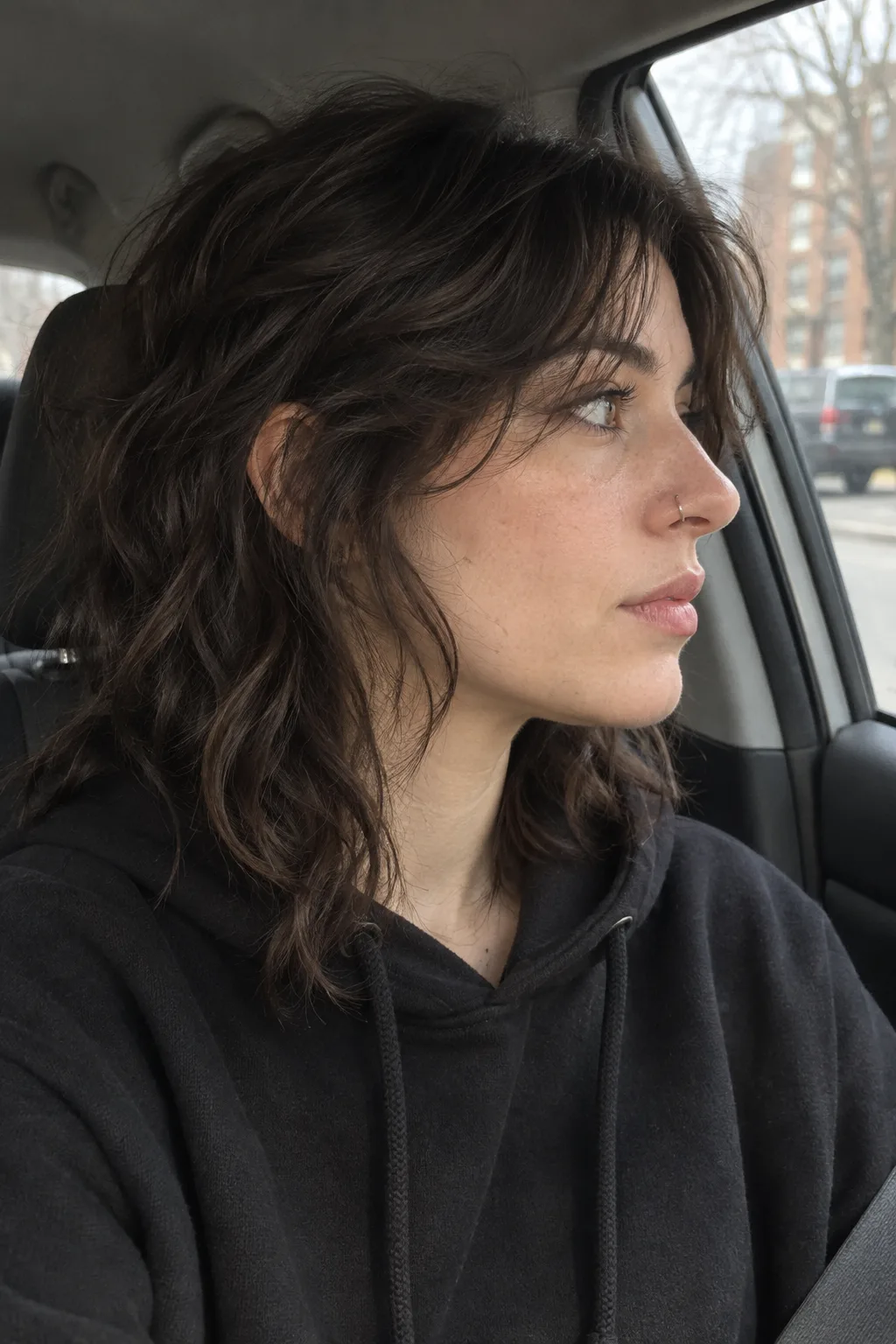
A wolf cut mixes a shaggy crown with a longer, thinned-out length at the back. This softer version keeps the layers blended so it reads as lived-in instead of dramatic. It works on wavy and thick straight hair and gives a flat crown real lift.
Fine, limp hair struggles to hold the shape, and very short layers on top are hard to grow out. Trim every 6-8 weeks, scrunch a sea-salt spray into damp hair, and let it air-dry for a look that takes about 5 minutes.
10. Blunt Base With Hidden Interior Layers

The outline stays a clean, one-length line, while shorter layers are cut inside the hair where they cannot be seen. This removes bulk and adds movement without changing the silhouette. It is a good choice for thick, straight hair and for anyone who dislikes visible layers.
It does little for fine hair, which needs all the density of a full blunt edge and gains nothing from internal weight removal. A blunt edge shows split ends quickly, so trim every 6-8 weeks, and a flat iron pass of about 10 minutes keeps the line crisp.
11. Flipped-Out Layered Ends

Layers are cut to end just at the shoulder so the tips kick outward instead of resting on the fabric. It suits straight and slightly wavy hair, and it is a good fix when your ends constantly flip on their own because of your collar or shoulders.
It is harder to maintain on very thick, heavy hair, which pulls the flip out. Use a 1.25-inch curling iron, curling each end away from the face for 2-3 seconds, and expect about 10 minutes. Trim every 8 weeks.
12. Layered Cut With Side-Swept Bangs

Longer bangs sweep from a side part across the forehead and flow into the layers around the cheeks. They suit most face shapes, particularly round and square ones, because the diagonal line draws the eye away from the width of the face. The cut works on straight and wavy hair of any thickness.
If your hair grows in a strong whorl at the front hairline, the bangs may refuse to fall to one side, so ask your stylist to check the direction before cutting. Trim the bangs every 4-6 weeks, and blow-dry them with a small round brush for about 3 minutes.
13. Razor-Cut Layers for Fine Hair
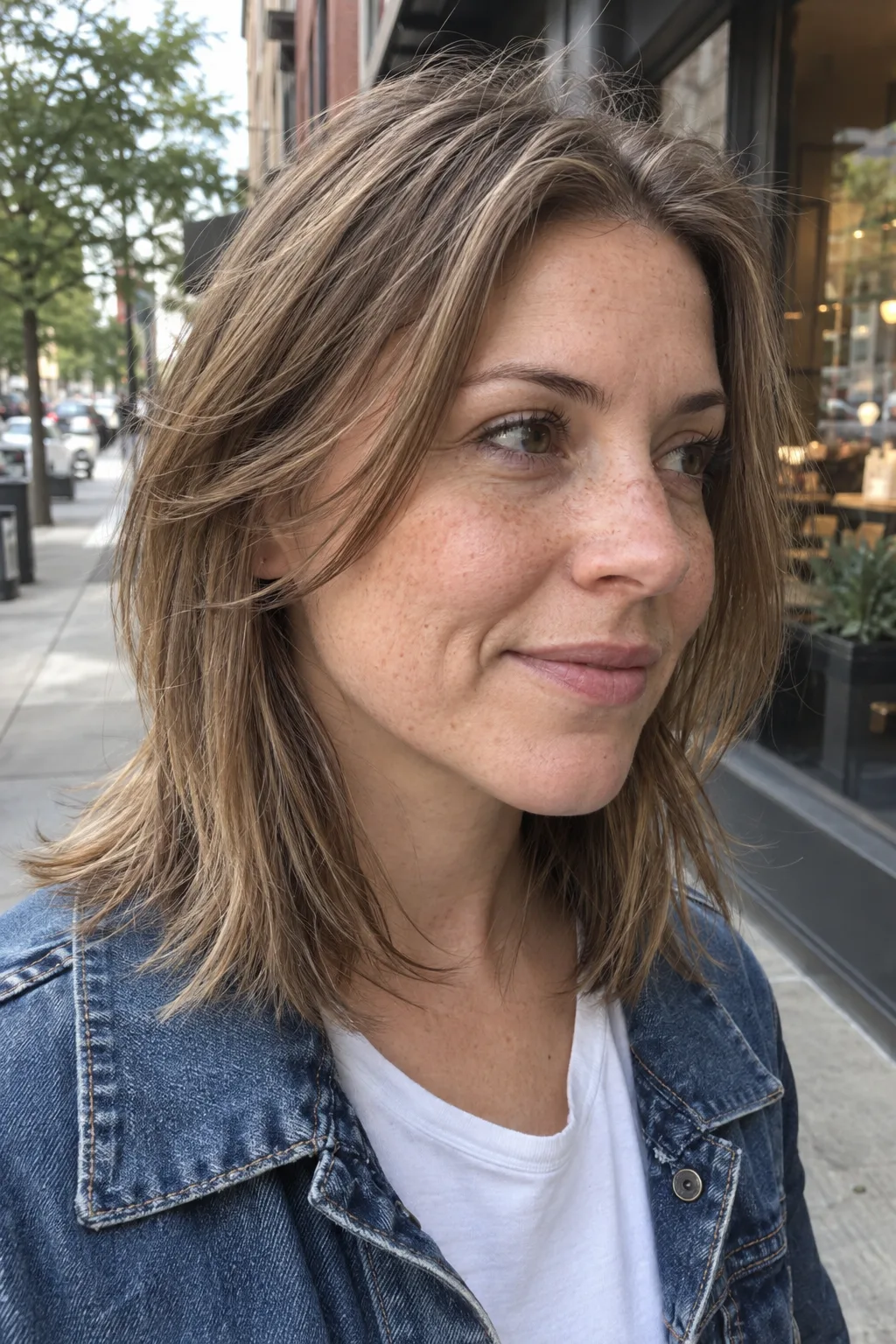
A razor cuts the layers at a slant, leaving thin, feathery ends instead of a flat edge. On fine, straight hair this makes the lower lengths look lighter and more textured. Ask for subtle layering only, since too many layers will thin out already sparse hair.
Razor cutting can rough up the cuticle on dry, frizzy, or curly hair, so it is better avoided there. Trim every 6 weeks because the thin ends fray quickly, and use a lightweight leave-in conditioner after washing to keep them smooth.
14. Stacked Layers for Thick Hair
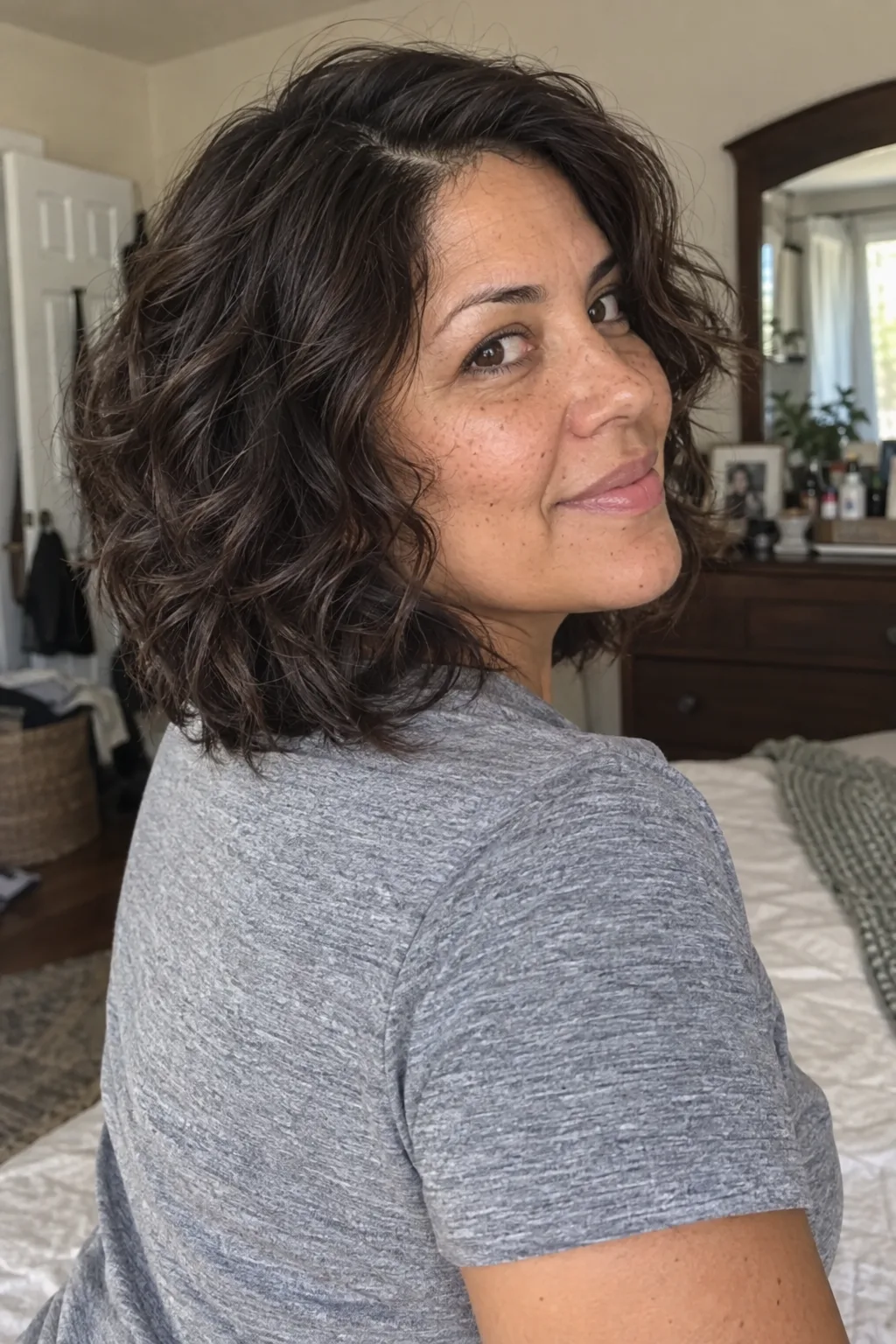
Layers are cut in steps from the crown to the ends, which removes weight from the thickest sections and stops the shape from widening at the shoulders. It suits dense, straight or wavy hair that feels heavy or takes over 30 minutes to dry.
Fine hair does not have the density for stacked layers and may look thin at the ends. Blow-drying thick hair into shape takes roughly 15-20 minutes, and a trim every 8-10 weeks keeps the steps balanced. Use a heat protectant spray before every session.