15 Protective Styles for Short Natural Hair That Protect Your Ends
Short natural hair often loses its ends because it rubs against collars, pillowcases, and your own fingers all day. By midday, a short coil may puff sideways, flatten at the crown, or bulk up at the nape, and each rub breaks off a little more length. Good protective styles for short natural hair tuck those ends away so they stay out of the way of friction and daily handling.
The main tools are twists, braids, and wraps. Twists and braids lock the hair into a small, compact shape, so the ends sit inside the style instead of brushing against fabric. Knotless braids and tuck-and-pin updos go further, because the ends are hidden under a sealed section or pinned flat against the head. Wigs and headwraps add a second layer of cover, but only if the base hair is clean and moisturized first.
Table of Contents
1. Flat Twists on a Short TWA
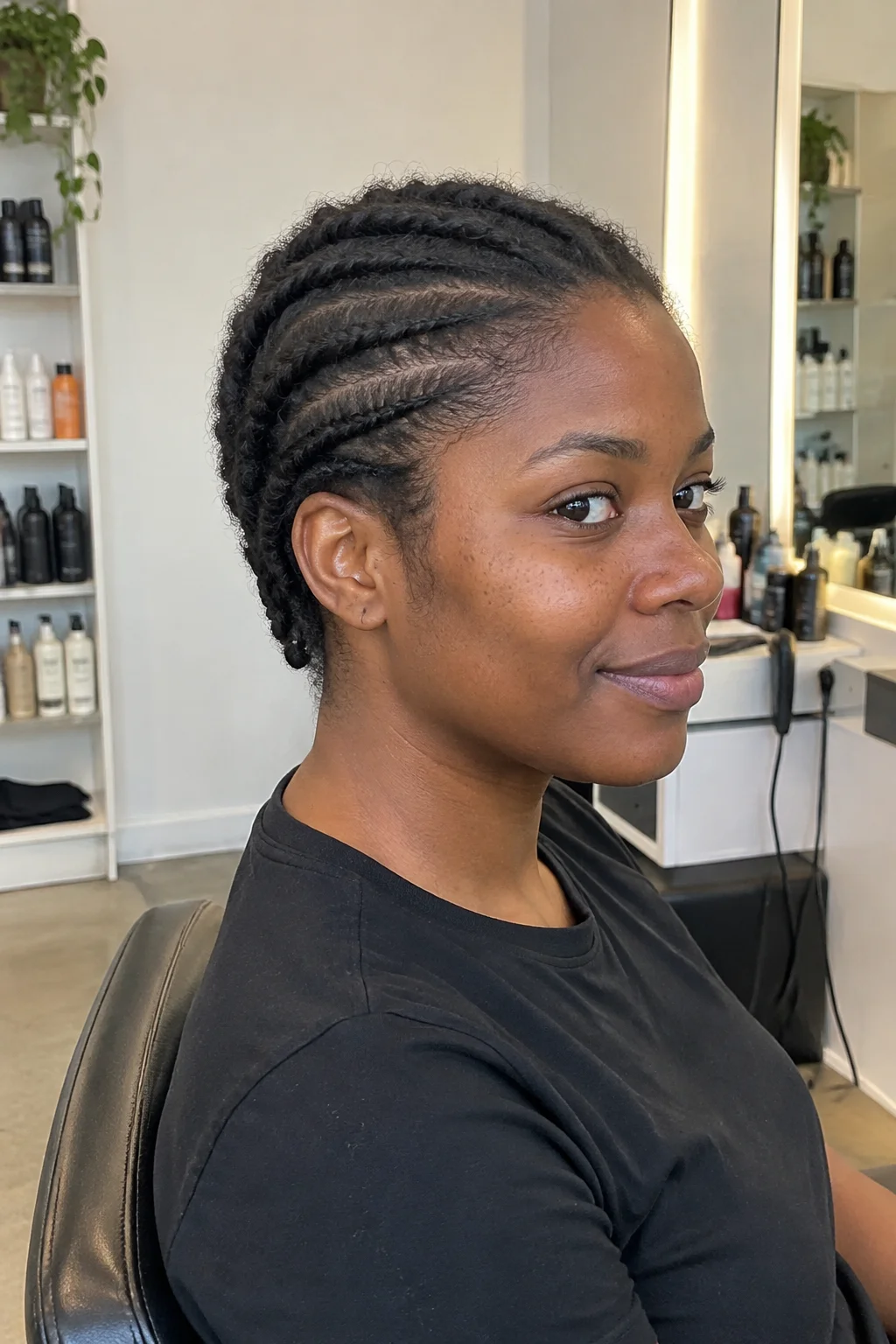
This style lies flat against the scalp, so the twists stay out of the way of collars and pillowcases. It suits 4C hair with a strong, even density and a rounded head shape. It is a poor match for very fine hair, because the twists need enough length to hold their line. Skip it if your hair is shorter than two inches, since the ends may not tuck.
Flat twists need about two inches of your own hair to grip well, and a short, tapered afro usually has enough. Plan on about 120 to 150 minutes for a full set of eight. These styles last roughly 4 to 6 weeks before takedown. Keep the scalp lightly moisturized with a water-based leave-in, and wear a satin bonnet at night so the twists stay smooth. At takedown, apply conditioner, finger-detangle the shed hair, and unravel each twist from the ends up so your own ends stay intact.
2. Mini Twists on Short Natural Hair
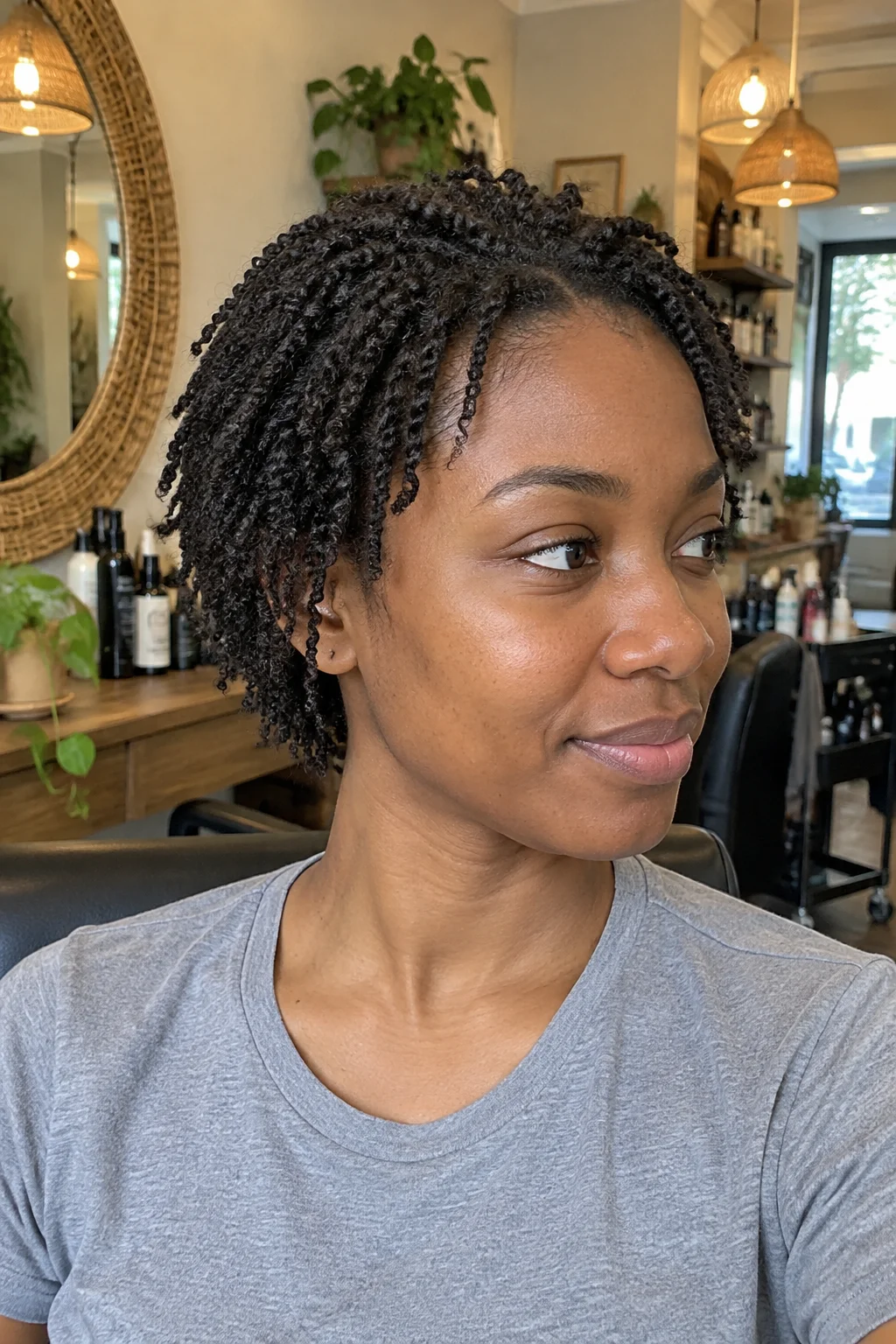
Mini twists are small enough to hold short hair without making it look thin. They keep each strand grouped, which reduces tangling and the friction that snaps short ends. This style suits 4C hair with good density and short to medium lengths. Skip it if your scalp is very sensitive or your hair is under two inches, because the twists may slip out quickly.
Mini twists work on hair that is at least three inches long, since shorter hair slips out of the tiny sections. Installation usually takes about 180 to 240 minutes, depending on how many twists you want. They last about 4 to 6 weeks before they need to come down. Apply a light oil to the scalp rather than heavy product, and sleep on satin to keep the twists from frizzing. When it is time to take them down, soften the hair with conditioner, finger-detangle, and unravel from the ends up.
3. Chunky Two-Strand Twists for Short Hair
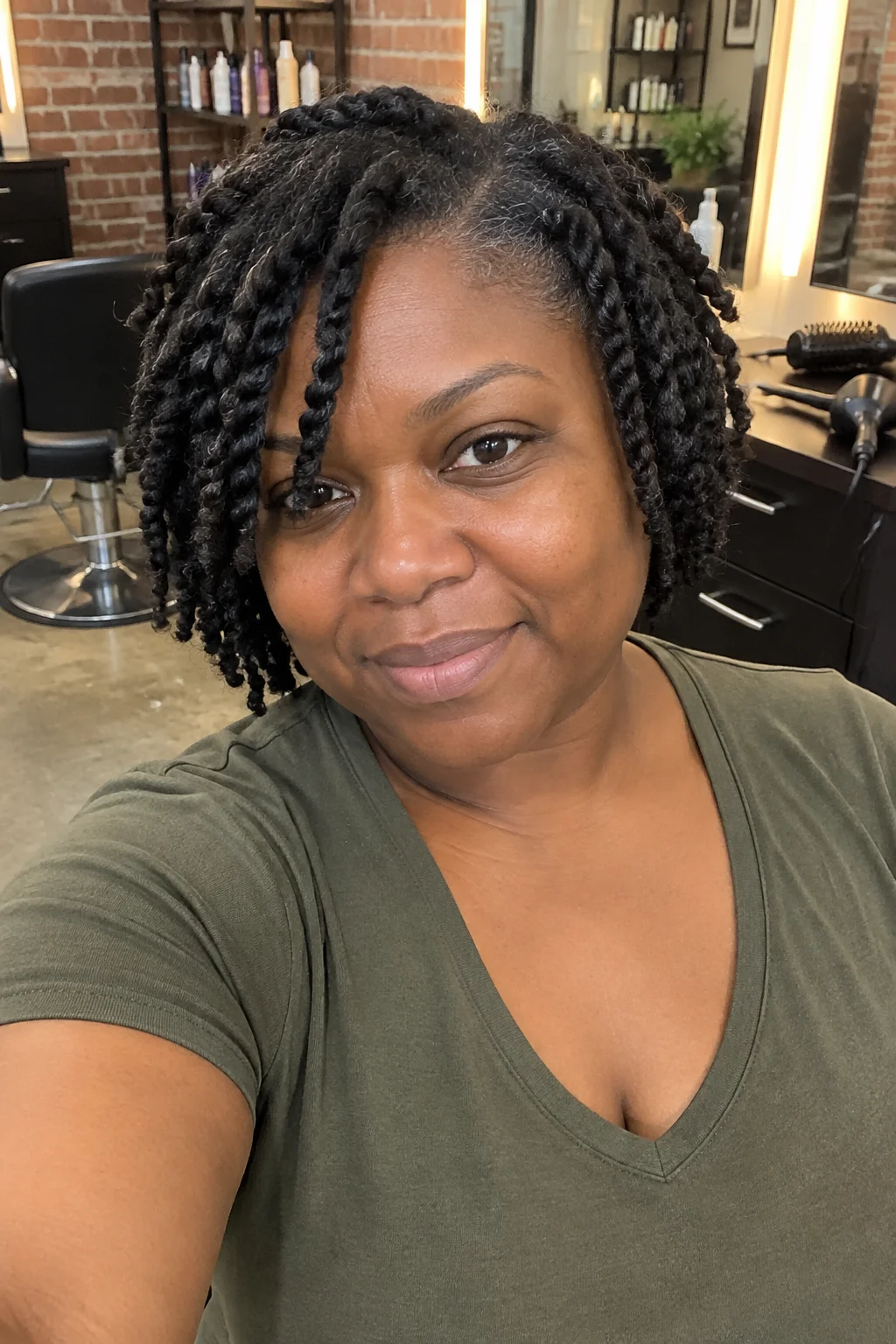
Chunky twists are quick to install and show the shape of the style well. Because each twist is thick, the ends are fewer and easier to protect. Among easy protective styles for natural hair short, this one needs the least upkeep. It suits 4B and 4C hair with medium density and an oval or heart-shaped face. It is a poor match for very dense hair that needs many sections, since chunky twists can look heavy and lopsided.
Chunky two-strand twists need a minimum of about two inches of your own hair to hold their shape. Expect install time of about 90 to 120 minutes for a set this size. They tend to last 4 to 6 weeks before takedown. A water-based leave-in applied to the scalp and lengths helps keep them soft, and a satin scarf protects them overnight. For takedown, saturate the hair with conditioner, finger-detangle the shed hair, and unravel from the ends up.
4. Bantu Knots on Short Hair
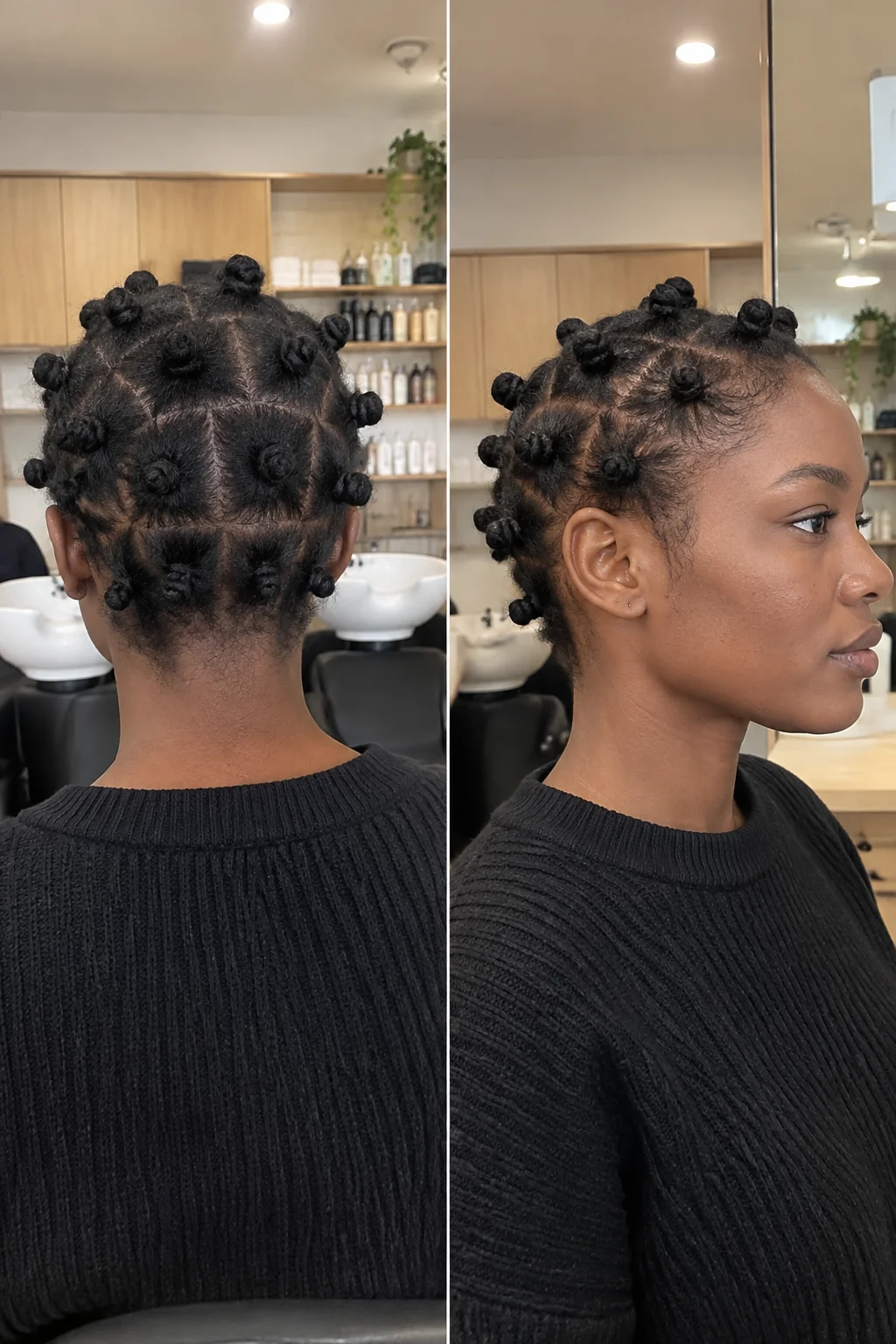
Bantu knots coil the hair into tight, compact shapes that protect the ends and reduce exposure to friction. The knots sit close to the scalp, so there is little loose hair to snag. This style suits 4C hair with a strong curl pattern and a round or square head shape. Skip it if your hair is shorter than two inches, since the knots may not hold a shape.
Bantu knots can be set on hair that is at least one to two inches long, which makes this a good option for a short natural cut. The knots take about 60 to 90 minutes to set on the whole head. Worn for a few days at a time, they can be refreshed over several weeks as the style is redone. Use a water-based leave-in before setting and cover the head with a satin bonnet at night to keep the coils defined. When you undo the knots, dampen the hair, apply conditioner, and finger-detangle gently.
5. Straight-Back Cornrows on Short Hair
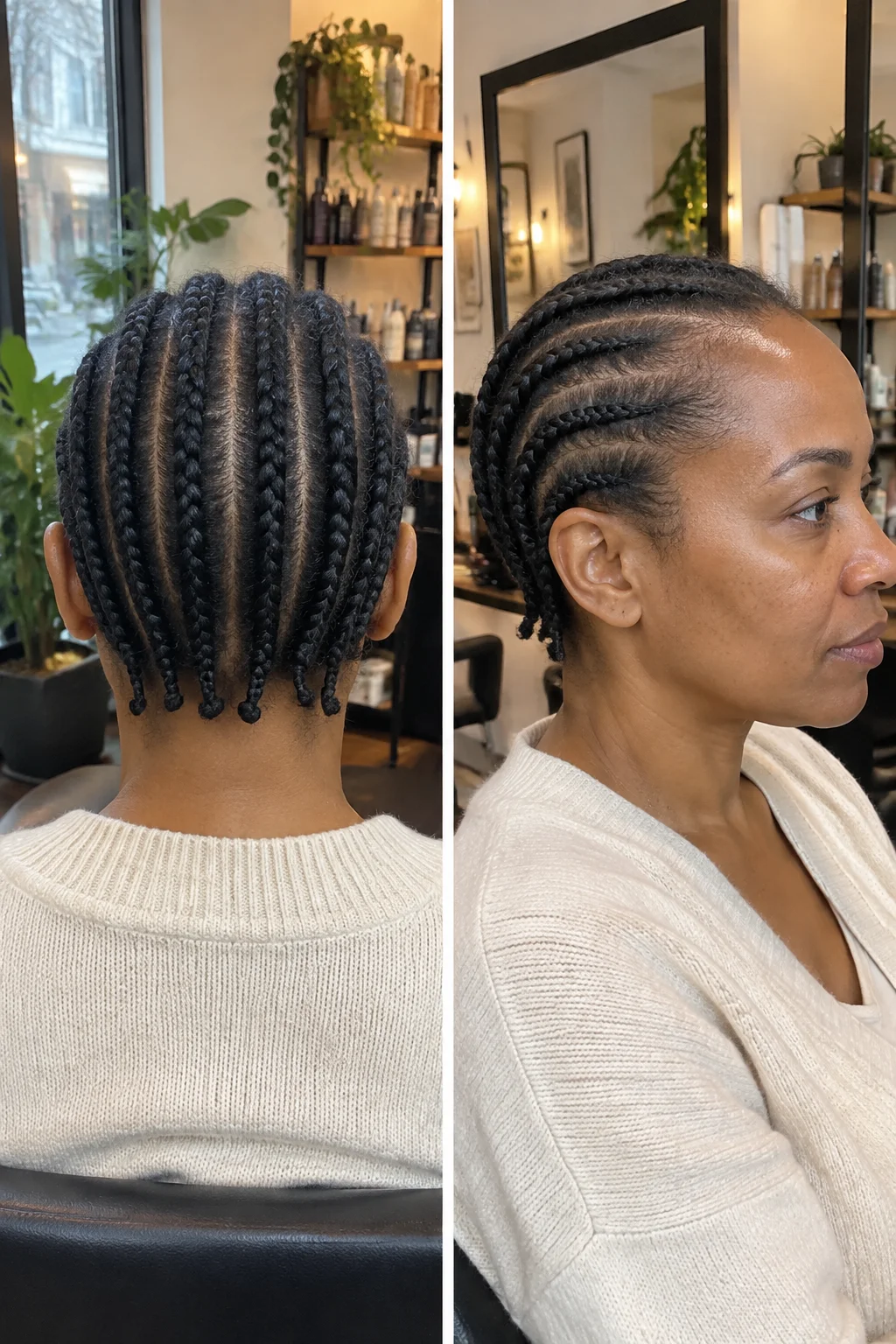
Straight-back cornrows lie flat against the head, so the ends are tucked into the braid and away from the collar. They are a good choice for short hair because the braids hold the hair in place without extra length. This style suits 4B and 4C hair with good density and a clear, even scalp. It is a poor match for thin or sensitive scalps, since tight braids can cause tension.
Straight-back cornrows are a dependable choice for protective styles for short natural hair, especially on hair about two inches long. Installation takes roughly 150 to 180 minutes for seven rows. These braids typically hold for 2 to 4 weeks before they should come out. Apply a light oil to the scalp between the braids and sleep in a satin bonnet to reduce friction. For takedown, apply conditioner or oil, finger-detangle the shed hair, and unravel from the ends up without cutting near your own ends.
6. Zigzag Part Cornrows
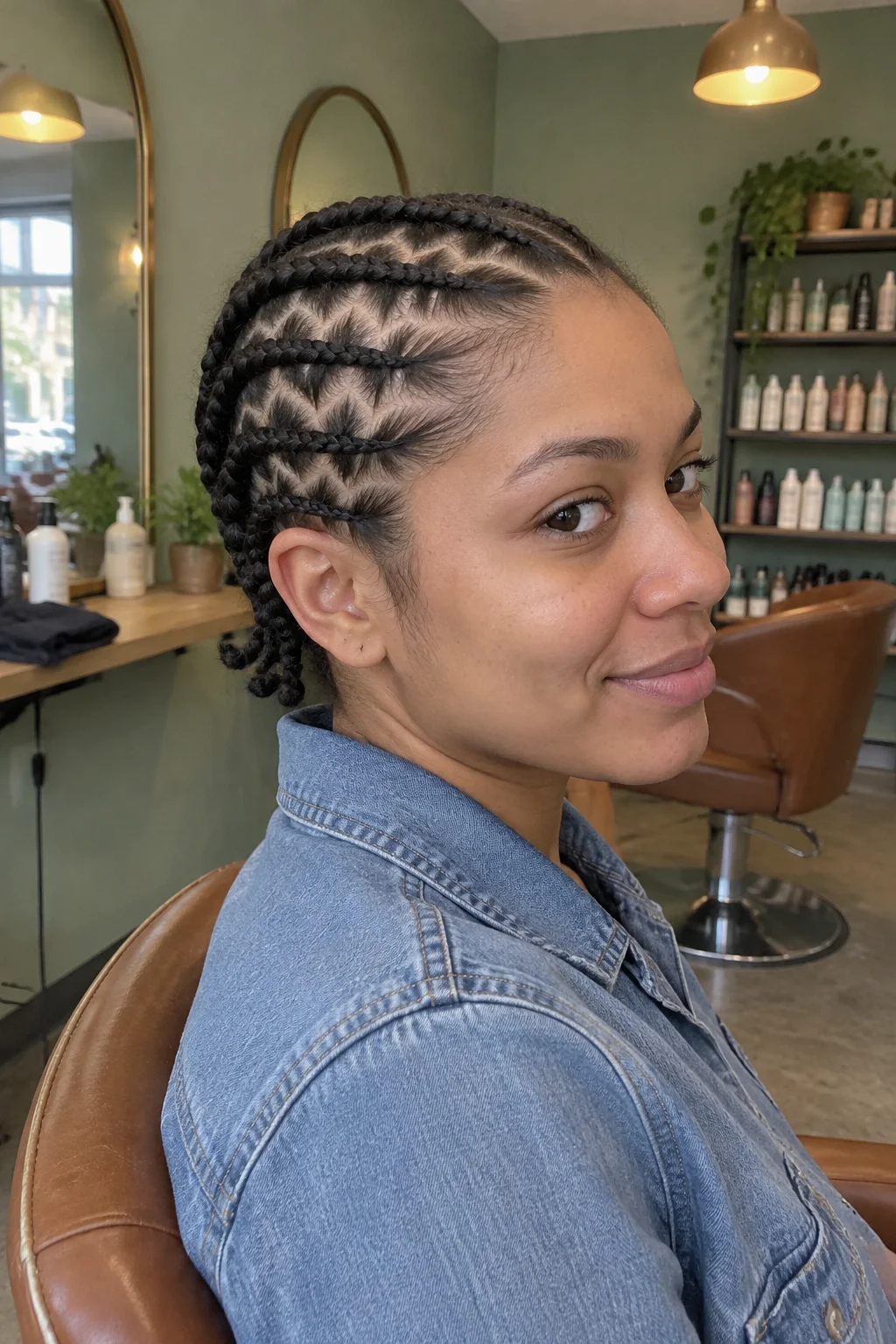
Zigzag parts make the cornrows look bold without adding length. The braids still lie flat against the scalp, so the ends stay protected. This style suits 4B and 4C hair with good density and a balanced head shape. It is a poor match for very short hair under two inches, because the zigzag lines may not show clearly.
Zigzag part cornrows need at least two inches of your own hair for the braids to grip the scalp cleanly. Five rows typically take about 120 to 150 minutes to install. They are best worn for 2 to 4 weeks before takedown, since cornrows are more prone to frizz as they age. Use a water-based leave-in along the braids and wear a satin scarf overnight to protect the part lines. When removing them, saturate the braids with conditioner, finger-detangle, and unravel from the ends up.
7. Stitch Braids into a Short Puff
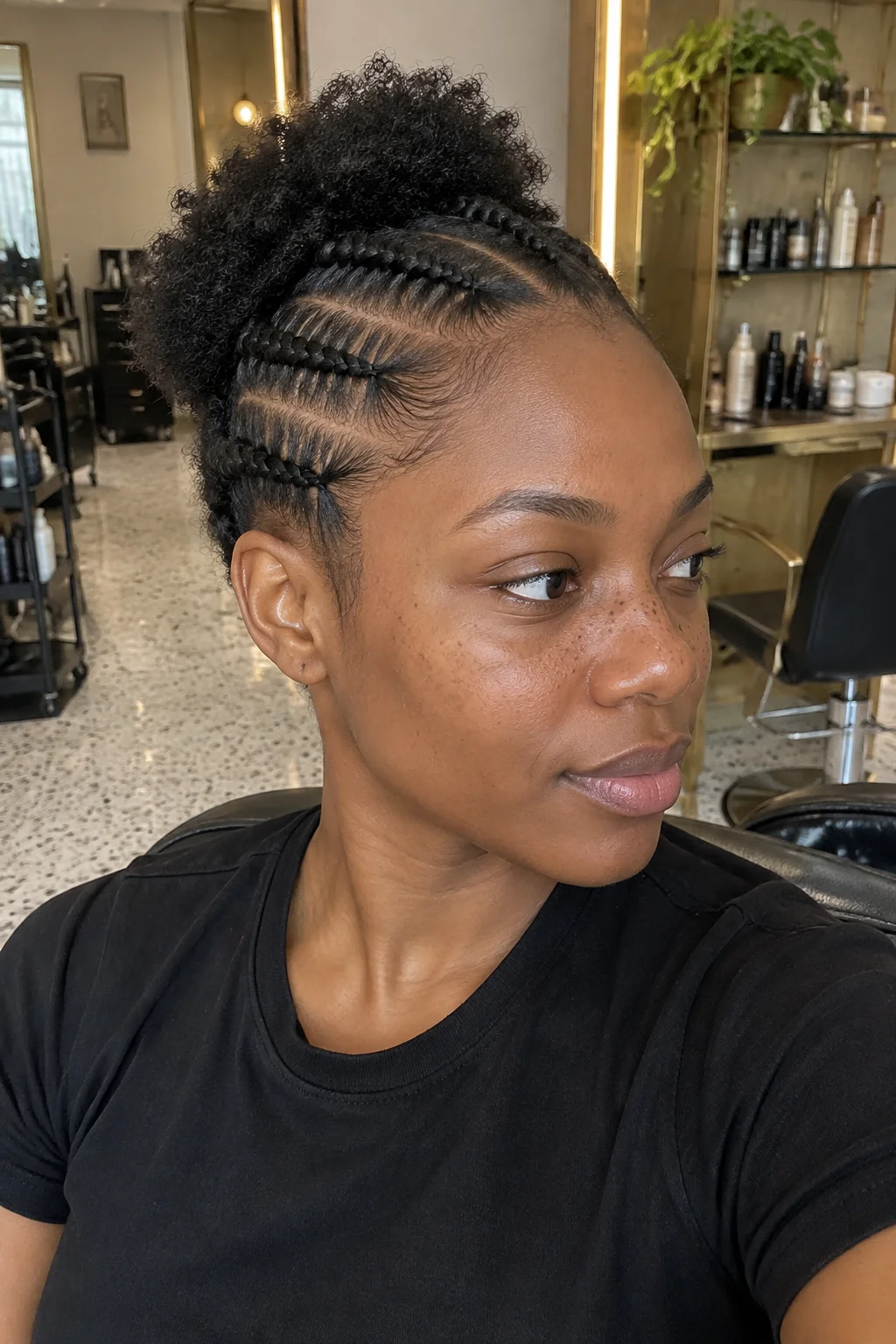
Stitch braids lock the hair in place from the front hairline to the crown, so the ends stay tucked and protected. The small puff at the crown adds volume without exposing the ends. This style suits 4C hair with good density and a round face. Skip it if your hairline is fragile, since the braids pull at the edges.
Stitch braids can be installed on short hair that is at least about three inches long, which gives enough length to braid back to the crown. The install takes about 150 to 180 minutes for four braids. Plan on wearing them 2 to 4 weeks before taking them down. A small amount of light oil on the scalp helps prevent itching, and a satin bonnet keeps the crown puff smooth. At takedown, apply conditioner, finger-detangle the shed hair, and unravel the braids from the ends up.
8. Twist-Out on Short Natural Hair
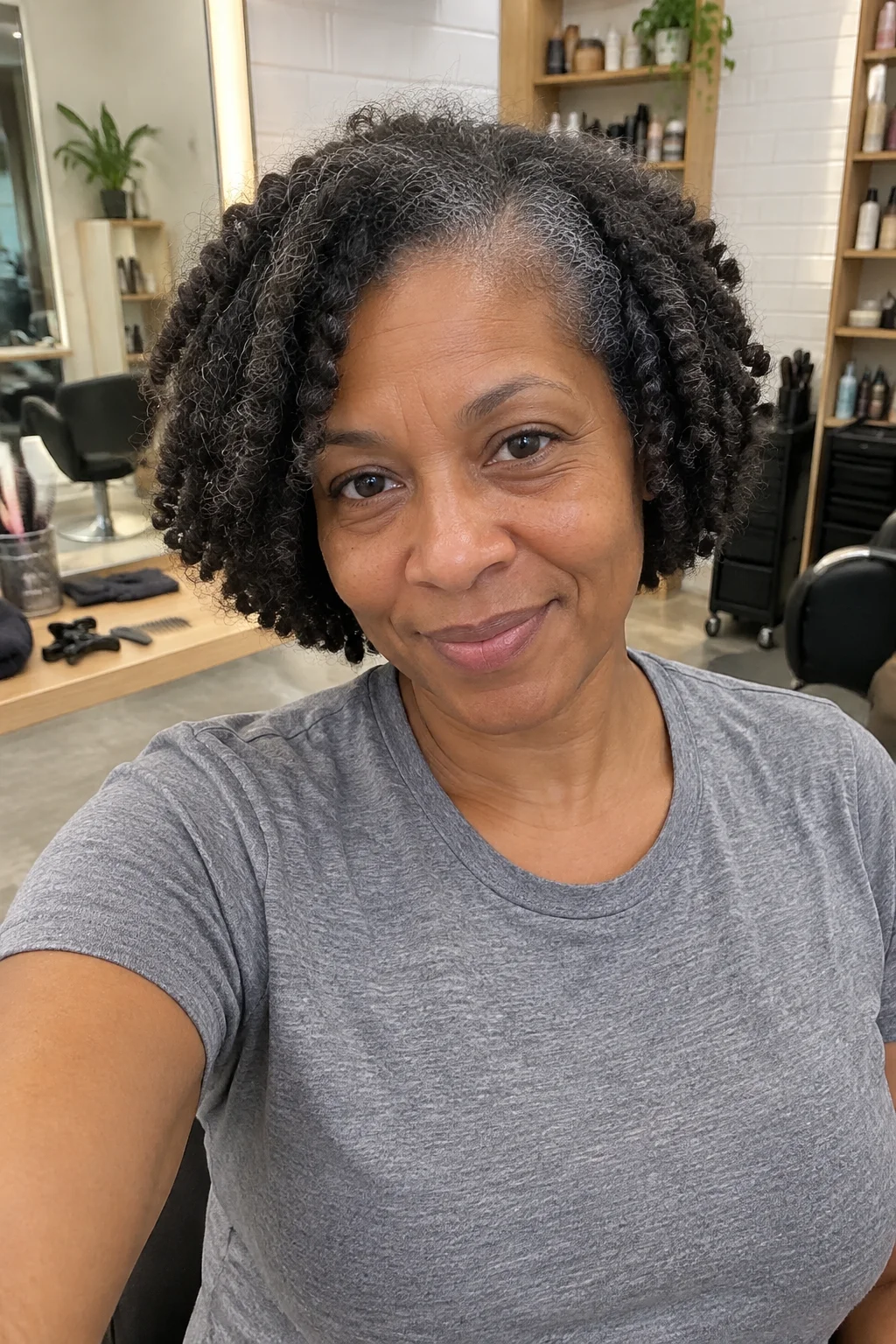
A twist-out is a finished style, not a braid, so it protects the ends only when you wear it for a short time and sleep in a satin bonnet. It suits 4B hair with good moisture retention and a fine to medium density. It is a poor match for very dry or fragile hair, because the twists can break at the ends during takedown.
A twist-out needs about two inches of hair to form defined clumps that sit well around the face. Setting the twists takes about 60 to 90 minutes, and the finished style is worn for a few days before it is refreshed. Refreshing with a water-based leave-in every few days keeps the clumps soft and springy. Sleep in a satin bonnet to preserve the shape between wears, and trim split ends every 8 to 12 weeks. When you take the style down, add conditioner to the hair, finger-detangle the coils, and avoid pulling the ends.
9. Bob-Length Knotless Braids
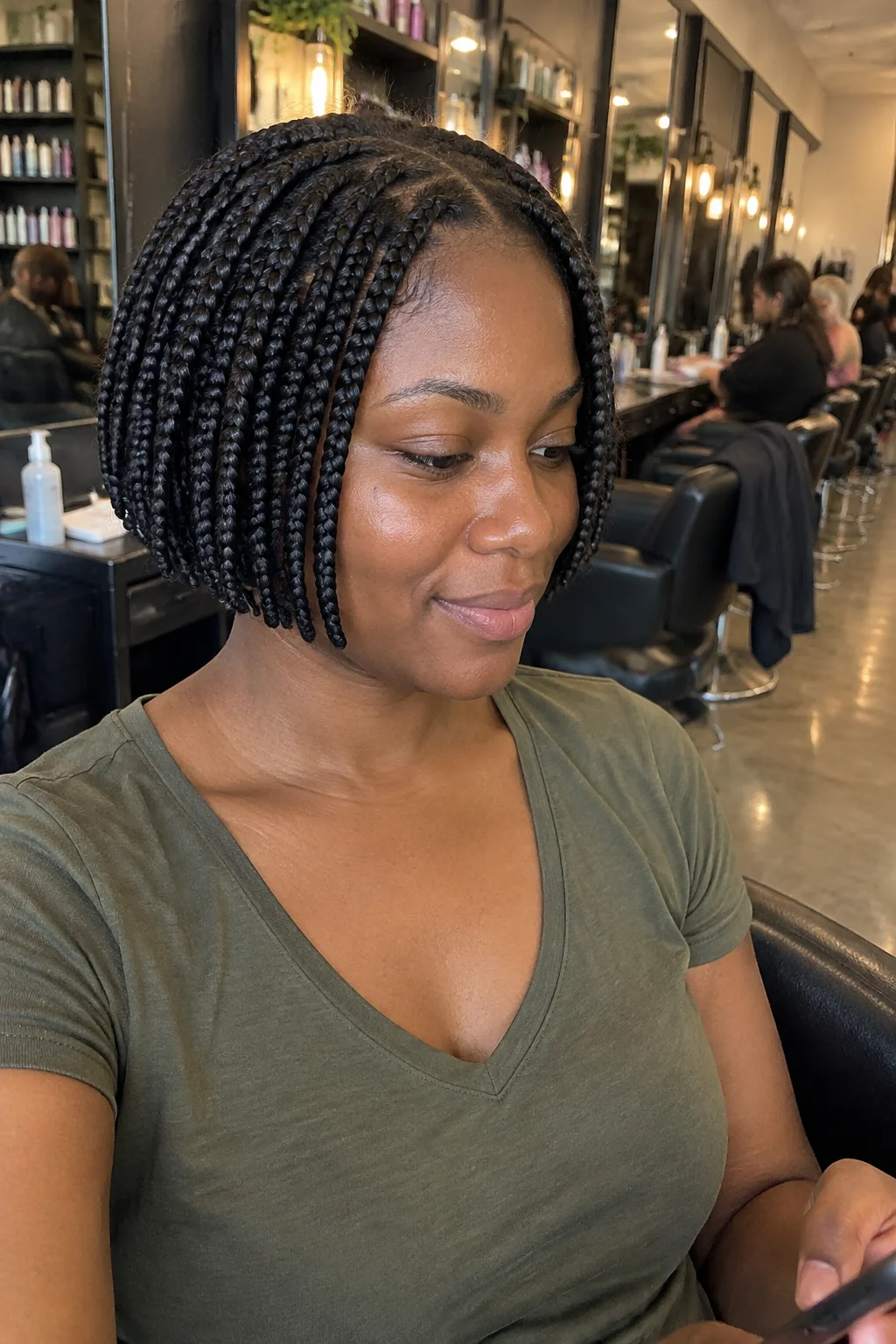
Knotless braids start the braid from the scalp, so the hair does not pull at the root and the ends are sealed inside the braid. This bob-length style works well for short natural hair that needs length for the braid to hold. It suits 4B and 4C hair with medium to thick density and an oval face. It is a poor match for very fine hair or a sensitive scalp, since the tension can cause pain.
Knotless braids in a bob need a minimum of about three inches of your own hair so the braids have enough to anchor into. Installation runs about 240 to 300 minutes for a full head. These braids last about 4 to 6 weeks before takedown. A water-based leave-in on the scalp and lengths keeps the braids from drying out, and a satin scarf protects the ends overnight. For takedown, apply conditioner, finger-detangle the shed hair, and unravel the braids from the ends up.
10. Short Crochet Curls
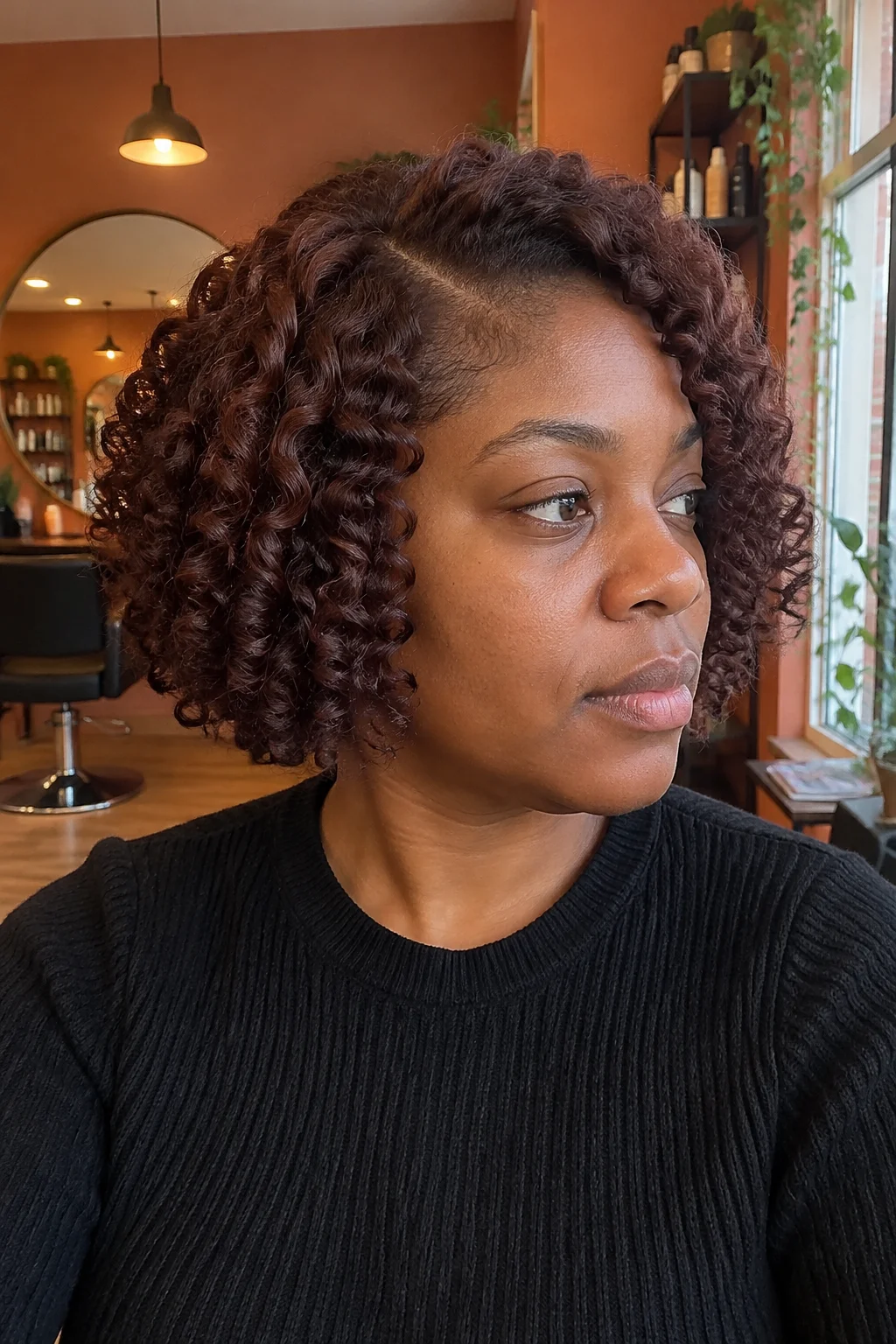
Crochet curls are attached to small braids that hold the natural hair underneath, so the ends are protected inside the curls. The style gives a full, rounded shape without adding bulk to the scalp. It suits 4B and 4C hair with a round or oval face. Skip it if your scalp is itchy or sensitive, because the synthetic curls can irritate.
Crochet curls on a bob are installed by braiding your own short hair flat and then attaching the curly hair. Your natural hair should be at least two inches long to create a secure base. Installation usually takes about 120 to 150 minutes. Crochet styles last about 4 to 6 weeks before they need to come out. Keep the braids moisturized with a water-based leave-in and sleep in a satin bonnet. When removing the style, apply conditioner, finger-detangle the shed hair, and unravel from the ends up.
11. Short Passion Twists Bob
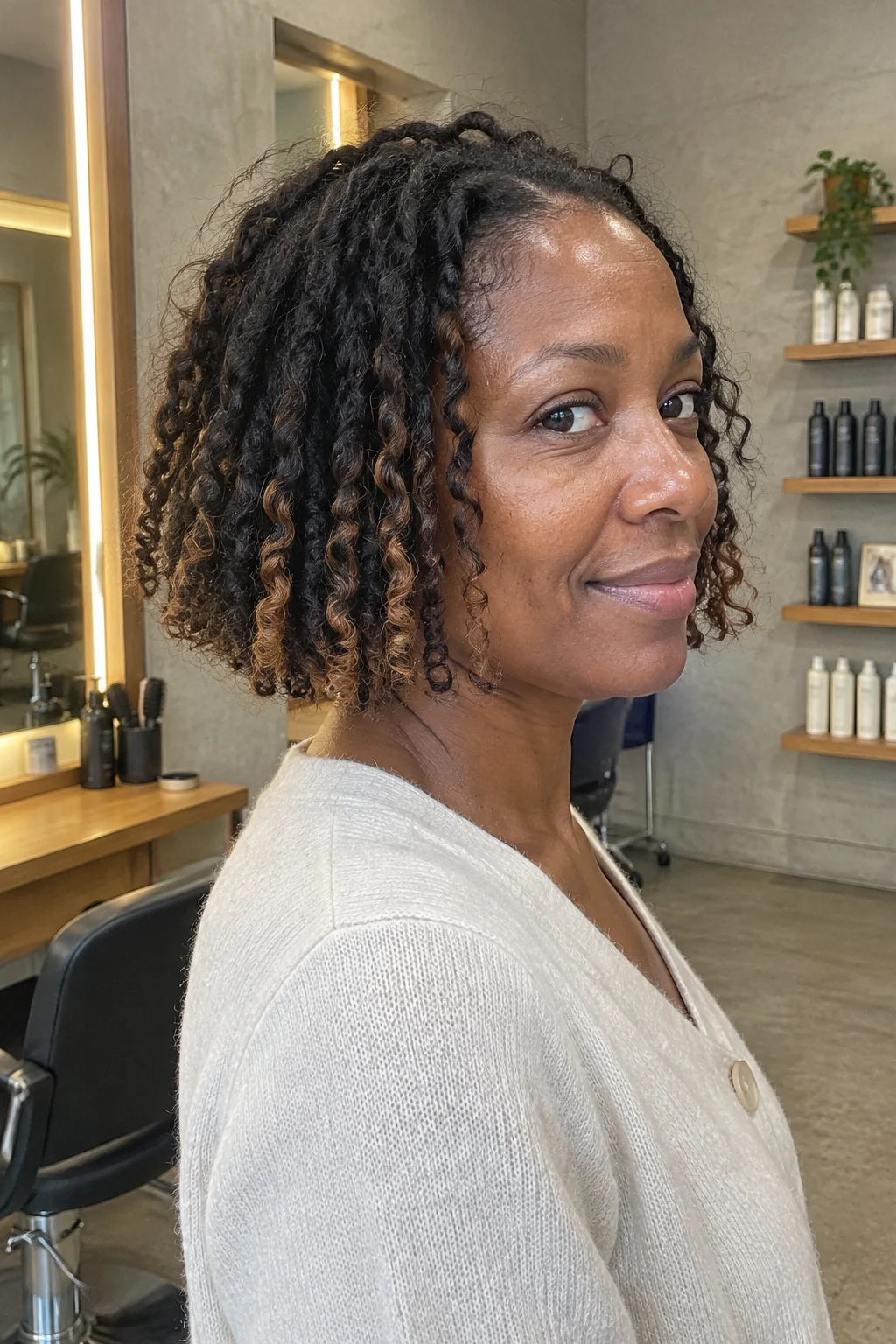
Passion twists are lightweight and soft, so they show the ends as a natural bob shape. The twists protect the ends while keeping the style easy to wear. This style suits 4B hair with fine to medium density and a heart-shaped face. It is a poor match for very dense hair, because the twists can look heavy and bulky.
Passion twists in a bob need a minimum of about two inches of your own hair to hold the twists in place. The install takes roughly 150 to 180 minutes. These twists typically last 4 to 6 weeks before takedown. A water-based leave-in helps keep the waves soft, and a light oil on the scalp prevents dryness. Sleep in a satin bonnet to protect the twist texture. At takedown, apply conditioner, finger-detangle the shed hair, and unravel each twist from the ends up.
12. Faux Locs Bob
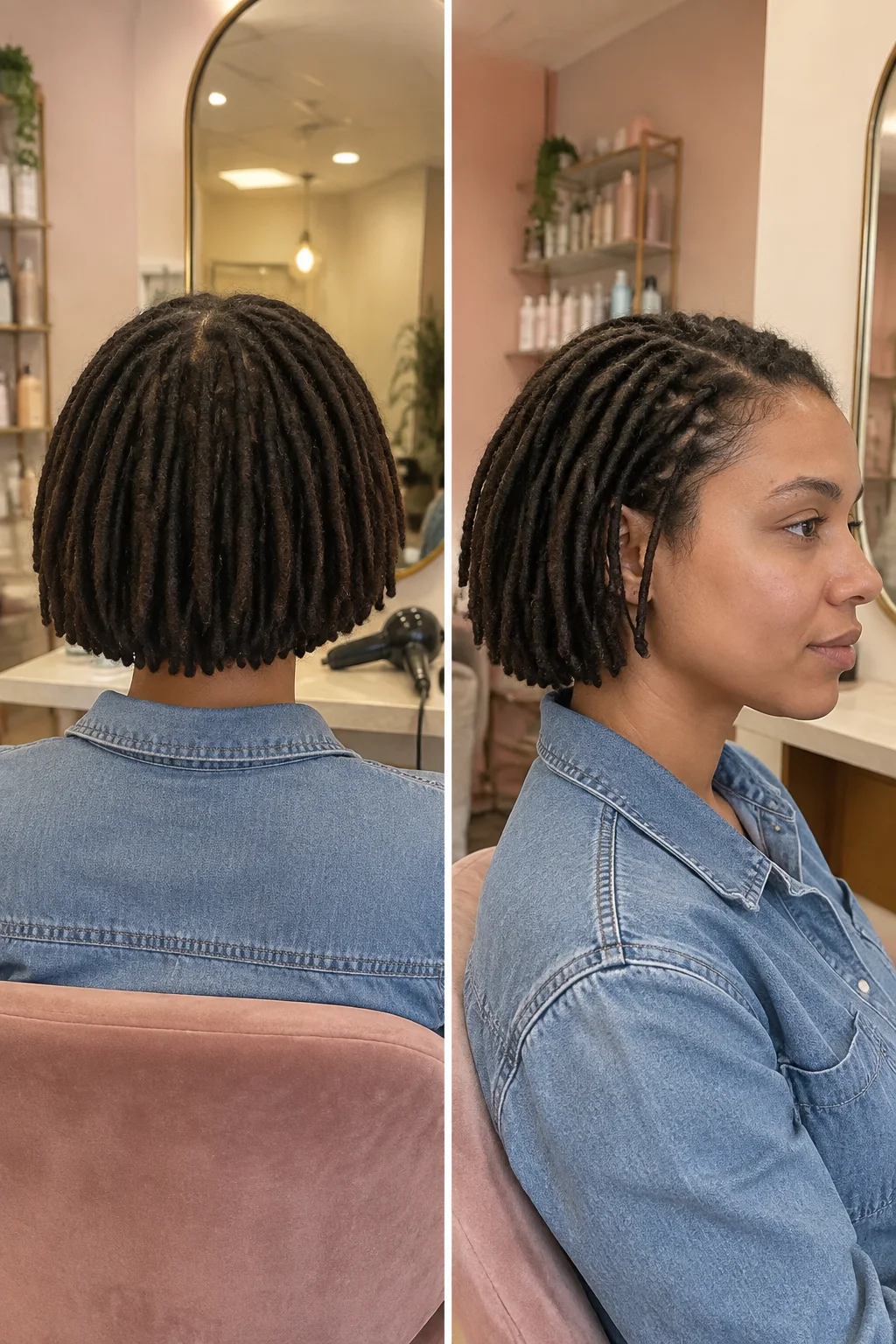
Faux locs are wrapped around the natural hair, so the ends are sealed and protected. They suit short natural hair that needs length and a bold shape. Of all natural protective hairstyles, short hair gets the most benefit from locs, since the wraps hold the ends together. This style suits 4C hair with a strong curl pattern and a square or oval face. Skip it if you want a soft, flowing look, since locs are structured and matte.
Faux locs need at least about three inches of your own hair so the locs can be wrapped securely. Installation takes about 180 to 240 minutes for a full head. Locs are worn 4 to 6 weeks before takedown, depending on how they are maintained. Use a light oil on the scalp and a water-based leave-in on the locs to keep them soft. Wear a satin bonnet at night. When removing them, apply conditioner, finger-detangle the shed hair, and unravel the locs from the ends up.
13. Tuck-and-Pin Twisted Updo
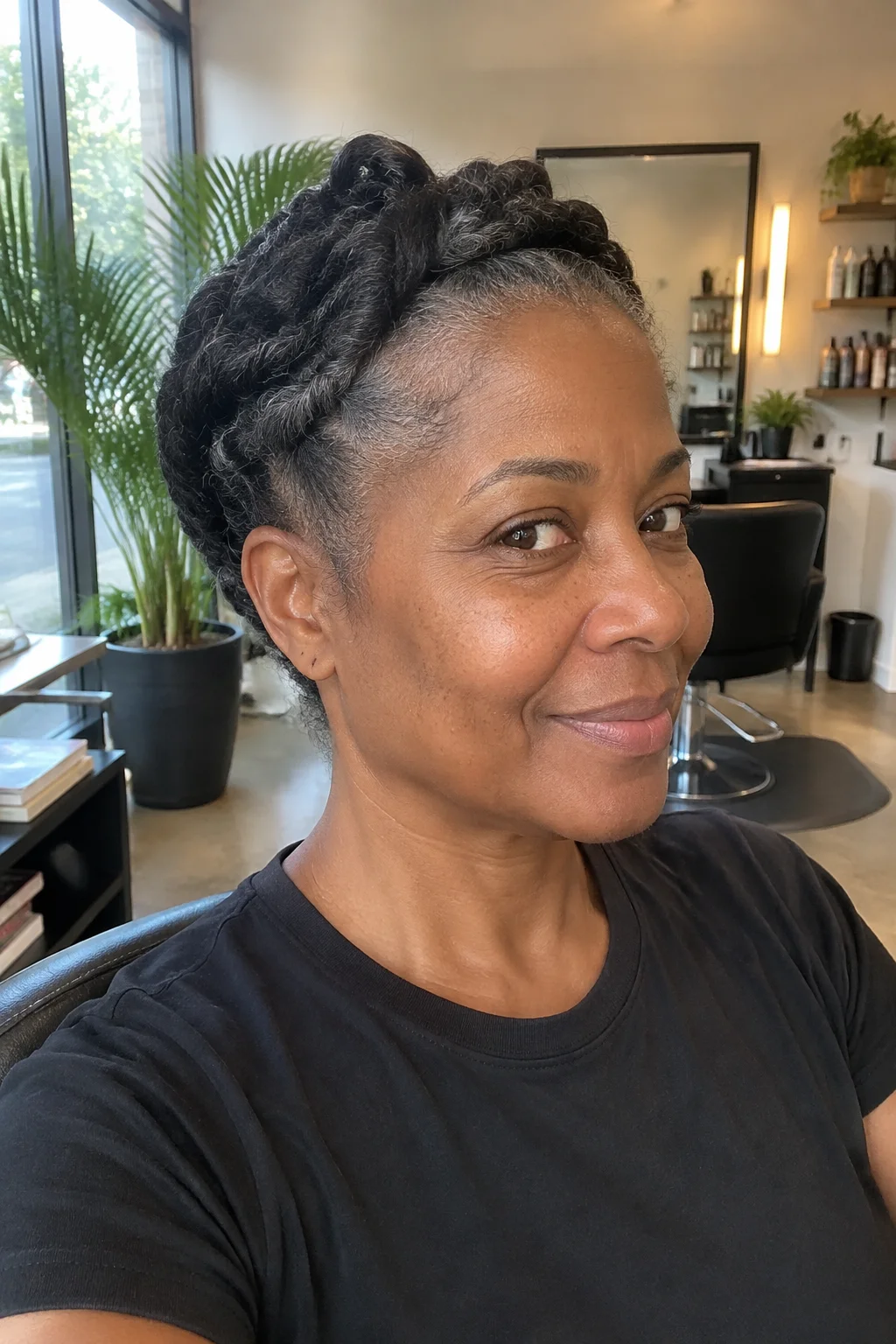
The updo lifts the twists off the nape and collar, so the ends stay pinned and protected. It works well for short natural hair because the twists are rolled into a compact shape. Protective hairstyles for short hair often fail at the nape, but this updo keeps that area clear. This style suits 4B and 4C hair with good density and an oval face. It is a poor match for very fine hair, because the pins can slip.
A tuck-and-pin updo works on short hair about two to three inches long, which is enough to roll the twists into a raised crown. Setting the twists and pinning the updo takes about 90 to 120 minutes. The style can be worn 1 to 2 weeks before the twists are removed. A water-based leave-in applied before rolling keeps the twists moisturized. Wear a satin bonnet overnight to protect the pinned crown. For takedown, unpin, apply conditioner, finger-detangle the shed hair, and unravel the twists from the ends up.
14. Kinky-Curly U-Part Wig Bob
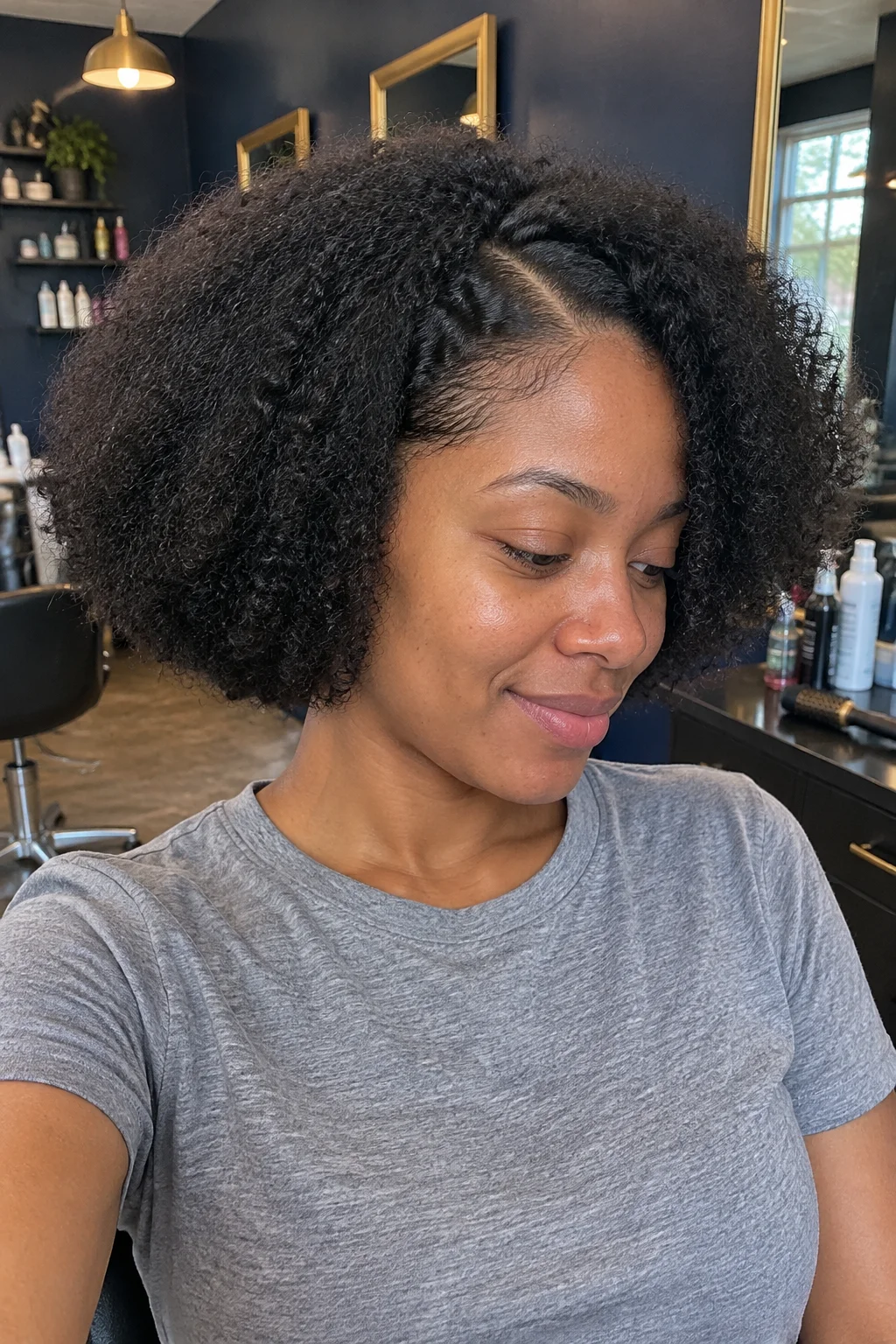
A U-part wig covers the ends with a cap of curls, so the natural hair underneath stays protected. The leave-out blends the wig with the natural hair at the part. This style suits 4B and 4C hair with a round or oval face. Skip it if you want to wear your natural hair out most days, since the wig adds structure.
A U-part wig with a leave-out works on short natural hair that is at least one to two inches long, since the leave-out is blended into the part. Installation takes about 60 to 90 minutes, including cornrowing the base. Wigs are worn with the cap removed weekly for scalp care, and the style can be worn for several weeks. Use a water-based leave-in on your leave-out and a light oil on the scalp. Wear a satin bonnet at night. When removing the wig, apply conditioner to the leave-out and finger-detangle the hair, avoiding pulls near the ends.
15. Satin Headwrap over Mini Twists
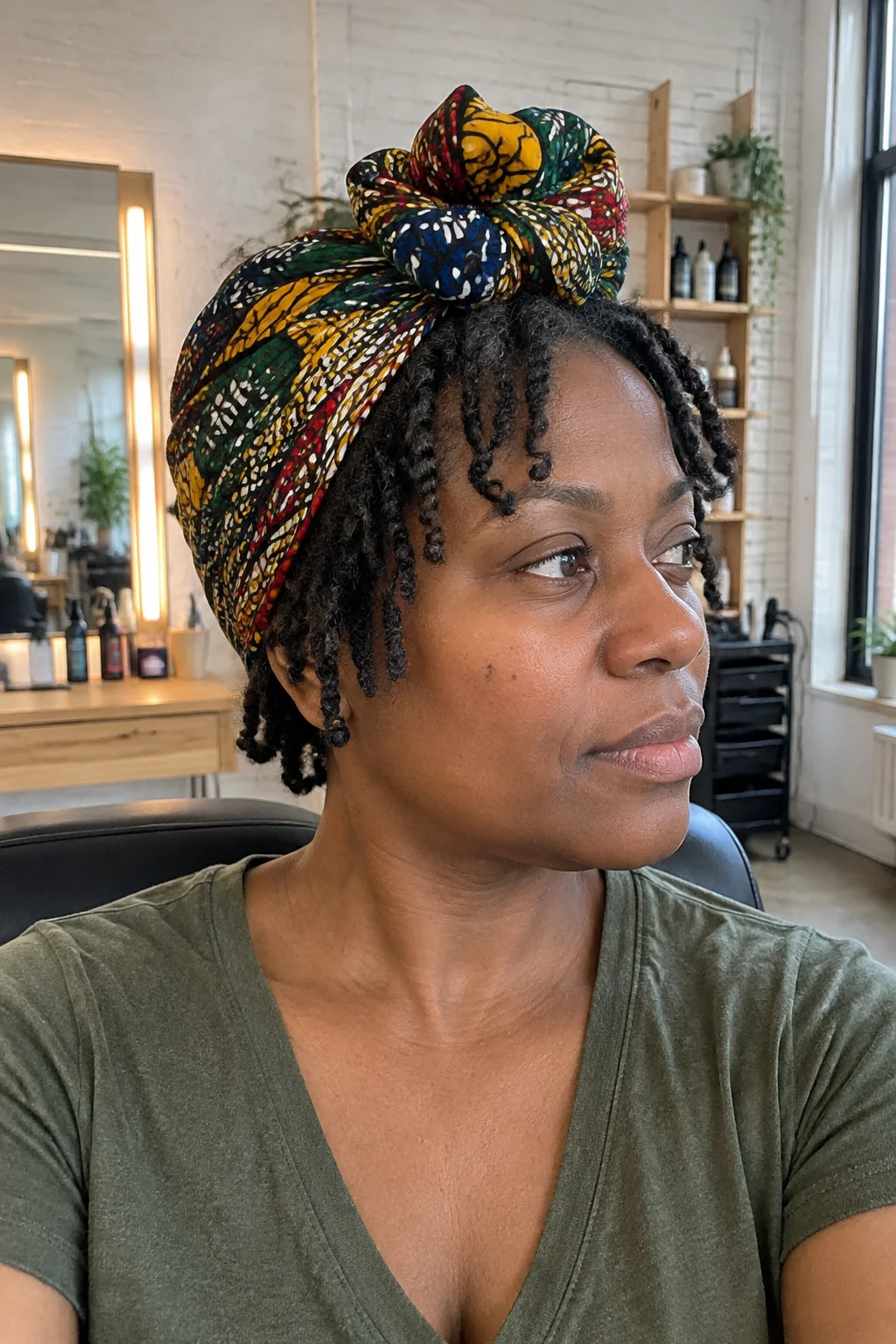
A satin headwrap covers the twists and the ends, so friction from pillows and collars is reduced. It works well for short natural hair that is already in mini twists. This style suits 4C hair with medium to thick density and a round face. It is a poor match for very dry hair, since the wrap can trap moisture against the scalp if it is worn all day.
Mini twists under a headwrap need about three inches of your own hair so the twists are secure enough to wrap. The twists take roughly 180 to 240 minutes to install. Twists stay in place for about 4 to 6 weeks before takedown, and the headwrap can be changed daily. Use a water-based leave-in on the twists and keep the scalp lightly oiled. At night, swap the wrap for a satin bonnet to protect the twists. For takedown, apply conditioner, finger-detangle the shed hair, and unravel from the ends up.