15 Trending Calico Hair Peekaboo Ideas for Long Hair
Calico hair borrows its pattern from the cat: uneven patches of black or deep brown, ginger or copper, and cream or blonde. On long hair, the pattern gets a lot more interesting when you place some of those colors out of sight. A peekaboo layer hides under your top section and shows up when you move, tuck your hair behind an ear, or put it up.
Peekaboo also makes calico easier to live with. Only a small share of your hair gets lightened, so you can wear it subtle at work and let the colors show on weekends. The trade-off is that cream and blonde patches on dark hair need bleach, which should be done by a colorist, not from a box.
Table of Contents
1. Classic Black, Ginger and Cream Calico Peekaboo
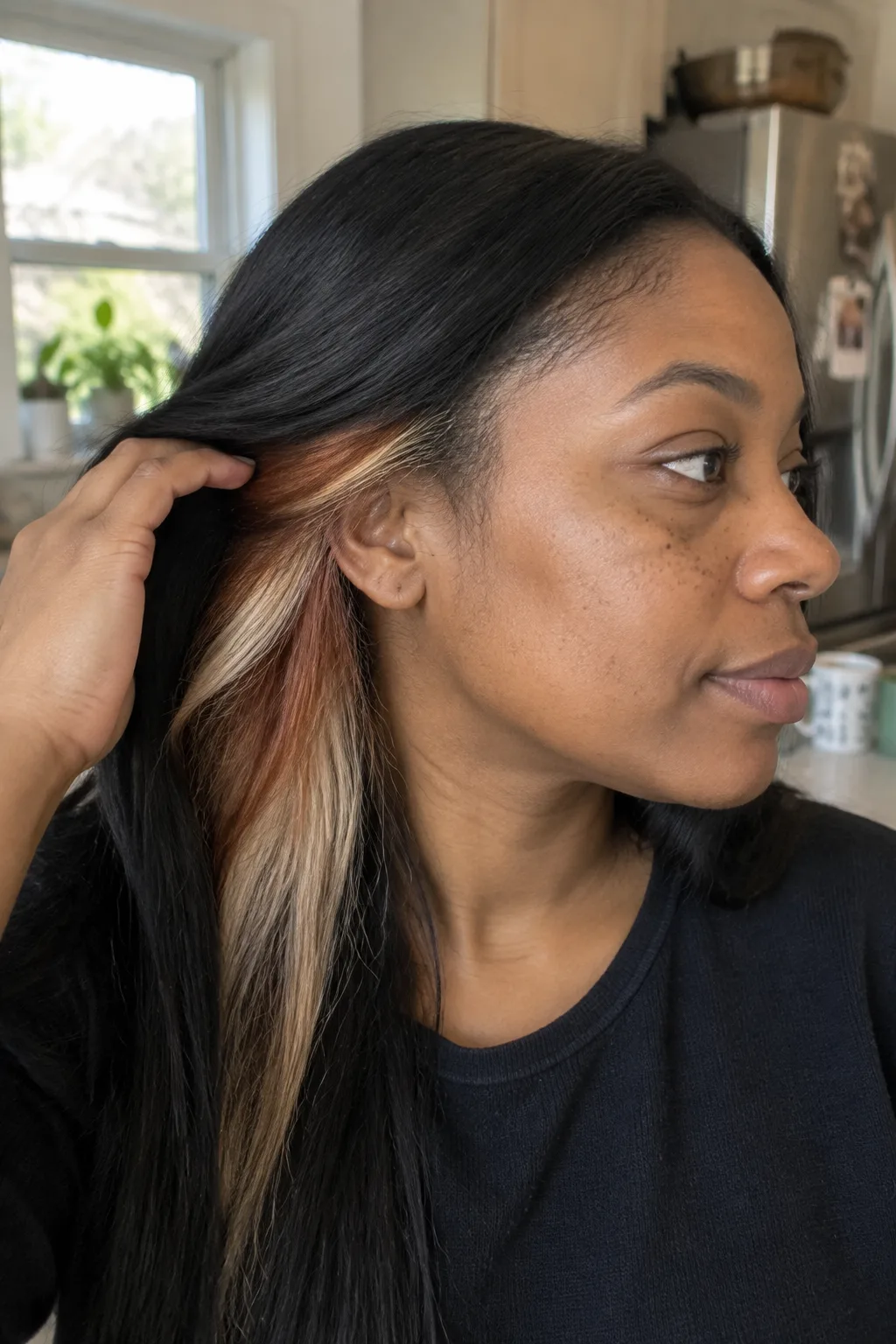
This is the standard version. Your top layer stays black or near-black, and the underneath section carries irregular blocks of ginger and cream instead of one even stripe. It suits medium to thick hair with natural black or dark brown color, because the contrast reads clearly against a dark canopy. Fine, thin hair does not hide enough to keep the patches secret.
Expect a full-day appointment, since the cream needs bleach and the ginger usually needs a lift first too. Book a touch-up every 8 to 10 weeks for the cream blocks, and wash with cool water no more than 2 to 3 times a week to slow the ginger from fading.
2. Hidden Underlayer Calico Panel
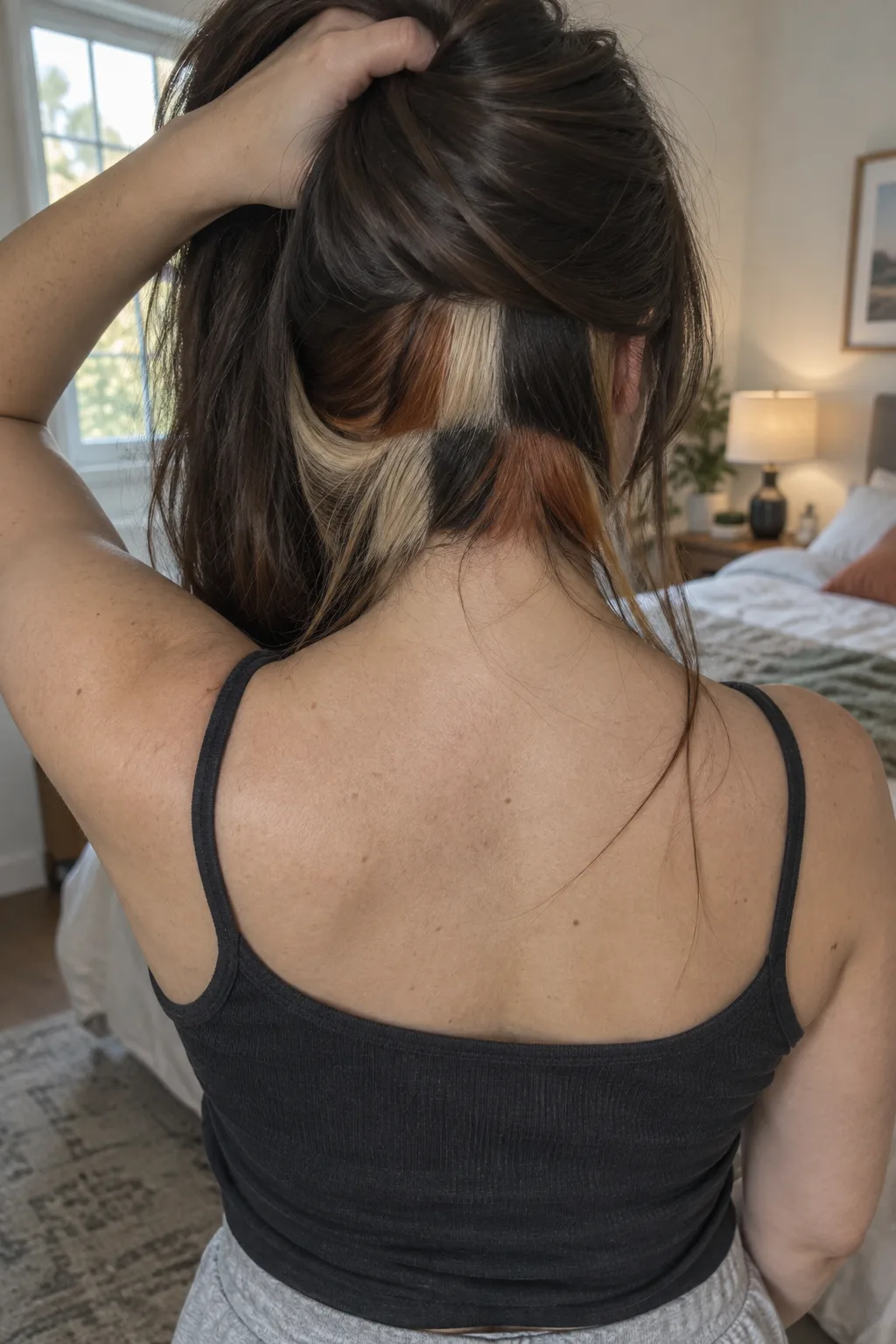
Here the color sits in one wide panel, roughly 2 to 3 inches tall, sectioned from ear to ear at the back of your head. Hair down, it looks like plain dark hair. Hair up or swept to one side, the calico panel shows. It suits anyone who needs a conservative look at work, and it works on straight, wavy, or curly hair of any thickness.
It does not suit very short layers, which can flip up and expose the panel by accident. Because less hair is colored, root regrowth is easy to hide, and a retouch every 10 to 12 weeks is usually enough. Ask your colorist to keep the panel above your nape so it is not rubbing against your collar all day.
3. Copper Peekaboo on Dark Brown Layers
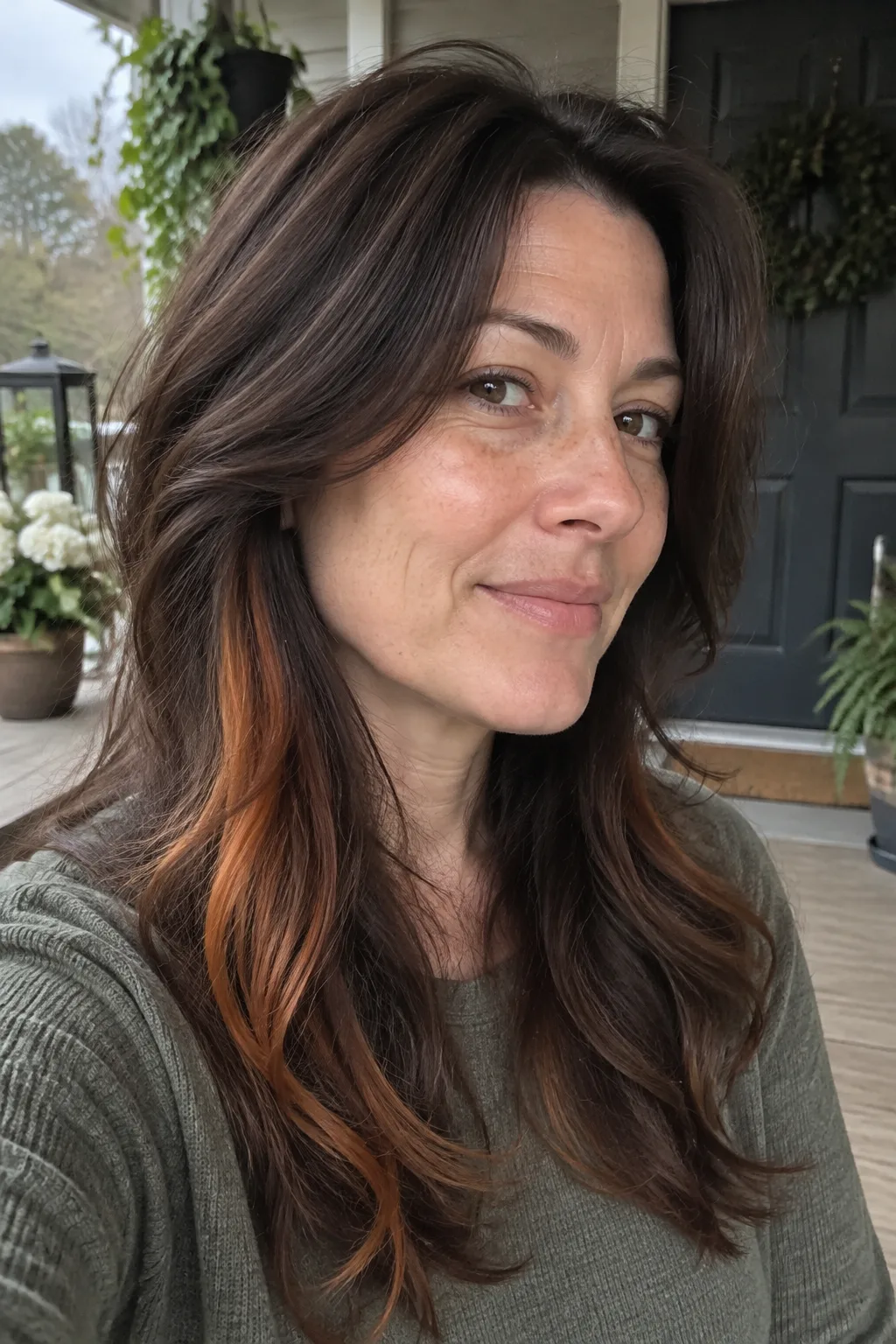
If cream patches feel like too much bleach, start with copper. Dark brown hair lifts to copper with less damage than it does to blonde, so you can keep a softer calico effect with two tones and a small cream accent near the front. Long layers help, because each layer lets a different strip of copper slip through.
It is a poor match for hair that is already heavily damaged or chemically straightened, since lifting even a few levels can cause breakage. Copper fades fast, so plan a gloss or color-depositing conditioner every 3 to 4 weeks and keep your wash water lukewarm. Skip purple shampoo here, because it cancels warm tones.
4. Platinum Patches on Waist-Length Black Hair
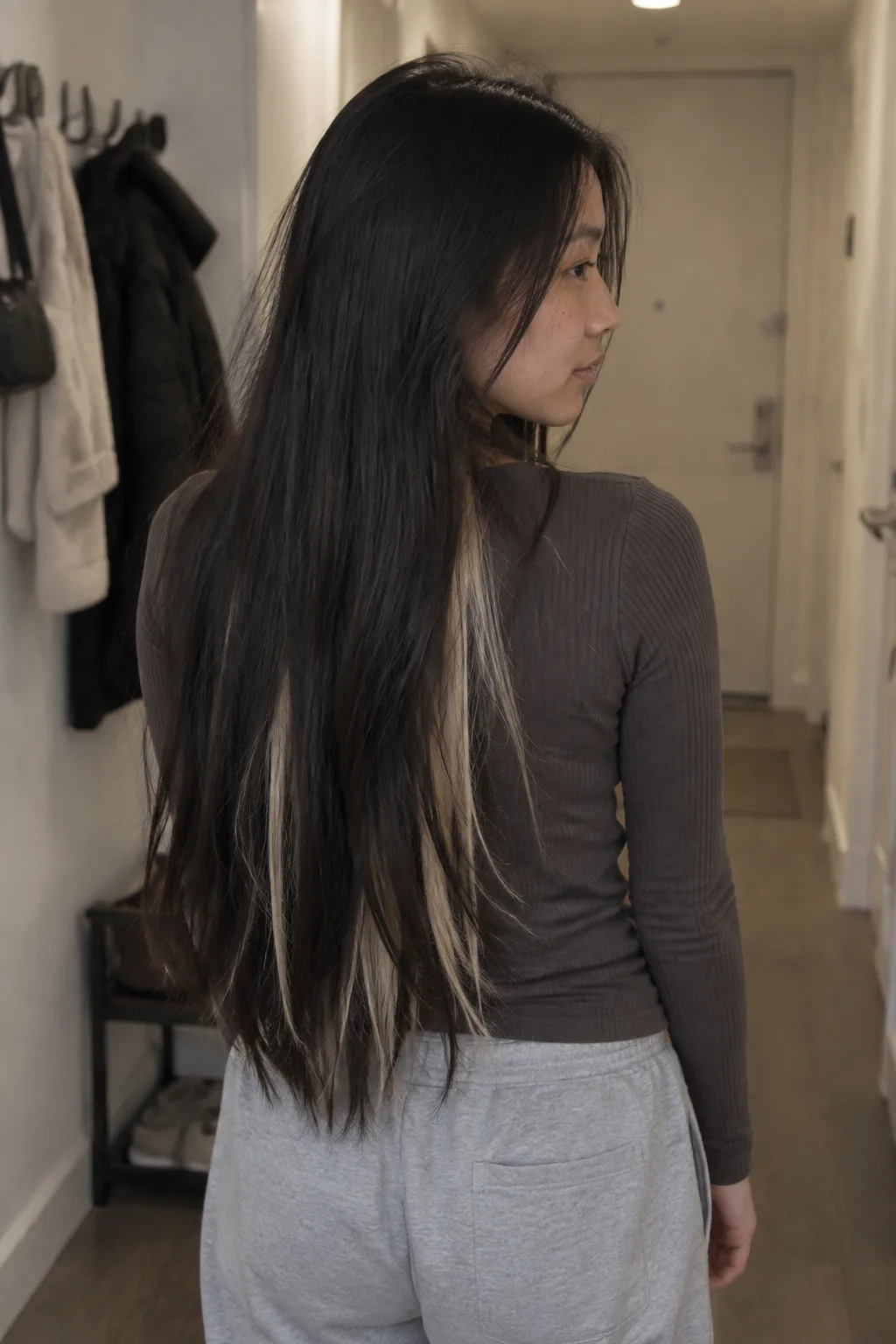
This is the highest-contrast version. Jet black hair carries a few hand-painted patches of platinum or pale cream, mostly underneath, with one or two ginger blocks to hold the calico look. Black hair needs to be lightened through several stages to reach platinum, so it has to be done by a professional, often over two visits spaced at least 4 to 6 weeks apart.
It suits strong, healthy hair with no previous box dye. It does not suit fine or brittle hair, because waist-length strands carry years of wear and bleach can finish them off. Use a bond-repair treatment weekly, and use purple shampoo only on the platinum patches, once every 2 weeks, keeping it off the ginger.
5. Calico Money Piece Frame
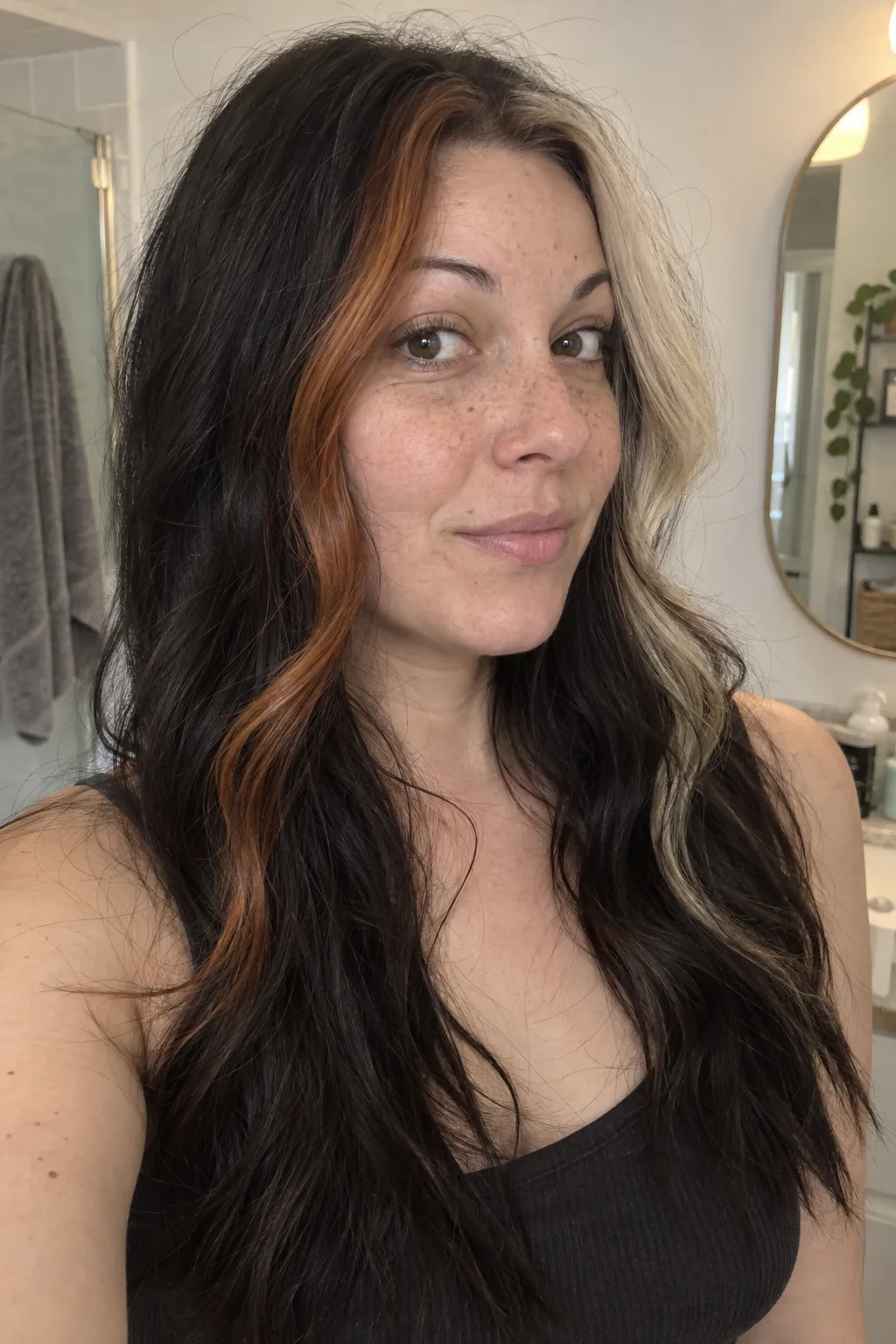
A money piece is a pair of bright strands around your face. In calico form, one side is cream, the other ginger, and the rest of your hair stays dark, with a small hidden panel behind your ears. It brightens your complexion and works well on oval and long face shapes. If your hairline is thin or you have a lot of gray at the temples, the contrast can look patchy rather than planned.
The front pieces grow out visibly, so schedule a touch-up every 6 to 8 weeks. Because the sections are small, the appointment is shorter, often 2 to 3 hours. Tuck the strands behind your ears in the morning and they will peek out by lunch.
6. Calico Peekaboo with Curtain Bangs

Curtain bangs part in the middle and sweep to each side, which gives you a natural spot to place a ginger or cream strand underneath. The color flashes only when the bangs move. This works best on straight to slightly wavy hair and on round or square faces, where the swoop softens the jaw.
It does not suit very coarse, tight curls, because bangs shrink as they dry and the placement can shift. Trim the bangs every 4 to 6 weeks to keep the curve at cheekbone level. Style them with a round brush and 5 minutes of low heat so they do not flatten against your forehead.
7. Wavy Calico Peekaboo with Beachy Waves
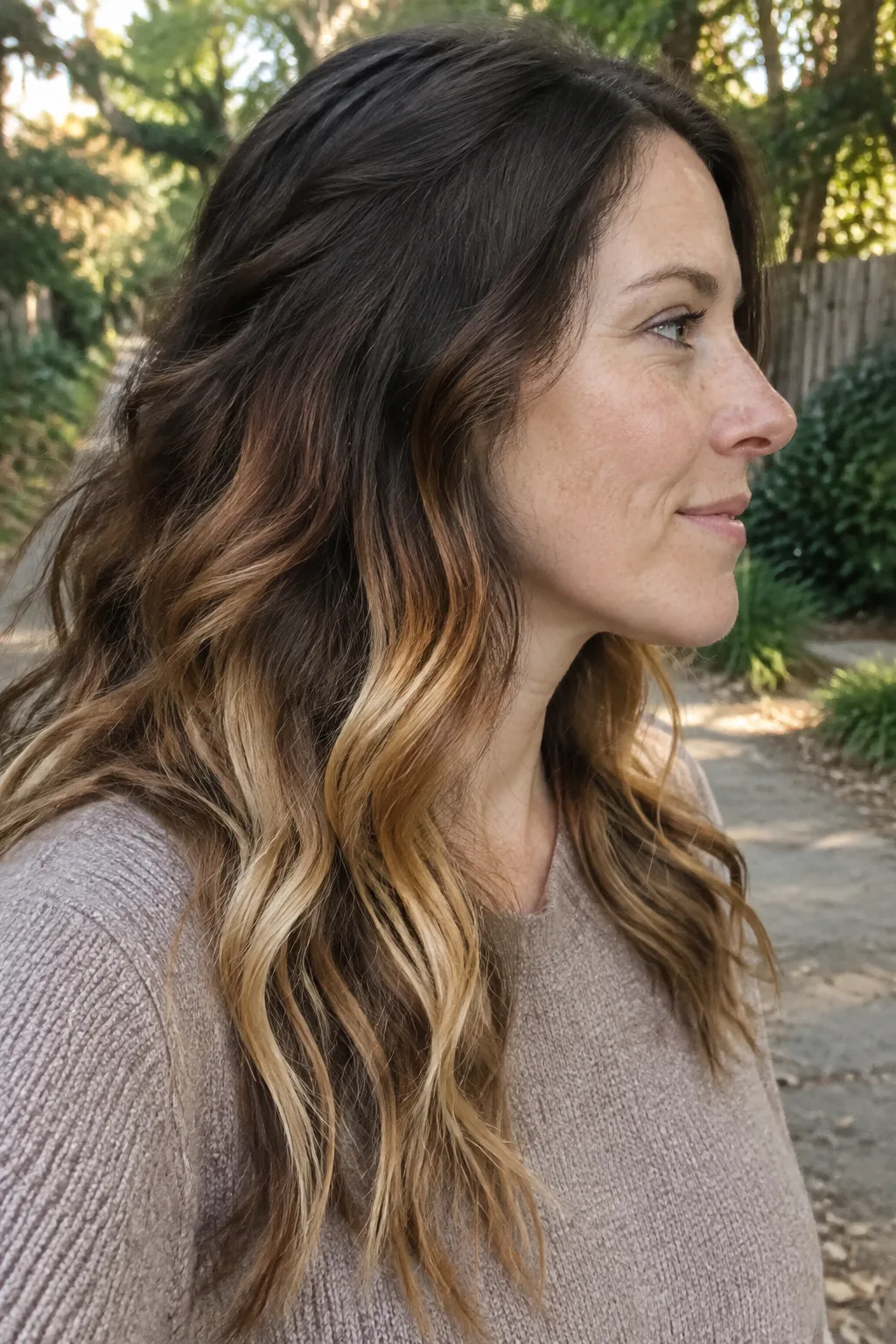
Waves scatter color, which suits calico well. Each bend reveals a different patch from the hidden layer, so the pattern looks random and unplanned. Natural 2A to 2C waves are the best canvas, and straight hair can fake it with a 1.25-inch curling iron. Very flat, fine hair will not hold enough curve to show the color.
To make waves, wrap 1-inch sections around the iron for about 10 seconds each, then leave the ends out. Total styling time is about 15 minutes. Apply a heat protectant first, since the lightened patches are more porous and take heat damage sooner than your dark top layer.
8. Calico Peekaboo Braids
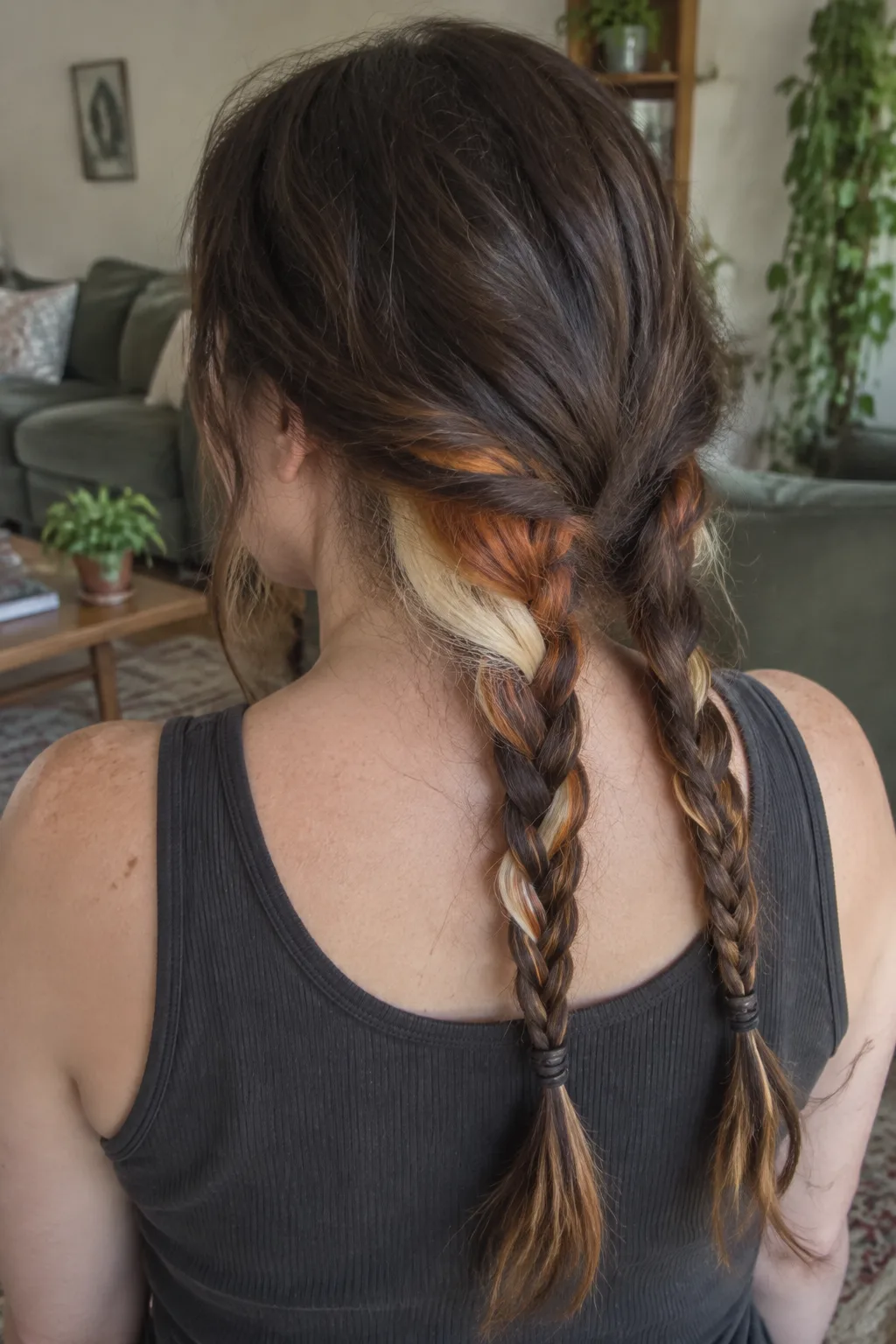
Braiding turns a hidden layer into a visible pattern. Color a few underneath strands ginger and cream, then pull them into a loose side braid or two thin face-framing braids, so the colors show in the weave. It suits straight and wavy hair best, and it gives you a way to show the color without leaving it out all the time.
It is harder on very fine hair, where braids tend to slip. Plan 10 to 15 minutes for a simple three-strand braid, and keep it loose near the roots to avoid tension on your hairline. Brush out tangles before bed and sleep on a satin pillowcase so the colored strands do not rough up.
9. Auburn and Cream Calico on Dark Hair
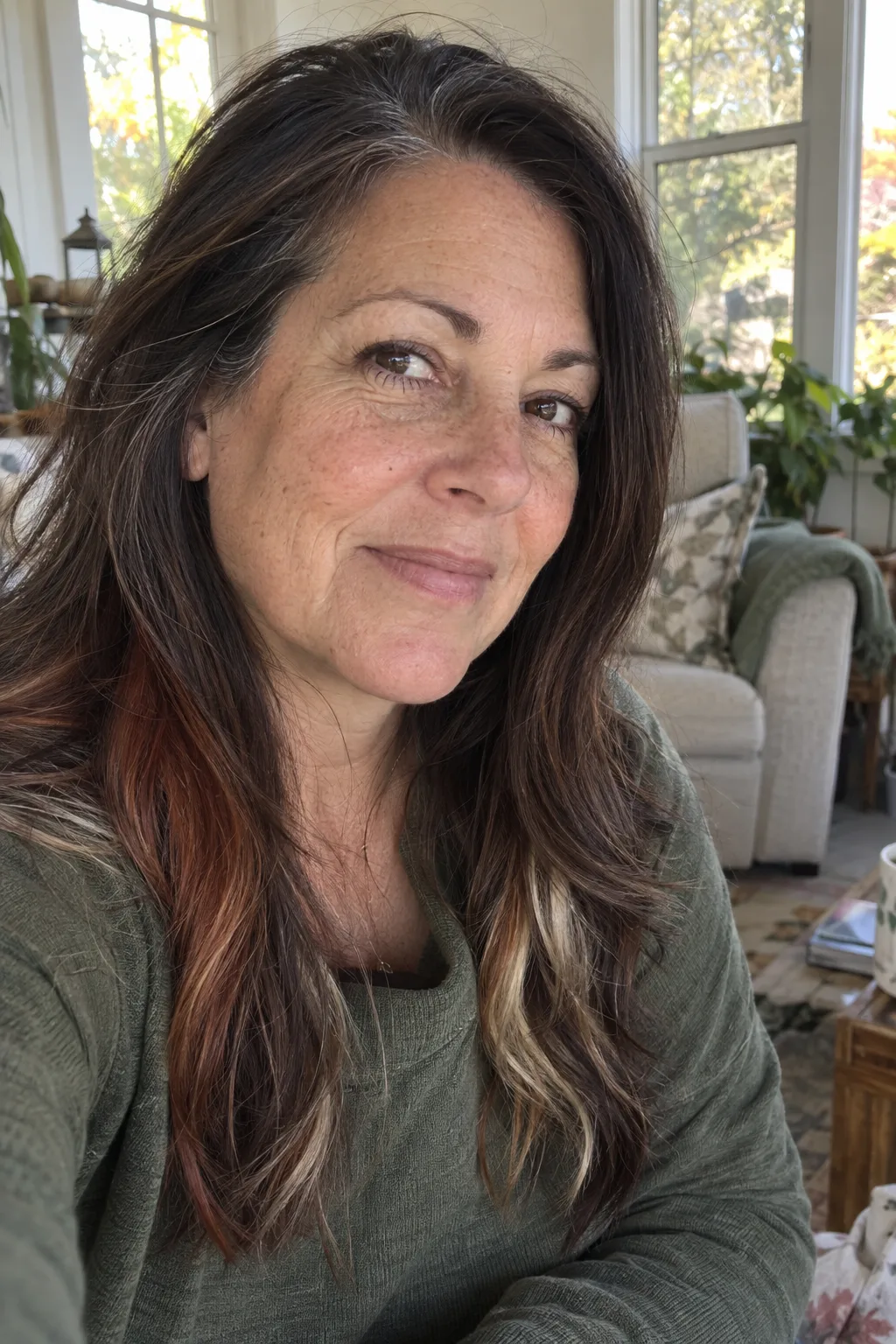
Auburn replaces bright ginger with a deeper red-brown, which blends better with dark brown or black hair and makes the cream patches look warmer. It suits olive and deep skin tones and anyone who wants calico without a big jump in brightness. Pale, cool-toned skin can look washed out against strong red tones.
Red pigments are small and wash out quickly, so expect the auburn to dull noticeably within 3 to 4 weeks. Use a red-depositing conditioner every second wash, rinse in cool water, and skip purple shampoo, which takes warmth out of red shades. Refresh cream blocks every 8 to 10 weeks.
10. Calico Nape Peekaboo with High Ponytail
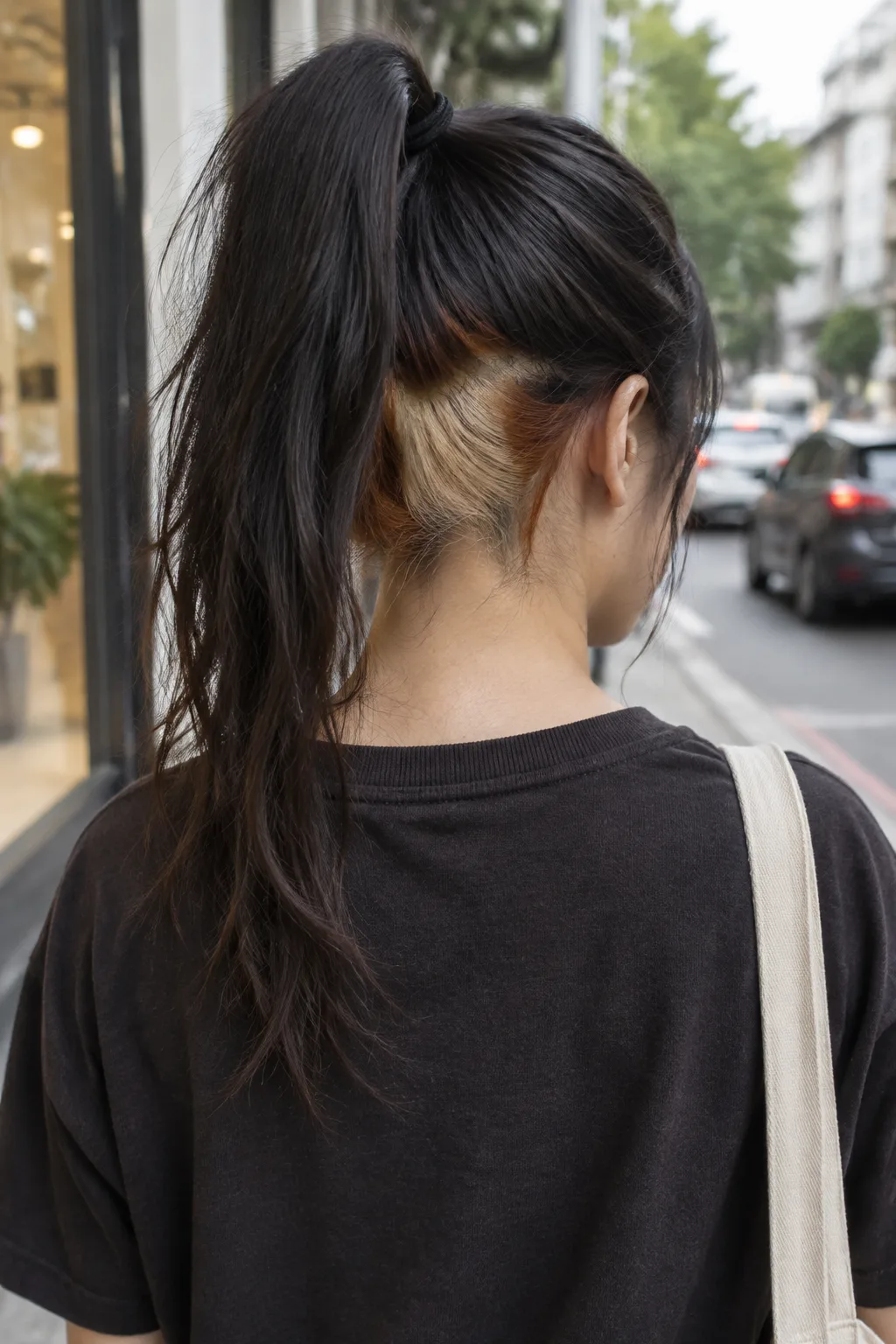
The color sits at the nape, in the layer closest to your neck, so it only shows when you lift your hair into a high ponytail. Down, it is invisible. It suits anyone who wears their hair up often, such as for work, sport, or hot weather, and who wants the color to feel private.
It is a poor choice if you rarely wear ponytails, since you will pay for color nobody sees. The nape also has finer hair that lightens faster, so ask your colorist to watch the timing. Use a soft fabric tie, not a thin elastic, and move the ponytail position every few days to prevent breakage in one spot.
11. Curly Calico Peekaboo
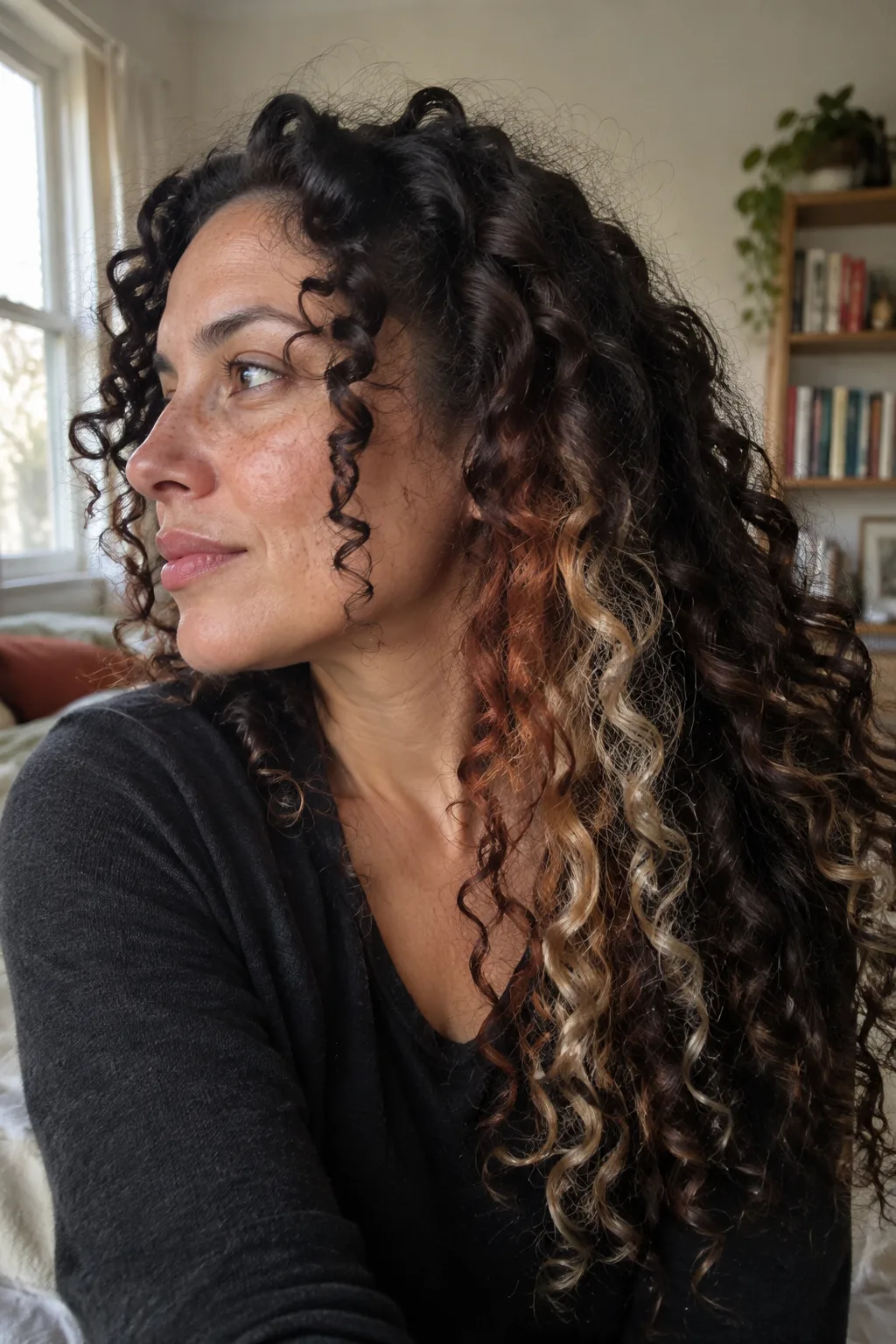
Curls are good at hiding and revealing color, because each ringlet lifts away from the others and exposes what is beneath. Ask for the patches to be placed in the underlayers and mid-lengths of your curls, not at the roots, so the pattern looks natural. It suits curl types 3A to 4A with healthy, moisturized strands.
Bleach loosens curl pattern and can leave curls dry, so skip it if your curls already feel brittle or if you have used relaxers. Deep condition weekly for 20 to 30 minutes and use a leave-in cream when you style. Lightened curls may need a protein treatment every 4 to 6 weeks, but check with your colorist on the right strength.
12. Soft Honey and Chestnut Calico Blend

This is the gentlest version. Instead of black, ginger, and cream, you get chestnut, honey, and a pale gold, kept within 2 to 3 levels of each other. It suits light to medium brown hair and anyone who wants calico without harsh lines. Because the lift is small, it is much easier on your hair than the dark versions.
It does not give the dramatic contrast that most people picture when they search for calico hair. If you want sharp patches, choose another look. Upkeep is light, with a gloss every 6 to 8 weeks and a touch-up every 12 weeks or so. Use a sulfate-free shampoo and a UV-protecting spray in summer to keep the honey from turning brassy.
13. Calico Peekaboo Half-Up Bun
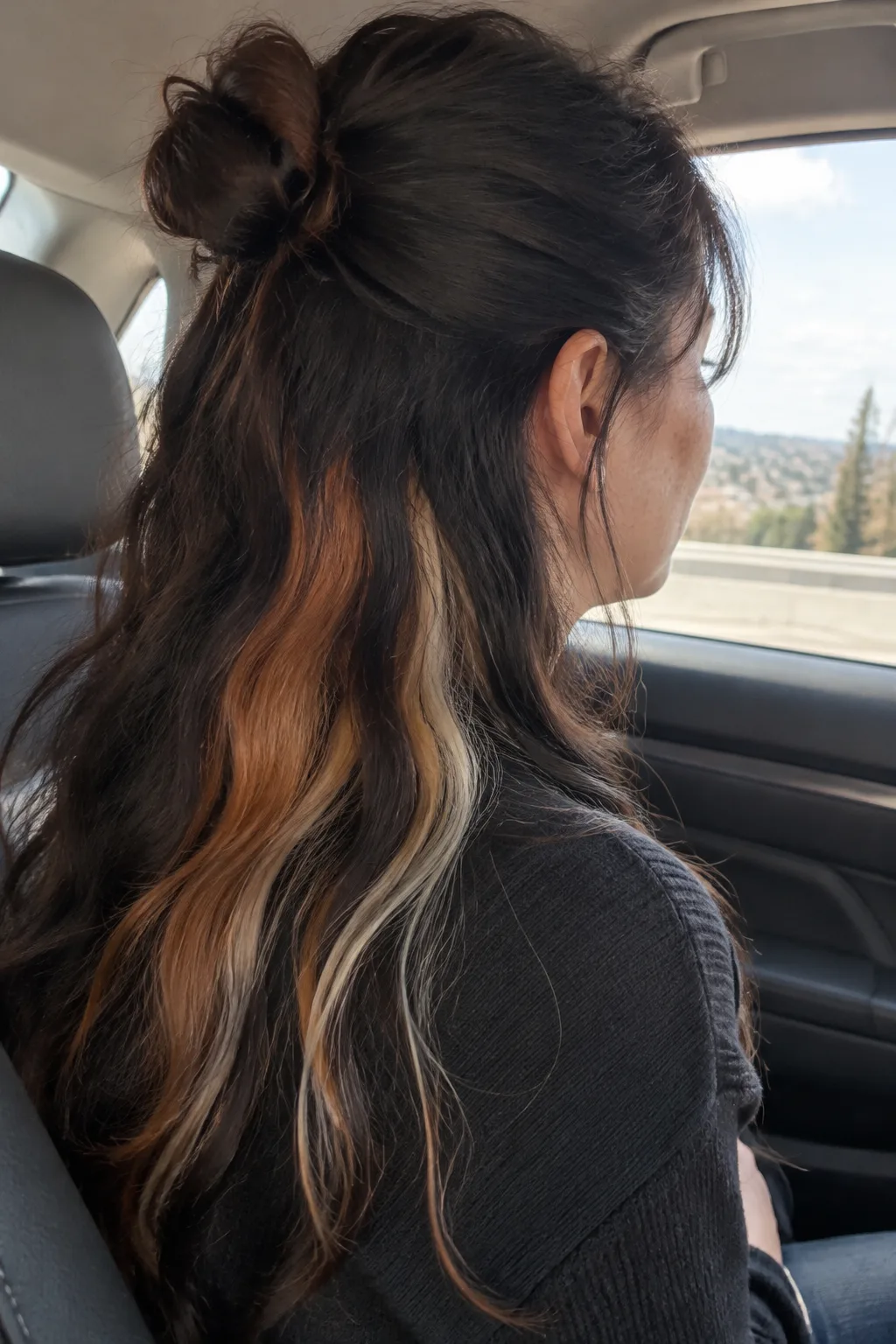
A half-up bun lifts the top section and exposes the hidden layer beneath it, while the bottom half hangs loose. It suits long hair with at least 8 inches of length past the crown, and it works on both straight and textured hair. Round and heart-shaped faces get extra height from the bun.
It is less useful on very thin hair, where a small bun leaves no volume. The style takes about 5 minutes with a claw clip or a hair tie and a few pins. Skip tight elastic bands around lightened hair, because bleached strands snap more easily, and loosen the bun at night so it does not pull on your scalp.
14. Sleek Straight Calico Peekaboo
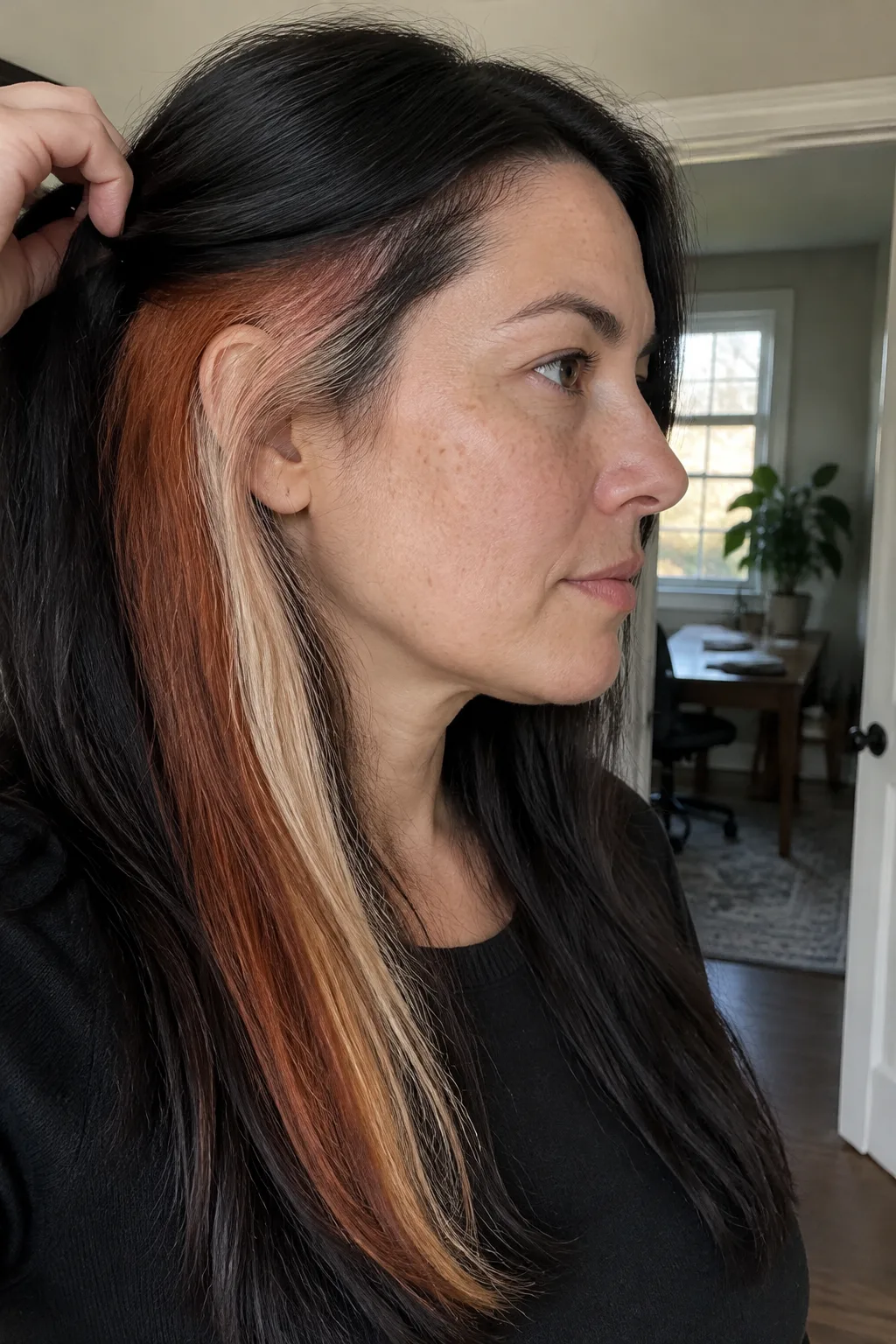
Straight hair shows color blocks most clearly, so this version gets the sharpest calico edges. The patches sit in clean sections underneath, and a sideways part or a tucked strand lets them show. It suits straight and fine to medium hair, and a blunt or lightly layered cut keeps the lines clean.
Straight hair also shows damage more than any other texture, so frizz and split ends on lightened sections are easy to spot. Use a flat iron at 300 to 350 degrees Fahrenheit, never above, and always with heat protectant. Trim every 8 to 10 weeks, and use a bond-repair mask every 2 weeks to keep the lightened sections smooth.
15. Calico Peekaboo Dipped Ends
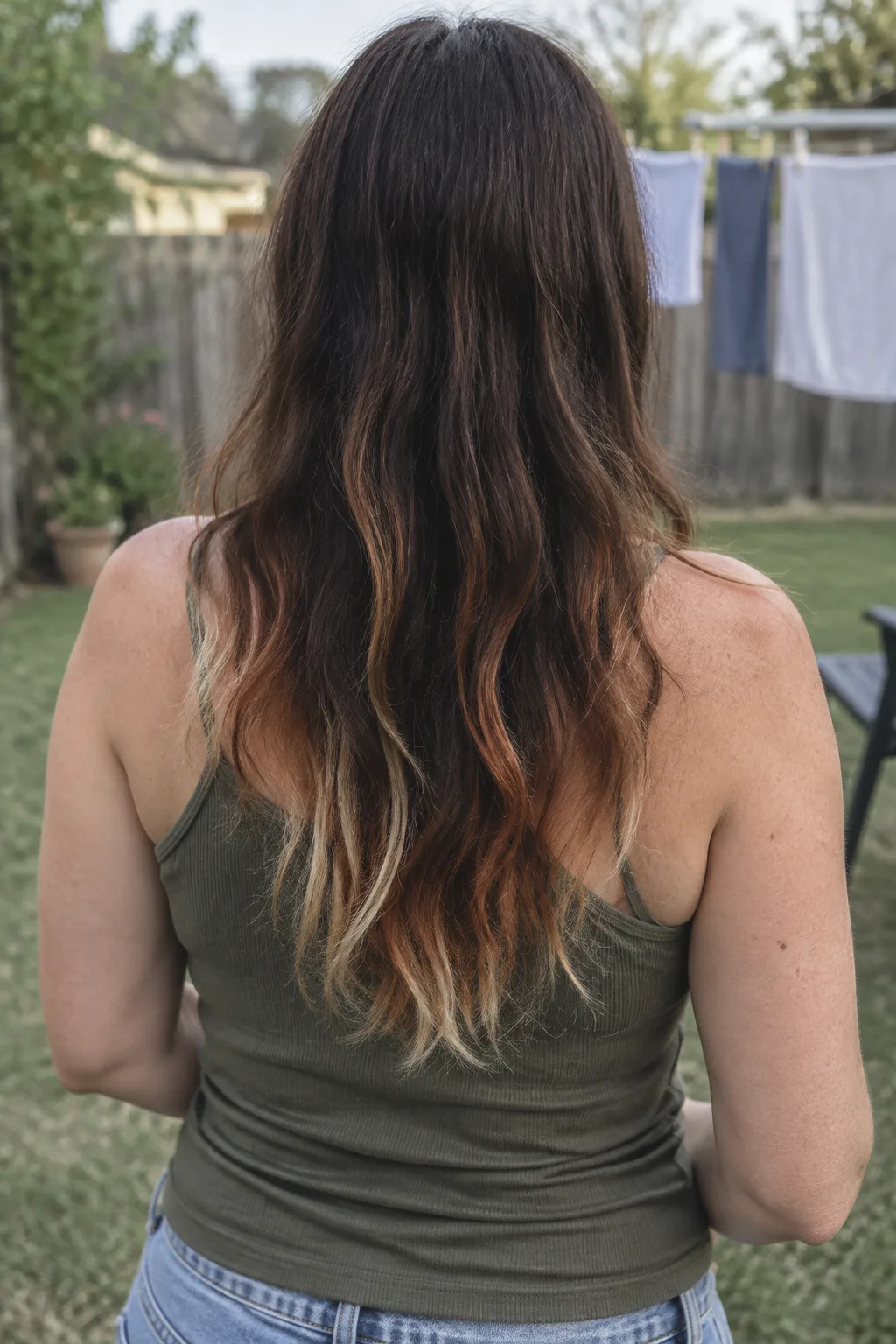
Instead of color at the roots, the patches sit only on the last 4 to 6 inches of the hair, in the underlayers, so the calico shows at the ends when your hair swings. Since the color starts far from your scalp, regrowth is never visible, which makes this the lowest-maintenance option here. It suits long hair that you are happy to trim later.
The downside is that your ends are the oldest and weakest part of your hair, so bleach hits them hardest. Skip it if they are already split or thin. Trim 1/2 inch every 8 weeks, use a leave-in with heat protection, and expect to cut the colored ends off within 6 to 9 months, which makes this a good trial before you commit to a bigger change.