17 Easy Wavy Hair With Bangs Ideas for Medium Hair
Wavy hair and bangs can work well together, but only if the fringe matches your wave pattern. Waves shrink and bend as they dry, so a bang cut at eye level can end up at your eyebrows by lunchtime. Medium hair, roughly chin to collarbone, gives you enough length to keep the waves loose while the fringe does the framing.
Each look below says who it suits, who should pass, and what the upkeep costs in minutes, tools, or salon visits. Most bang trims take 5 to 10 minutes and many salons do them free between cuts, so ask before you reach for the scissors at home.
Wave pattern matters more than any trend here. If your hair is closer to 2A or 2B, you can cut bangs fairly short. If it bends tighter at 2C or 3A, leave extra length and have the fringe cut dry so you can see where it settles.
Table of Contents
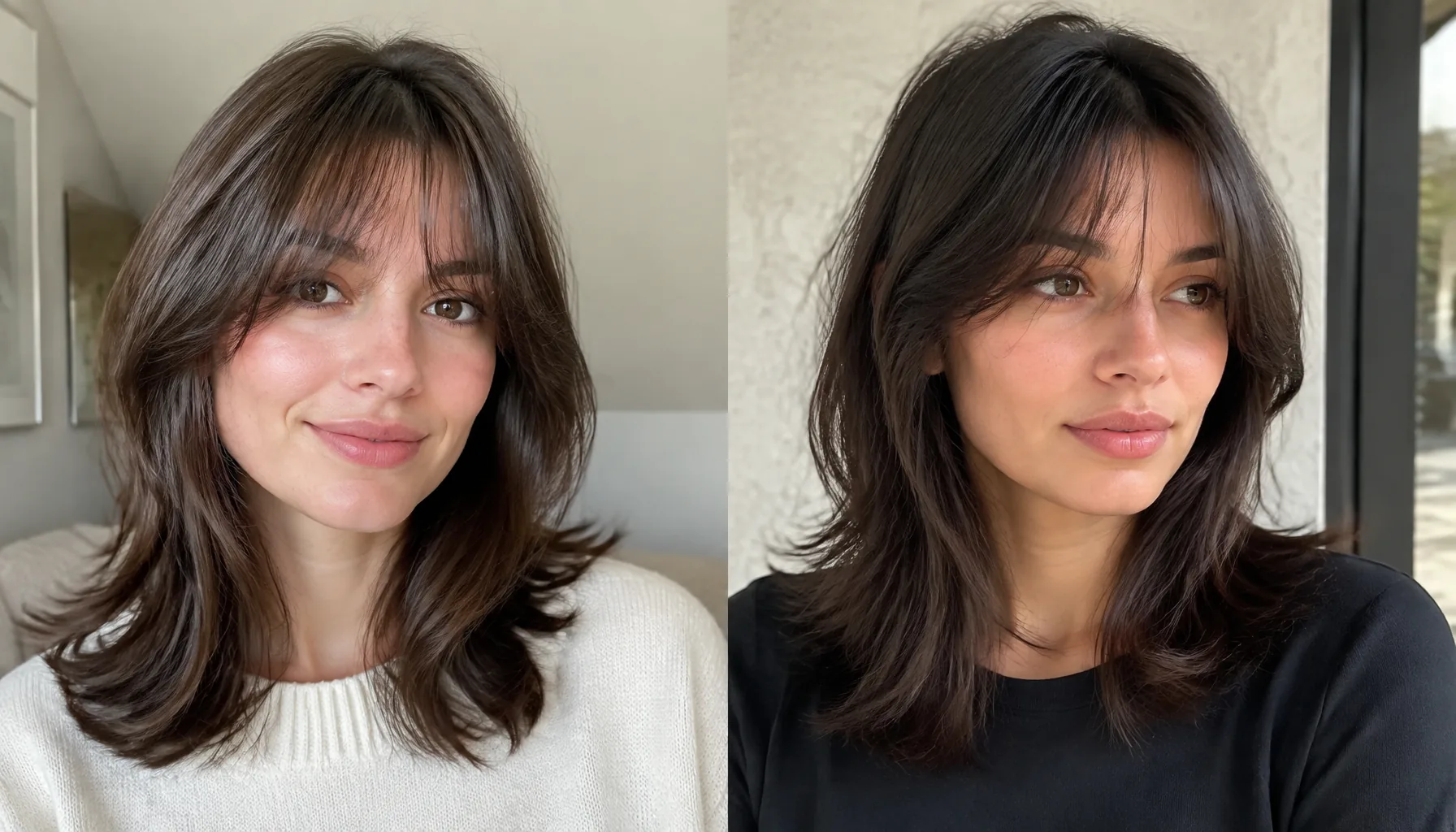
1. Soft Curtain Bangs on Loose Beach Waves

Curtain bangs part in the middle and sweep toward your cheekbones, which blends them into waves instead of fighting them. This look suits oval, heart, and long face shapes, and fine to medium wavy strands. It does not suit a cowlick right at the front hairline, because the part will keep splitting in the wrong place.
Curl 1-inch sections away from your face with a 1.25-inch barrel iron, about 15 minutes in total, then brush the waves out with your fingers. Trim the bangs every 6 to 8 weeks to keep them from growing past your cheekbones.
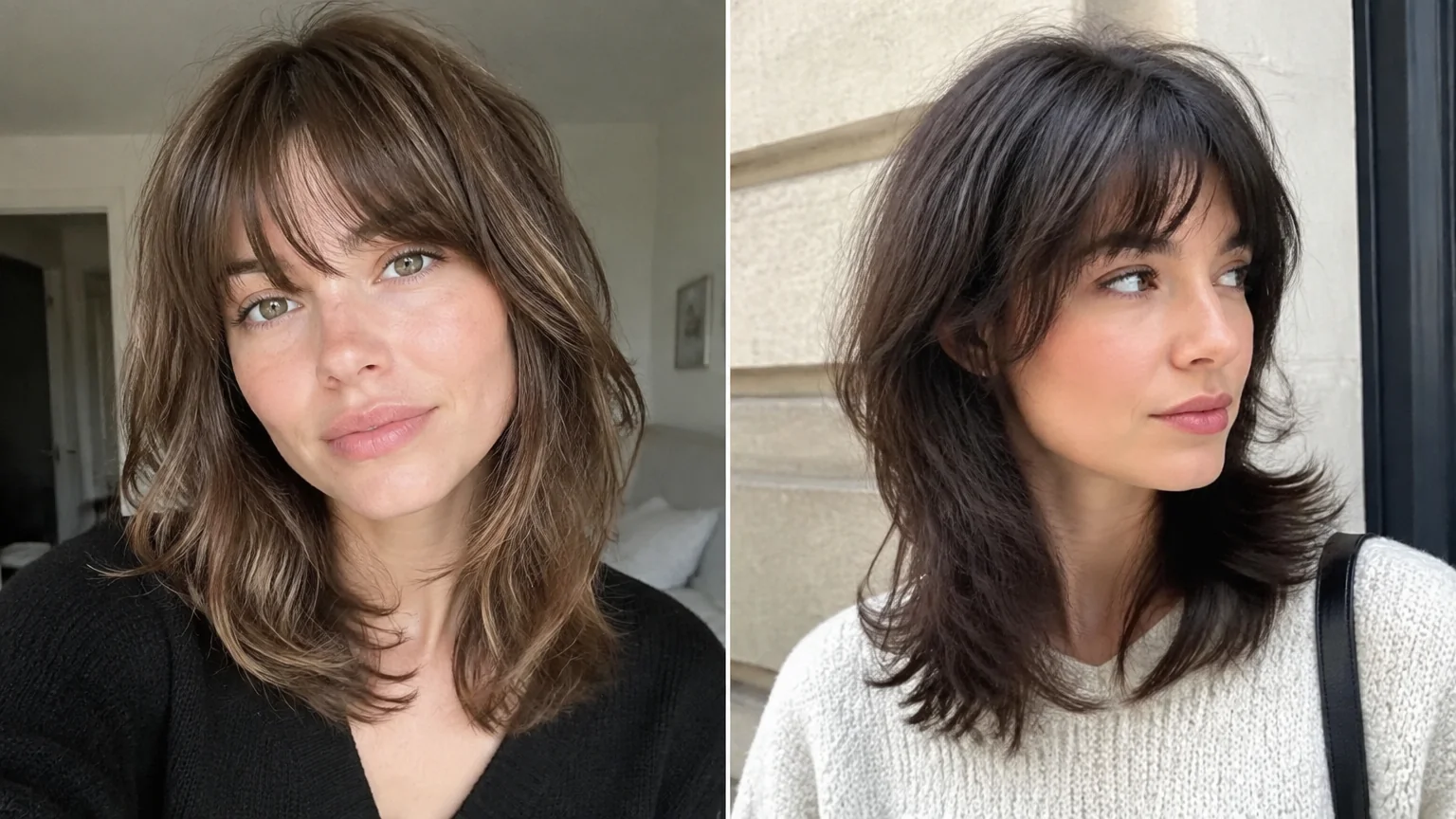
2. Wispy Bangs with Shoulder-Length Waves

Wispy bangs are thin and slightly see-through, so your forehead shows through. They suit fine or thin wavy hair, since a heavy fringe would take too much density from your lengths. They do not suit very thick, coarse hair, which tends to clump and turn blunt rather than wispy.
Blow-dry the fringe with a small round brush for about 3 minutes while the rest of your hair air-dries. Dry shampoo at the roots once a day soaks up oil, which makes thin bangs separate into strings. Plan a trim every 4 to 6 weeks.
3. Side-Swept Bangs with S-Waves
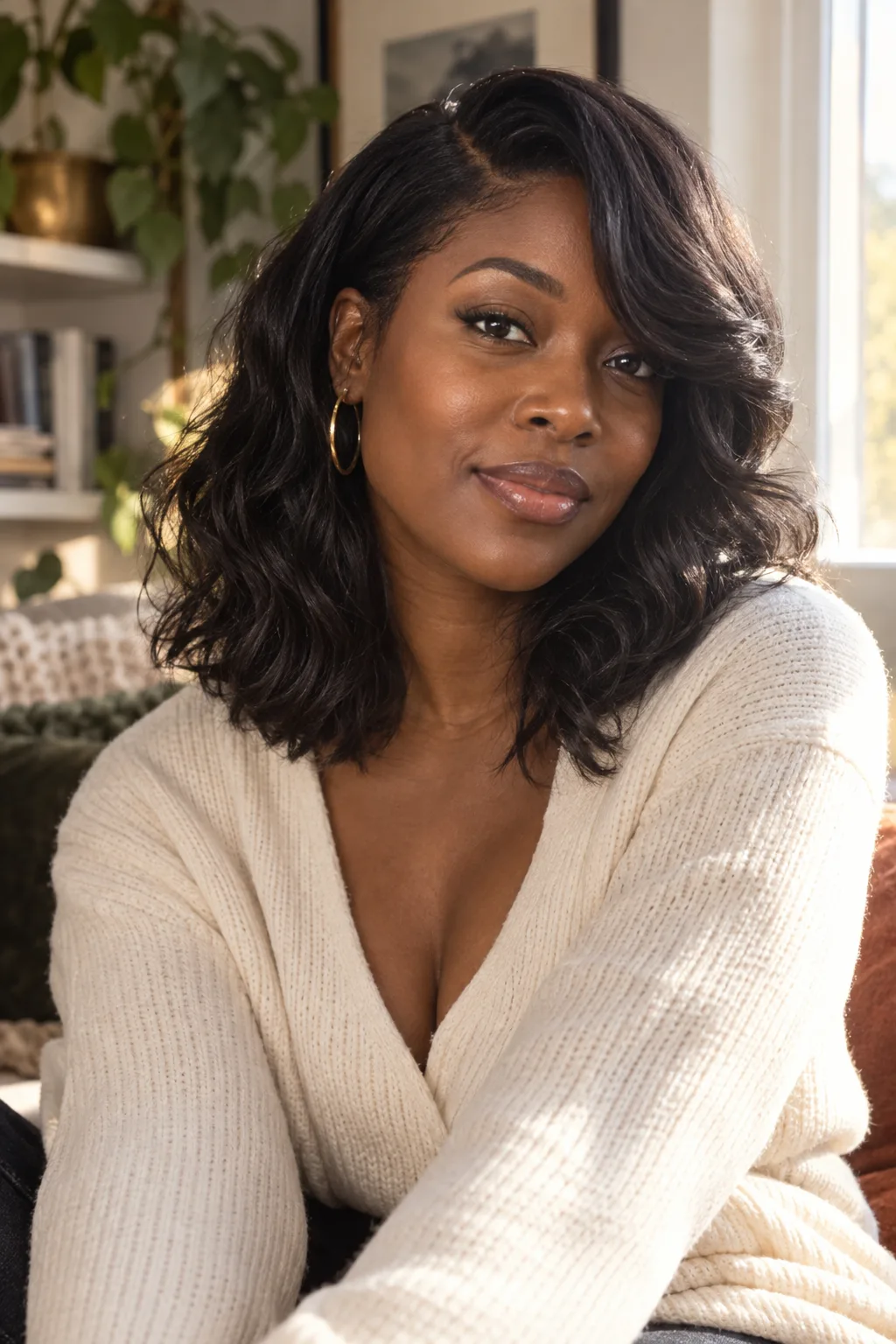
Side-swept bangs start from a deep side part and run diagonally across the forehead, so they echo the S-shape of natural waves. They suit round and square faces because the diagonal line breaks up width at the cheeks and jaw. They do not suit anyone who prefers a center part, since the fringe will fall back to the middle.
Set the direction with a 2-minute blast of heat from the dryer while the bangs are damp, then let them cool. A light mousse on damp waves helps the S-pattern hold for about a day. A trim every 6 weeks keeps the sweep off your eyelashes.
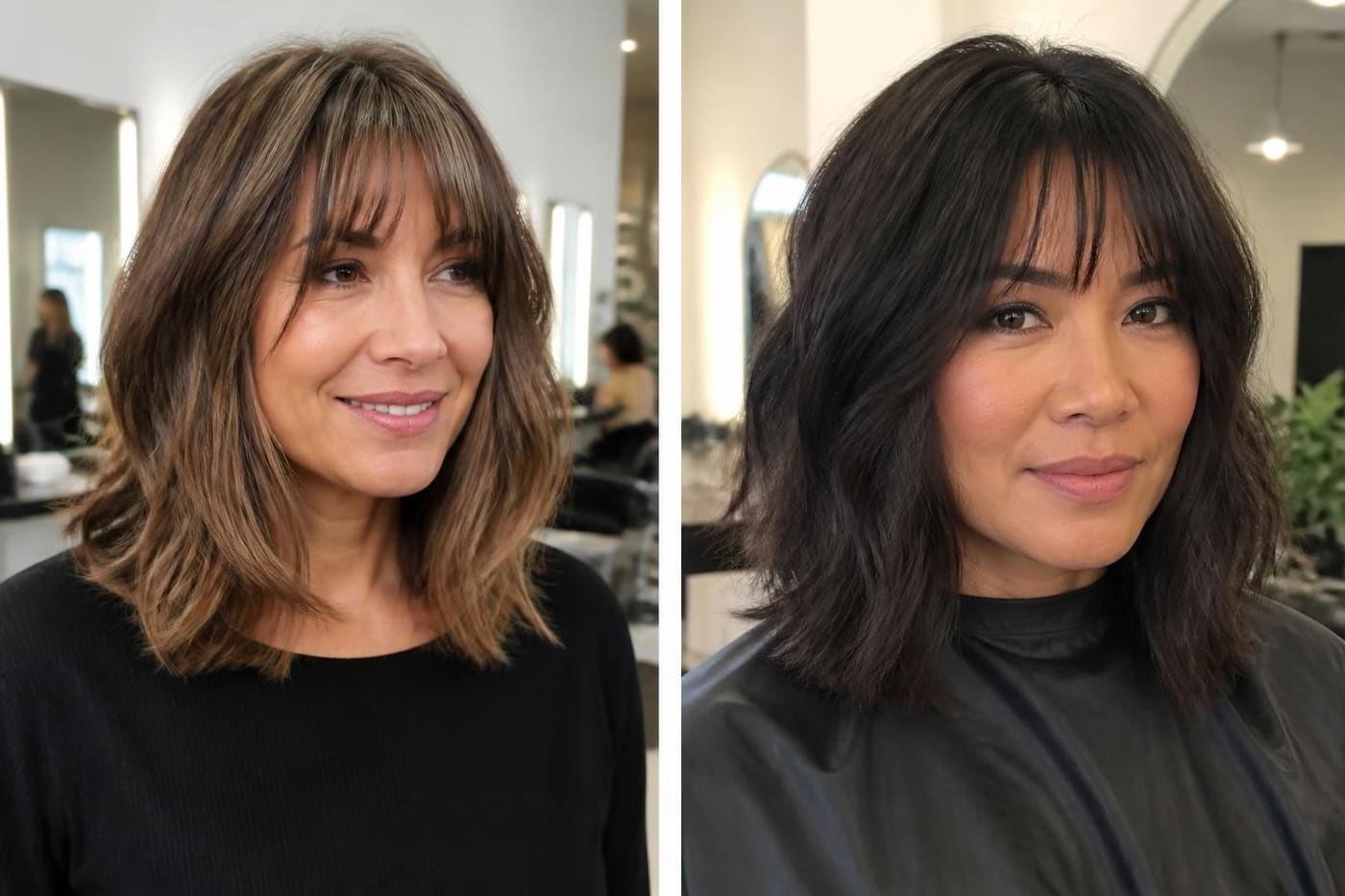
4. Wavy Lob with Full Blunt Bangs
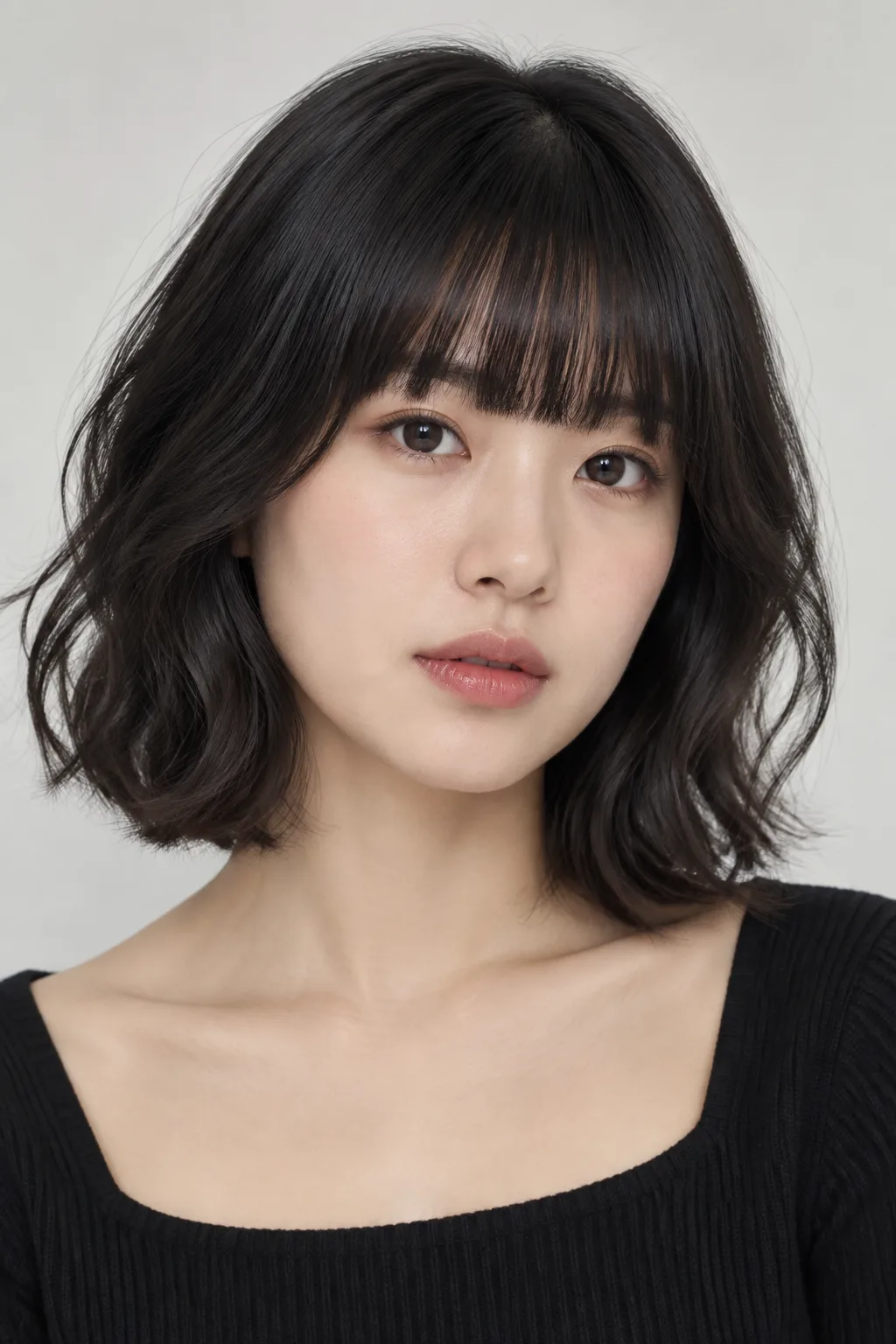
A collarbone lob with a straight-cut fringe makes a strong contrast, with soft movement below and a clean line above. It suits medium to thick waves, strong jawlines, and high foreheads. It does not suit 3A or tighter waves unless you straighten the bangs daily, since the fringe will spring up a full inch when it dries.
Straightening the bangs takes about 5 minutes with a flat iron set to 300 to 350 degrees F. Ask for a trim every 3 to 4 weeks, because a blunt edge looks messy the moment it touches your lashes.
5. Bottleneck Bangs with Mid-Length Waves
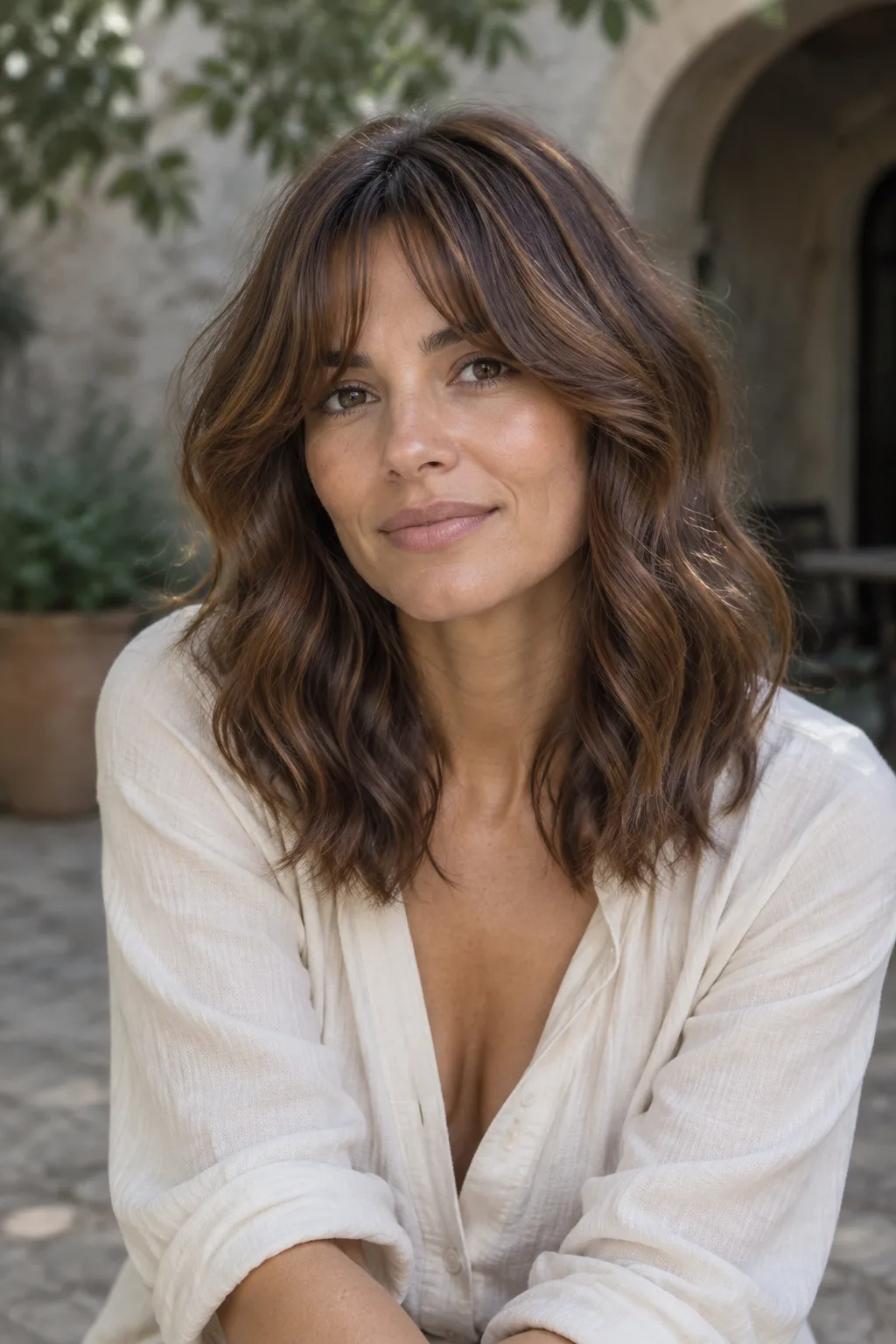
Bottleneck bangs are short and narrow at the center, then flare out toward the cheeks like the neck of a bottle. They suit wavy hair that already has some body, and faces with wider cheekbones or a softer jaw. They do not suit very thin hair, because the shape needs enough density in the front to flare.
Style them with a medium round brush for 4 minutes, rolling the ends outward. Because the center section is short, it grows out faster than most fringes, so book a shaping every 5 to 6 weeks.
6. Face-Framing Bangs with Layered Waves
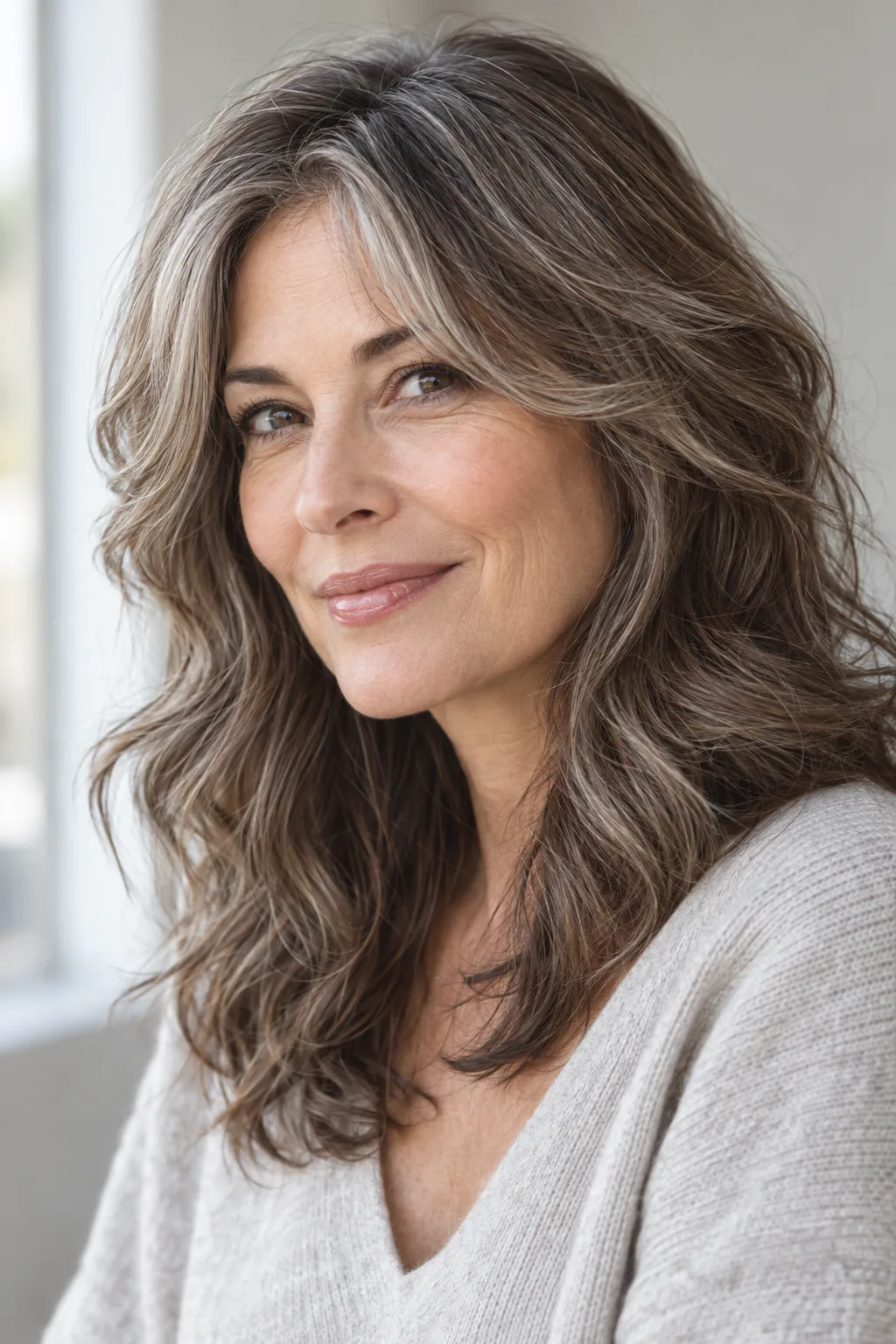
Here the bangs blend into longer layers that start around the cheekbones, so there is no hard line between fringe and the rest of the cut. It suits wavy hair that feels heavy or flat, since layers remove weight and let the wave pattern show. It does not suit very fine hair, where too many layers can make the ends look thin.
Wash-and-go works here if you scrunch in a curl cream and diffuse for 5 to 8 minutes on low heat. Refresh the layers every 8 to 10 weeks.
7. Wavy Shag with Choppy Bangs

A shag uses short, heavily layered pieces and bangs cut with a razor or point-cutting technique so the edges look broken up. It suits thick wavy hair and 2B to 3A patterns, since the layers remove bulk and add shape. It does not suit hair that frizzes badly in humidity unless you are happy with a rougher finish.
Style with a sea salt spray and a diffuser for about 10 minutes. Because the layers grow out unevenly, plan a trim every 6 to 8 weeks, and see a stylist who knows how to cut a shag, not a general trim.
8. Brushed-Out Bangs with Air-Dried Waves
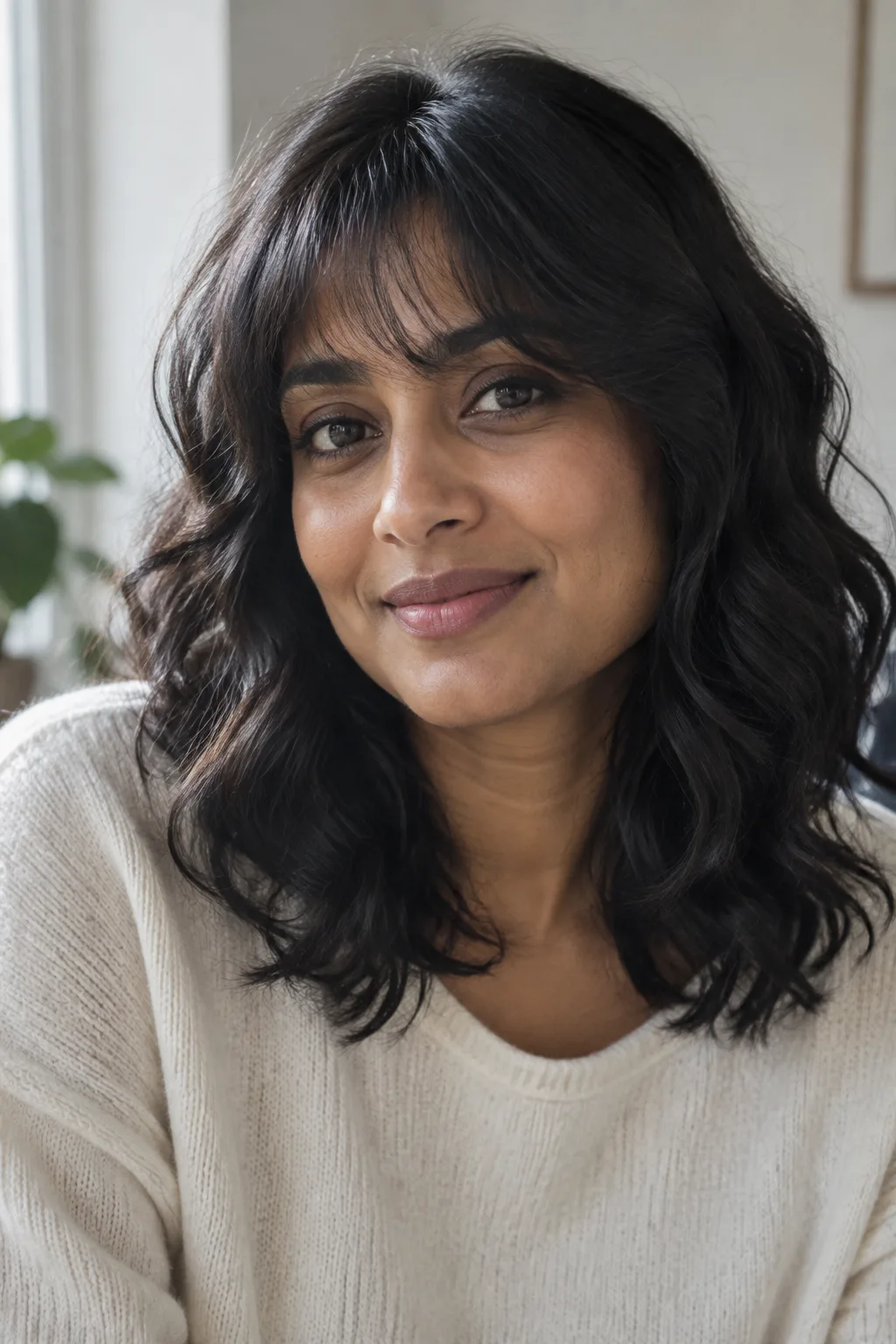
This look skips heat entirely. You brush the bangs to one side or the center while damp, then leave everything to dry. It suits low-maintenance routines and hair that already waves on its own. It does not suit hair with uneven wave patterns at the front, where the fringe can dry in two directions.
Apply a leave-in conditioner to damp hair, comb the fringe into place, and avoid touching it for the next 30 to 40 minutes while it dries. Pin the bangs flat with a clip for the first 15 minutes if they tend to lift. A trim every 8 weeks is enough.
9. Micro Bangs with Tousled Medium Waves

Micro bangs sit about an inch or two below the hairline, well above the eyebrows. They suit straighter-leaning waves (2A, 2B), small features, and anyone with a high, wide forehead. They do not suit tight waves or low hairlines, because the shortness exaggerates shrinkage and can end up as a puff.
Cut them dry and a little longer than you want, since waves shrink as they dry. Expect to trim every 3 weeks. Style in about 2 minutes with a tiny dab of paste, and keep a clip on hand for the grow-out phase.
10. Textured Bangs on a Wavy Collarbone Cut
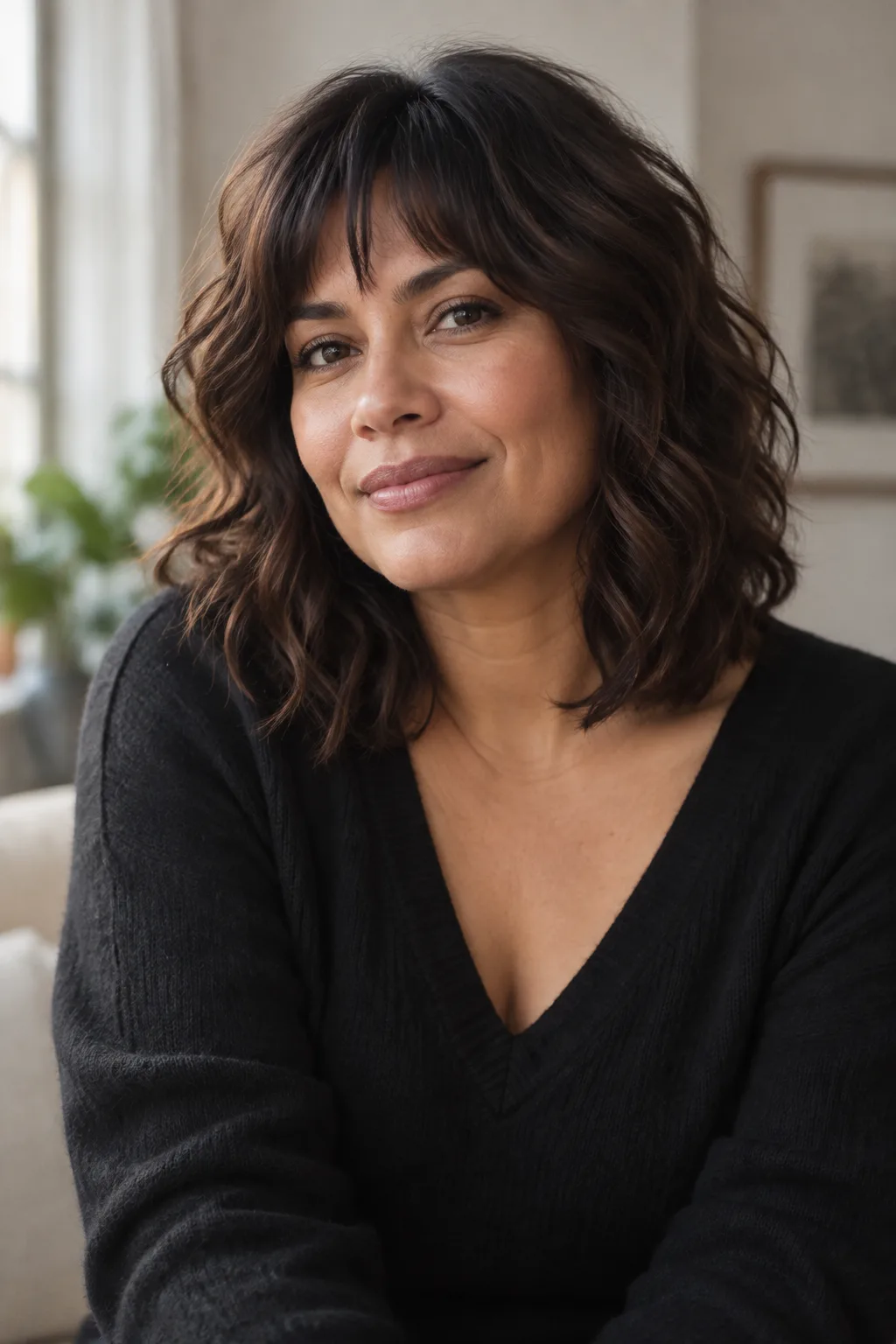
Texturized bangs are cut with small notches so they sit softly rather than in one heavy sheet. On a collarbone-length cut, this keeps the front light while the lengths hold the weight. It suits medium to thick waves and round or square faces. It does not suit very fine hair, which can look sparse after thinning.
Use a texturizing spray and 3 to 5 minutes with a diffuser for the bangs. Schedule a trim every 6 weeks. Do not let anyone use thinning shears on the fringe if your hair is fine.
11. Half-Up Waves with Curtain Bangs
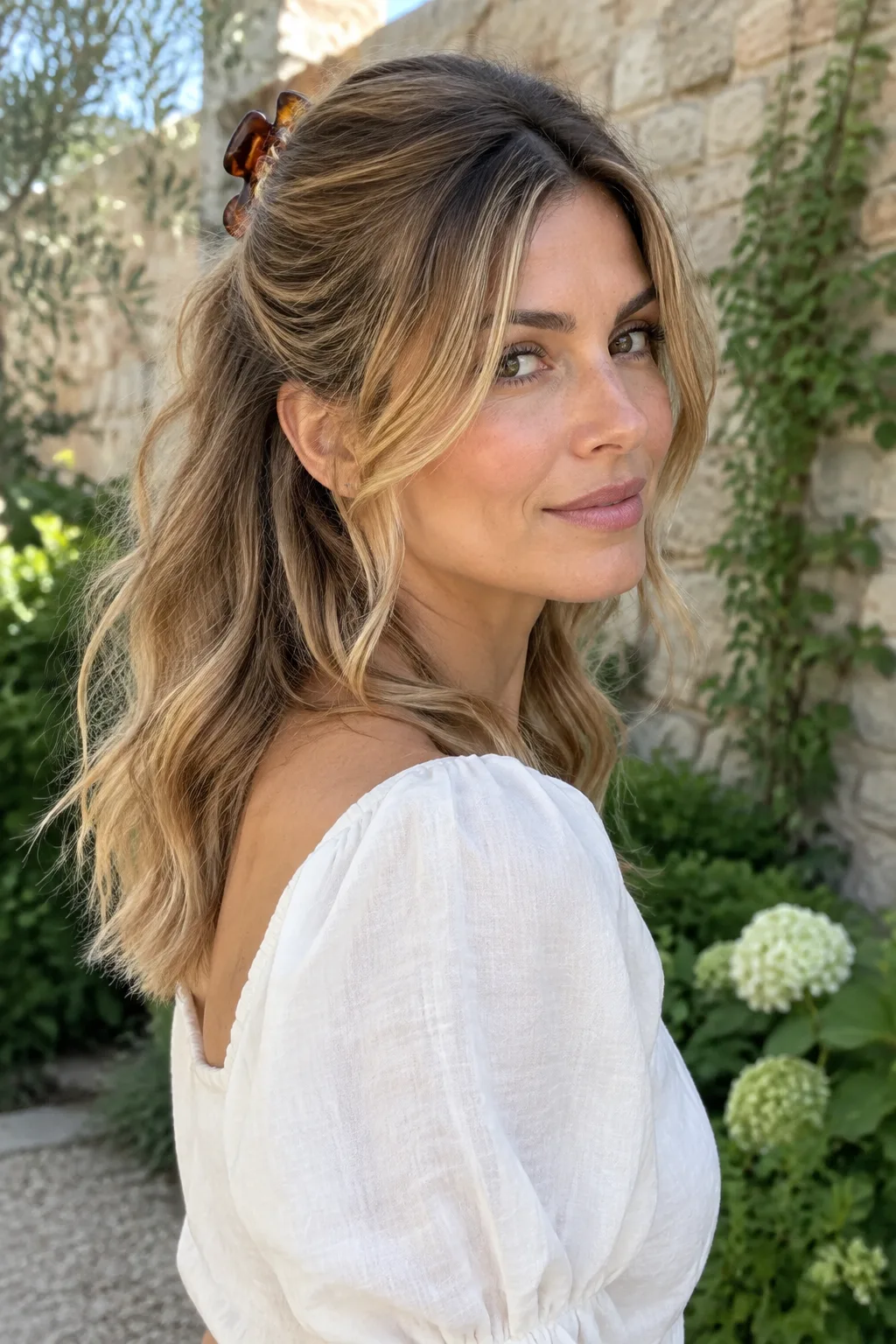
Pulling the top section back keeps medium waves off your neck while the curtain bangs stay loose around your face. It suits warm days, workouts, and growing-out fringes that are too short to tuck behind your ears. It does not suit very thin hair that cannot hold the clip without the top section sliding out.
Gather the crown section with a claw clip or a small elastic, which takes under 2 minutes. Leave out two face-framing pieces and the bangs. Skip tight elastics on the front section, since constant pull can break fine strands.
12. Long Side Bangs Tucked Behind the Ear
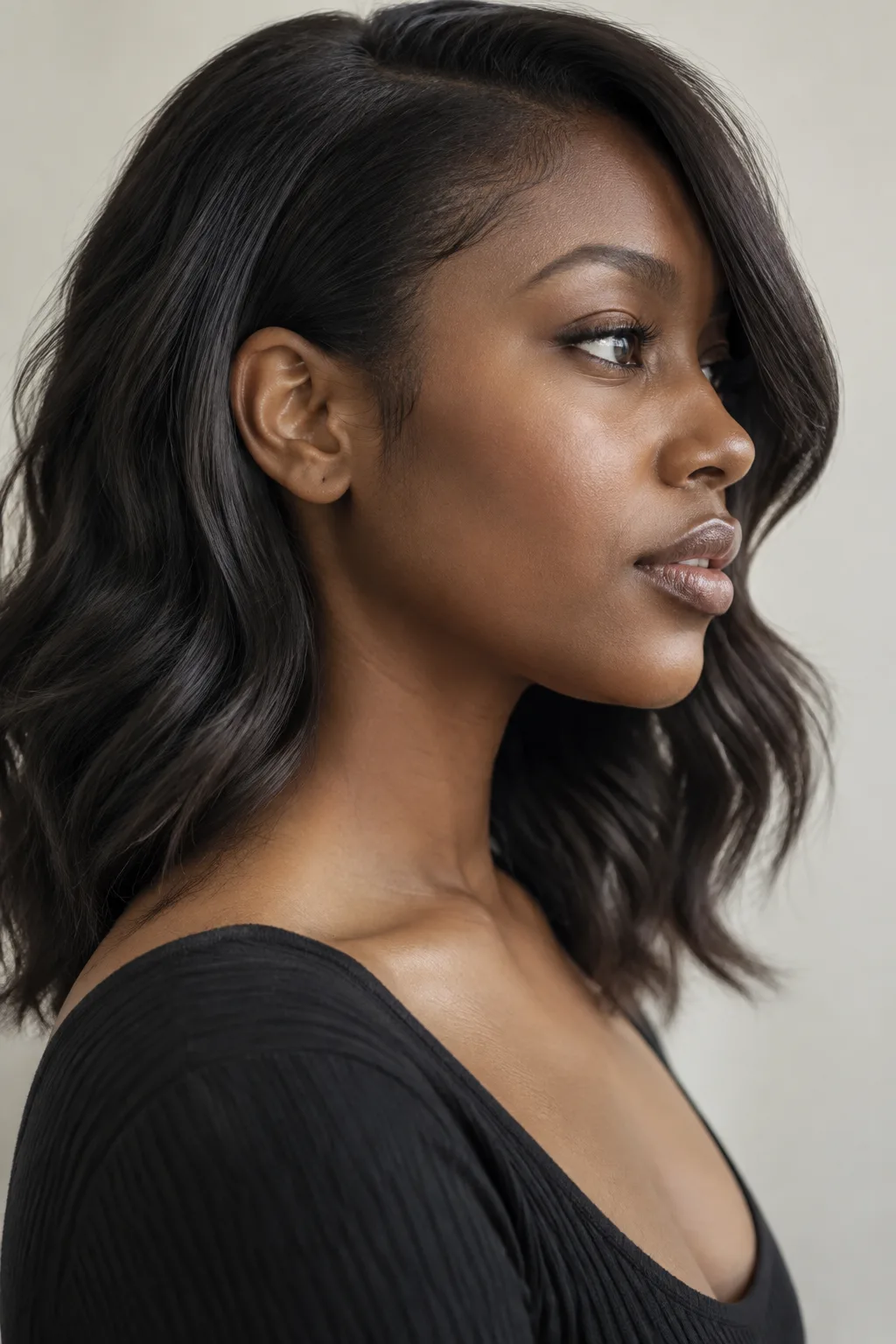
Long side bangs begin around cheekbone length and can be worn across the face or tucked back, so they handle every stage of grow-out. They suit anyone nervous about a full fringe, and any wavy hair type. They do not suit a very short fringe wish, since this look is built on length.
Style in 5 minutes with a light cream, finger-curling the front piece around your index finger as it dries. A trim every 10 to 12 weeks is enough, and a bobby pin keeps the tuck in place on windy days.
13. Retro Wavy Flip with Feathered Bangs
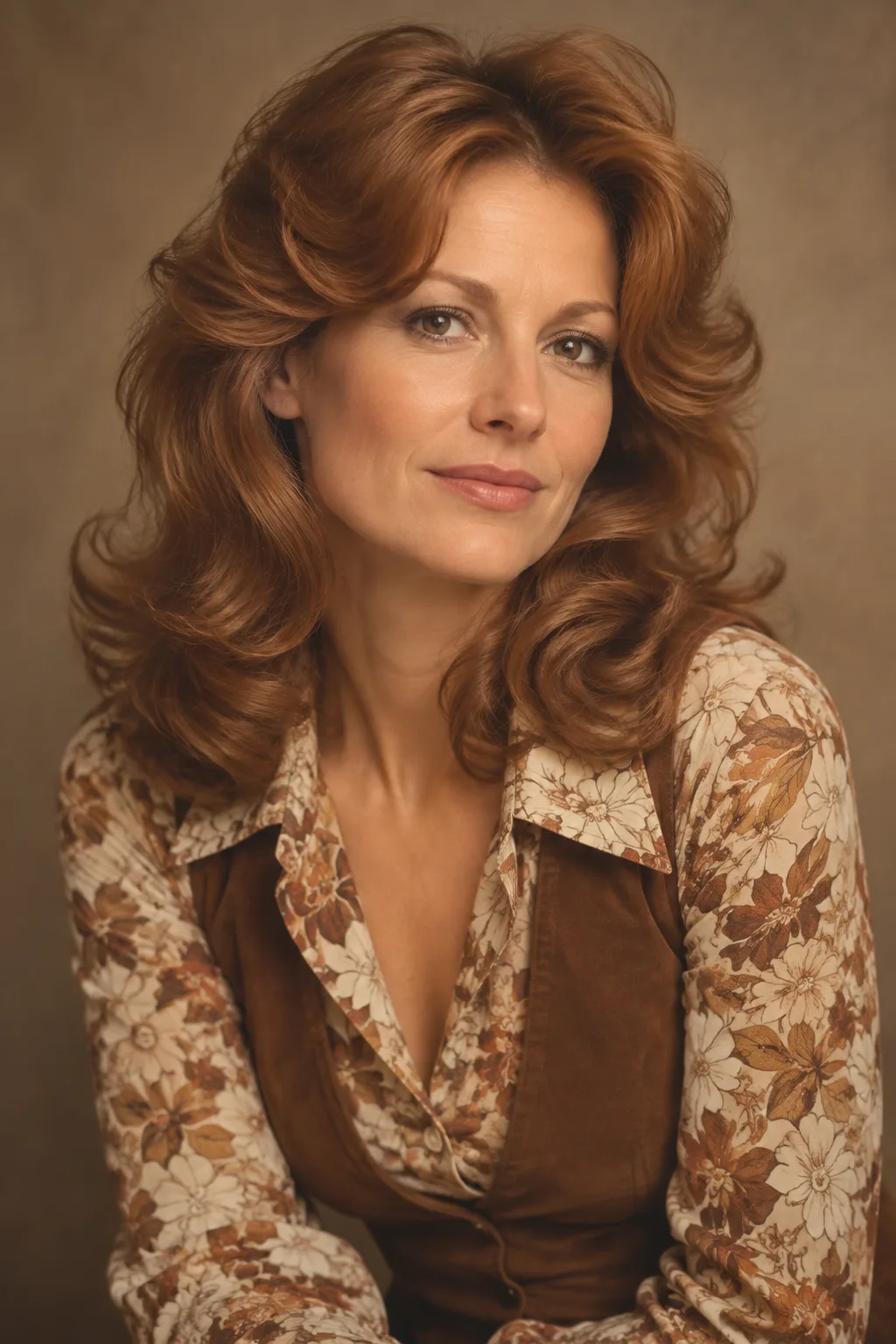
This look flips the ends outward and feathers the bangs back from the forehead in a 1970s-style shape. It suits medium-density waves and oval faces. It does not suit hair that resists heat styling, since the flip depends on a smooth, set shape that can fall flat in humid weather.
Use a 1.5-inch round brush and about 10 to 12 minutes with a blow dryer, then finish with a flexible-hold hairspray. Trim the feathering every 6 weeks so the ends stay light.
14. Arched Bangs with Soft Waves
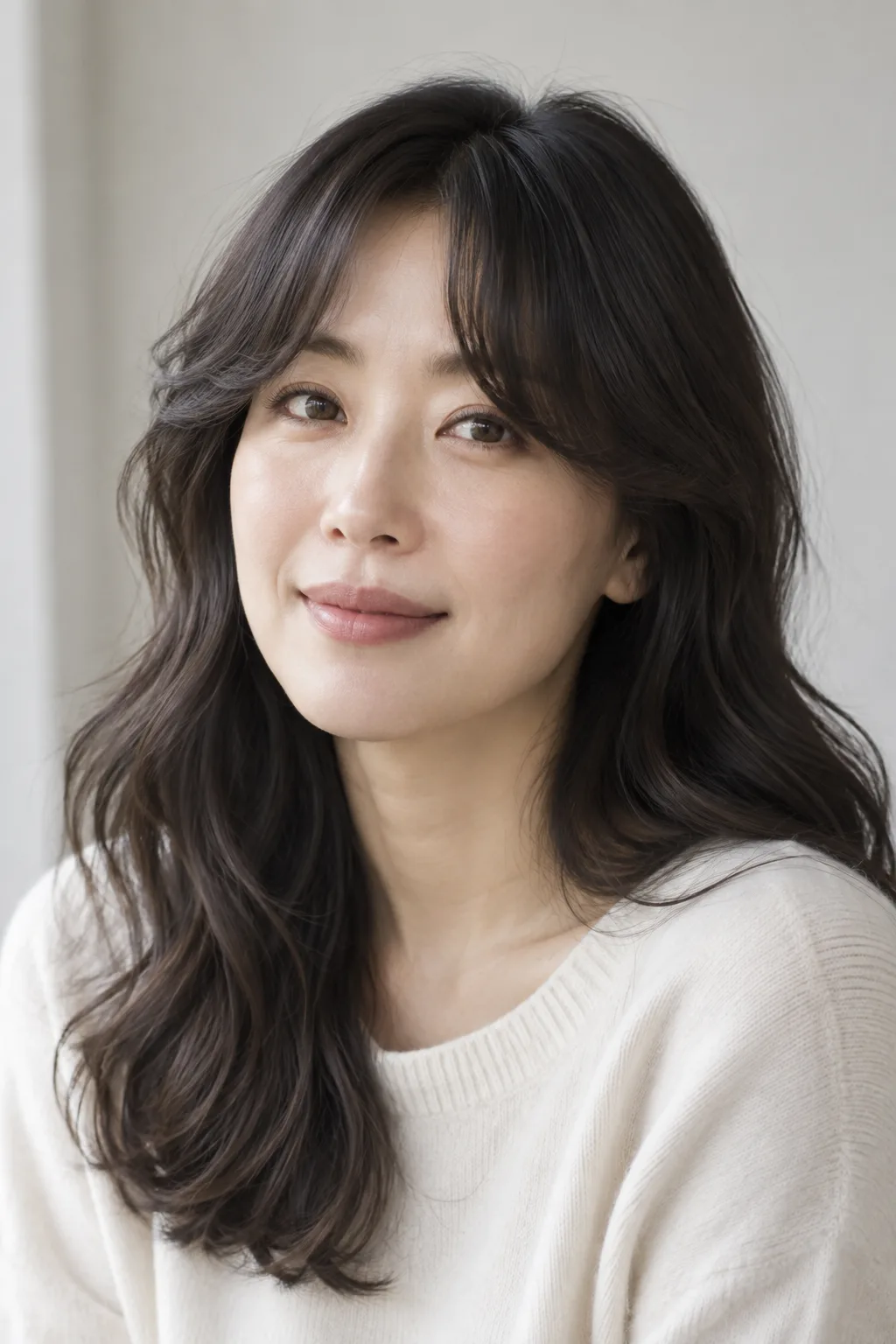
Arched bangs curve in a gentle dome, shorter in the middle and longer at the sides, which opens up the eyes. They suit round and heart-shaped faces, and soft 2A to 2B waves. They do not suit a strong cowlick or hair that grows in an uneven line at the front.
Round-brush the center upward for about 3 minutes to hold the arch. Shape them every 4 to 5 weeks, since the curve flattens as it grows longer.
15. Low Ponytail with Wispy Bangs
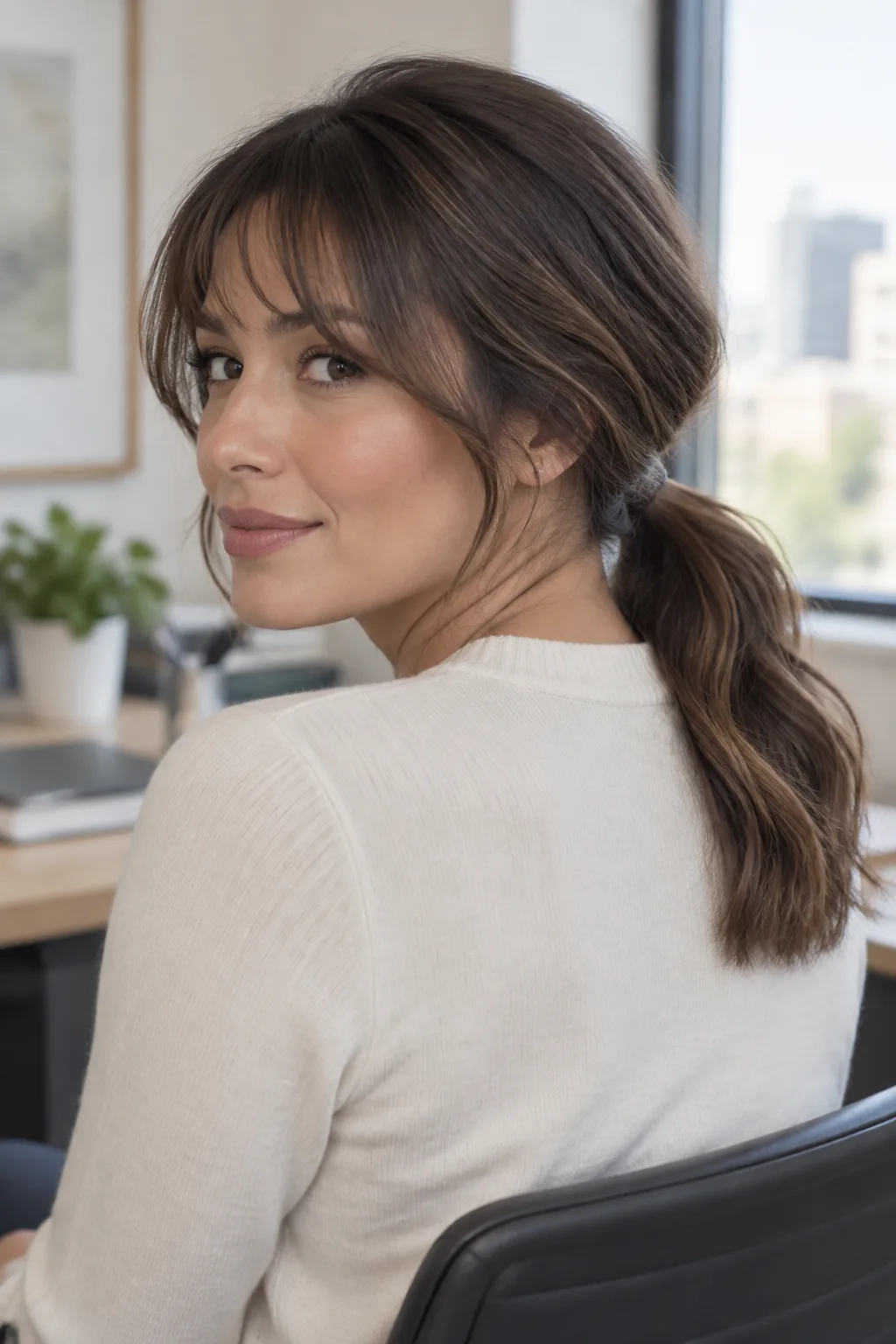
A low ponytail keeps medium waves tidy and leaves the wispy fringe as the only loose element. It suits gym days, office days, and anyone with hair that is long enough to reach a low elastic. It does not suit hair that is chin-length, which will not stay in the elastic.
Pull the hair back at the nape in under 2 minutes with a snag-free elastic or a silk scrunchie. Add a pinch of dry shampoo to the bangs to keep them from clumping, and trim every 4 to 6 weeks.
16. Dark Brown Waves with Soft Fringe
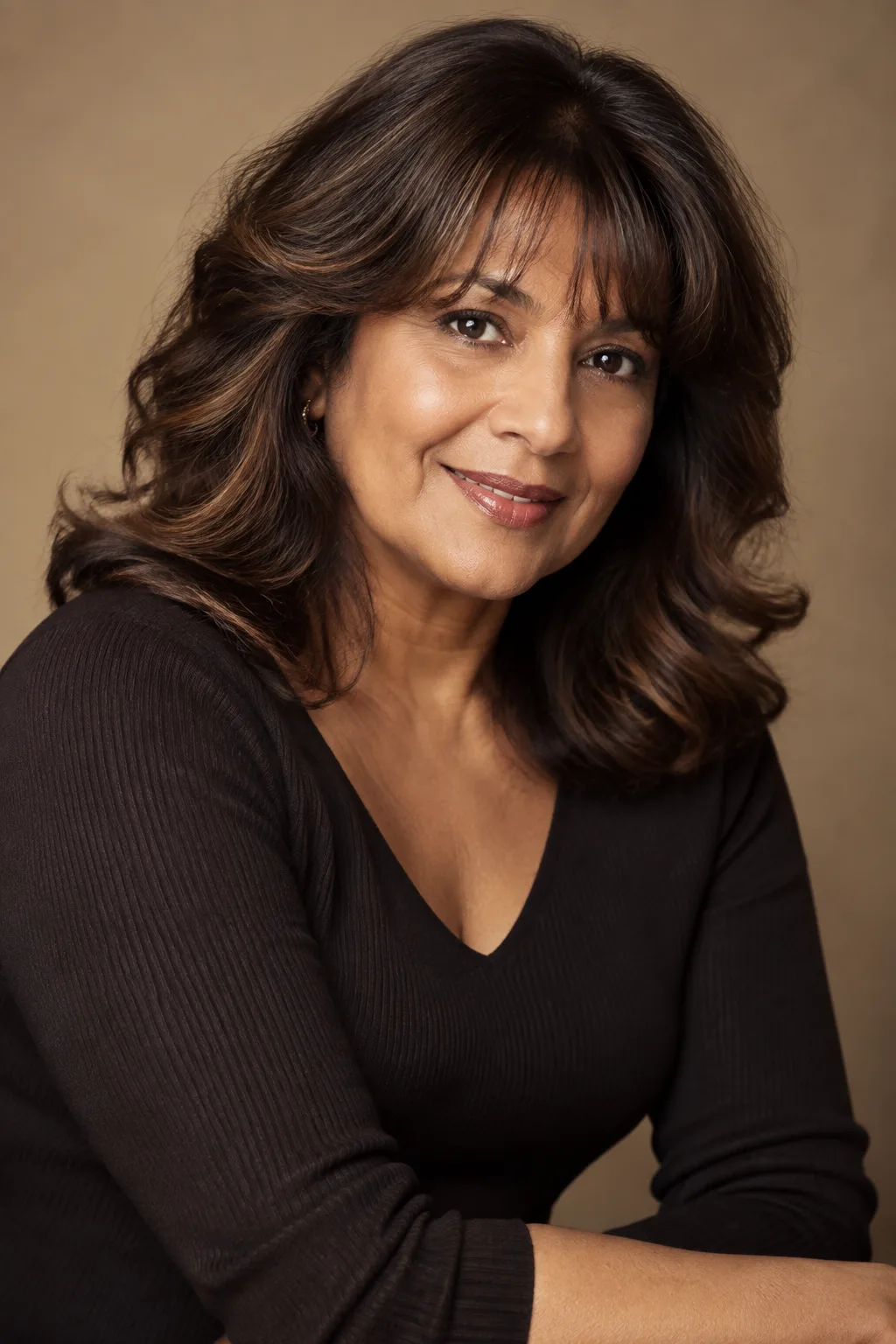
Dark brown shows wave shape and fringe texture clearly, since shadows form in every bend. It suits natural brunettes and anyone who wants a rich shade without lightening. It does not suit anyone planning to go much lighter at home, because lightening dark hair should be done by a colorist to limit damage.
A gloss treatment every 6 to 8 weeks keeps the shade from fading toward orange. Use a gloss-sealing cream and a 3-minute diffuse for the fringe. Trim the bangs every 6 weeks.
17. Sleek Blow-Dried Bangs with Wavy Lengths
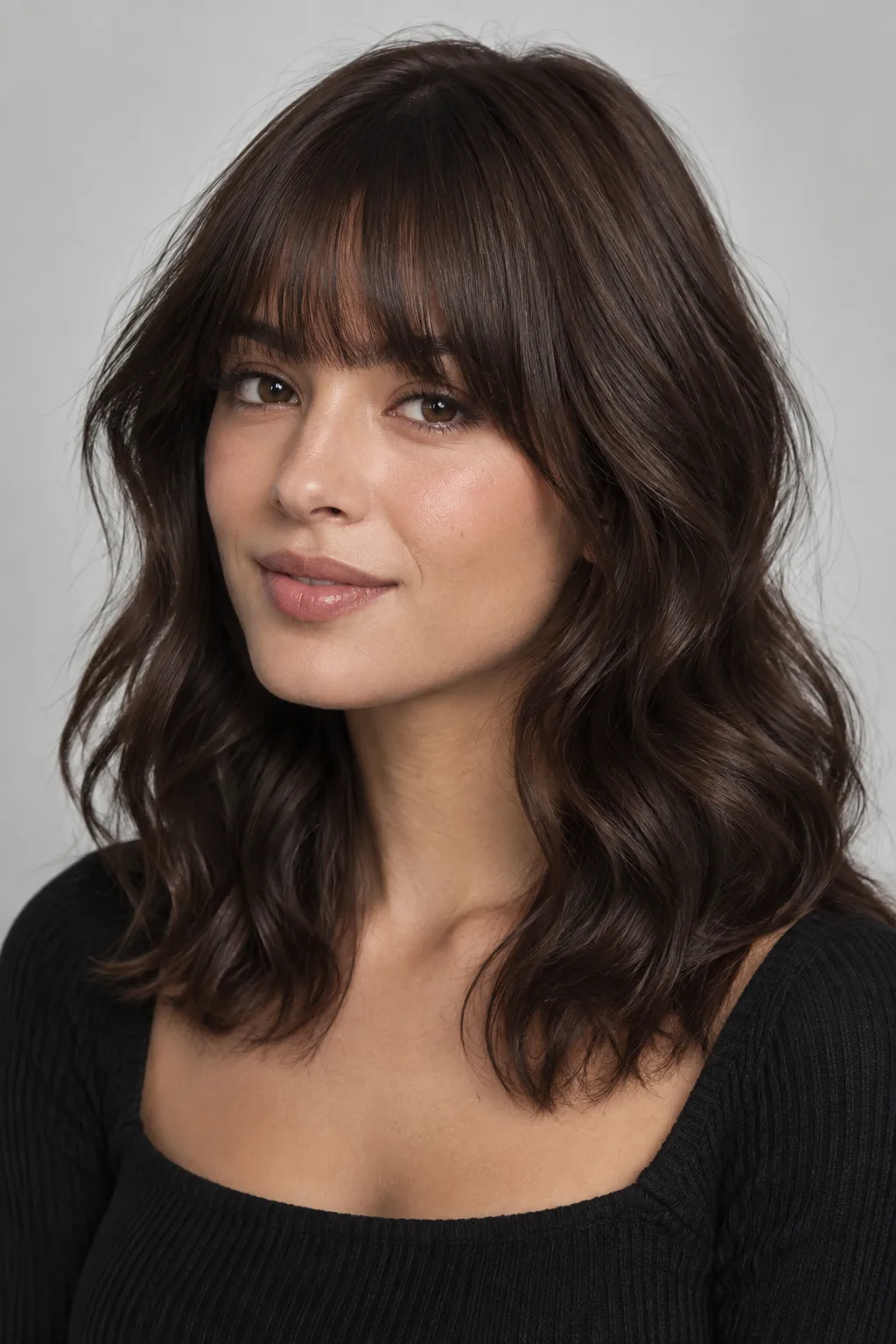
Smooth, glossy bangs paired with wavy lengths give a deliberate contrast between sections. It suits medium to thick hair, and anyone whose front hairs dry straighter than the rest. It does not suit very humid climates unless you carry a small anti-frizz serum, since the fringe will puff by midday.
Blow-dry the fringe with a paddle brush for 3 to 4 minutes, using a heat protectant. A flat iron on 300 degrees F fixes any bend. Keep the trim cycle at 4 to 5 weeks so the line stays clean.