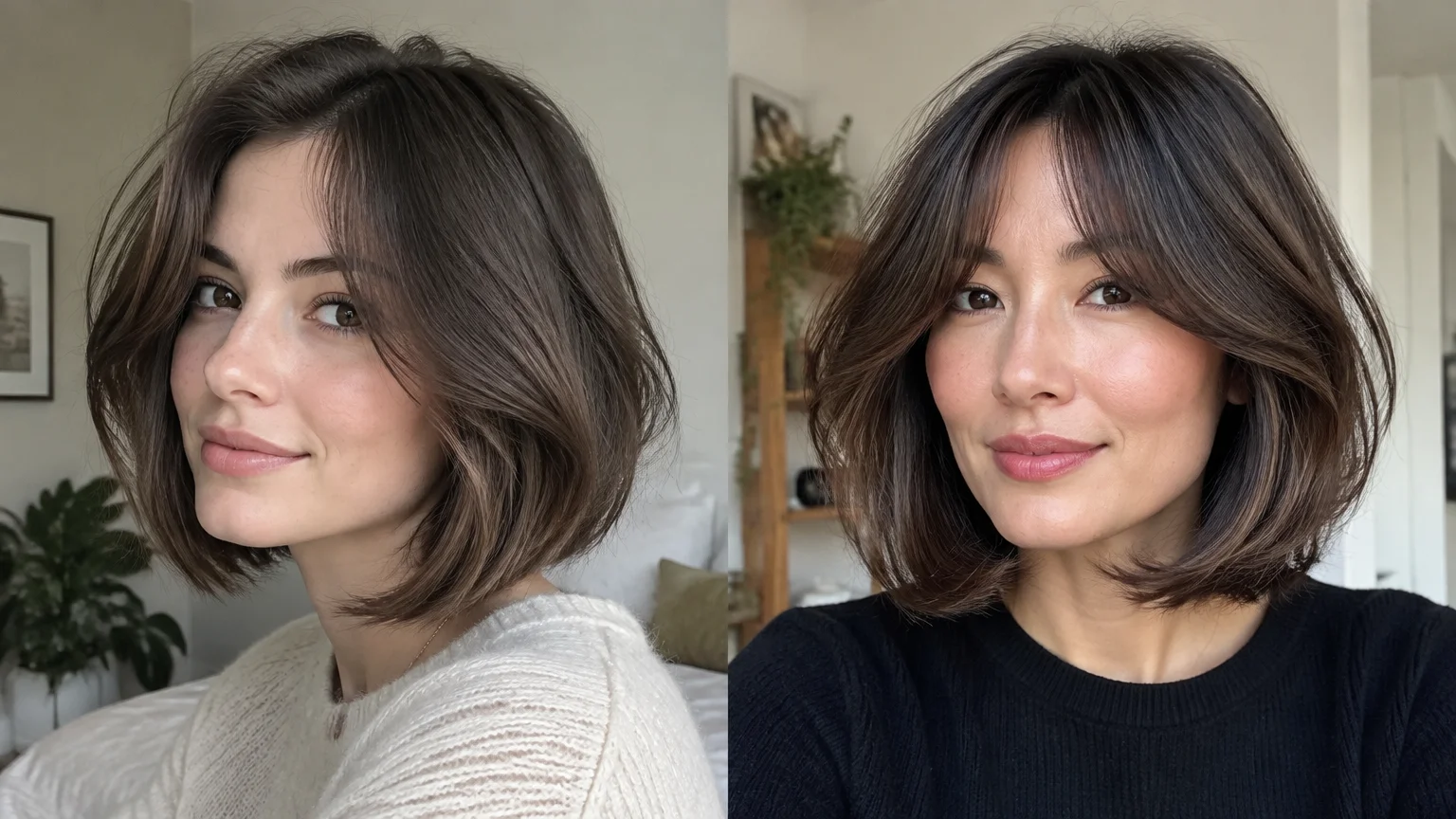
How to Style Fine Hair So It Looks Fuller Every Day?

Fine hair describes the thickness of each individual strand, not how many strands you have. You can have plenty of hair that is still fine, which is why it can feel soft and light but lie flat against your head by lunchtime.
The good news is that fullness is mostly a styling problem, not a fixed trait. The products you choose, the way your hair is cut, and where you put the volume when you dry it all change how much hair you appear to have.
Looking for more choices? Our collection of layered hairstyles is a good place to start.
In this guide, we will walk through a lightweight routine, cuts that add body, a blow-dry method for root lift, and everyday styles that hold up through the day. If your hair has recently become noticeably thinner or you are shedding more than usual, that is a separate issue, covered at the end.
Table of Contents
Why fine hair falls flat
Each fine strand is lighter and thinner than average, so it tends to lie close to the scalp instead of standing away from it. Oil from the scalp also travels down thin strands quickly, which is why roots can look limp by the end of the day even when the lengths look fine.
That combination means fine hair is easy to weigh down. Heavy conditioners, rich oils, and layers of product can flatten it in a way they would not flatten thicker hair, so the goal is to add lift and texture while keeping everything else light.
Start with a lightweight routine
Shampoo and conditioner
Look for a volumizing shampoo, which is usually made to leave a thin coating on the strand so it looks thicker. Avoid products labeled as "conditioning shampoo" or "intensive" conditioners, which tend to be too heavy for fine hair.
The American Academy of Dermatology advises people with fine or straight hair to apply conditioner to the ends only. Keep it off your roots and scalp, where it adds weight without adding benefit.
If your roots go flat by the afternoon, wash daily or every other day rather than stretching to three or four days. A clarifying shampoo once every week or two can remove product build-up that makes hair look dull and limp.
Styling products that add lift
A few well-chosen products do more than a bathroom shelf full of them:
Mousse: work a golf-ball-sized amount through damp hair from roots to ends before blow-drying
Root-lift spray: spray directly on damp roots, where lift is set
Texturizing spray or dry shampoo: use on dry roots on the second day to add grip and absorb oil
Keep heavy serums, butters, and oils to the last few inches of hair, if you use them at all. Too much product at any point is one of the most common reasons fine hair looks limp.
Choose a cut that adds fullness
A good cut does a lot of the work for you. Ask your stylist about these points:
A blunt, one-length cut keeps the ends looking dense. Too many layers can leave fine hair looking wispy and see-through at the bottom.
Hair at or above the collarbone often looks fuller than very long hair, because long, fine strands stretch out and thin toward the ends.
A few long, face-framing pieces or a soft fringe can add density at the front, but they take hair from elsewhere, so only choose this if you are comfortable with a thinner back.
Ask your stylist to avoid thinning shears and razoring, which remove bulk you cannot spare.
Trim every eight to ten weeks to keep the ends blunt. Split ends thin out the bottom of the hair and make it look sparse.
How to blow-dry fine hair for root lift
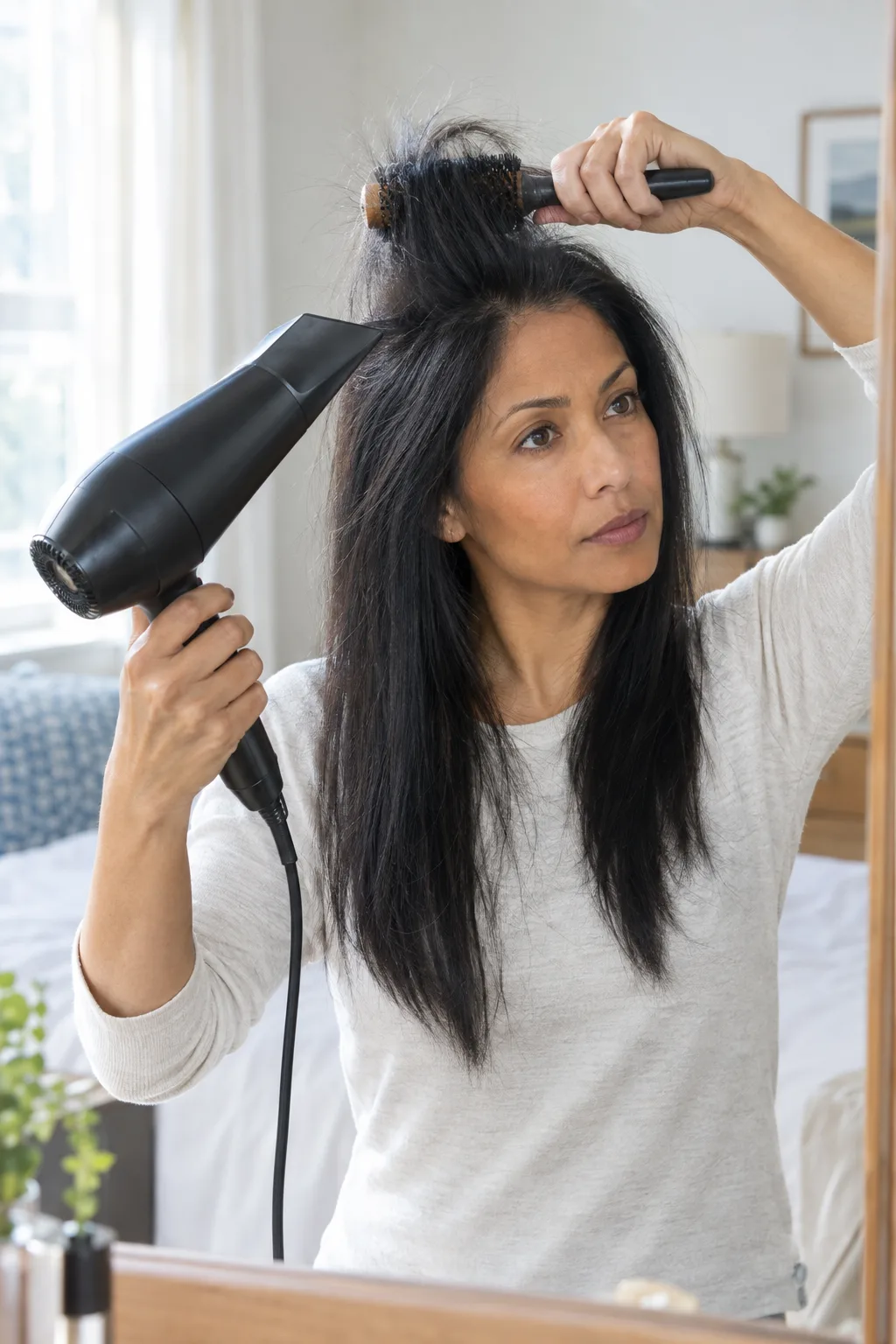
A step-by-step blow-dry
Squeeze water out of your hair with a towel, and apply mousse or root-lift spray to damp hair.
Rough-dry your roots first, lifting them with your fingers or a round brush and pointing the dryer against the way the hair falls.
Dry your lengths once the roots are almost dry, so you do not overheat the ends.
Finish with 20 to 30 seconds of cool air on the roots. Cooling helps set the lift.
Use low or medium heat, as the American Academy of Dermatology recommends, and apply a heat protectant first. Fine hair breaks easily, and a single hot pass can do more damage than it would on coarser hair.
Flip your part
Hair that has been parted in the same place for years lies flat there. Blow-dry it in the opposite direction, or move your part an inch to the side, and the roots will stand up more. A zigzag part also lifts the crown while hiding the line of scalp.
Velcro rollers
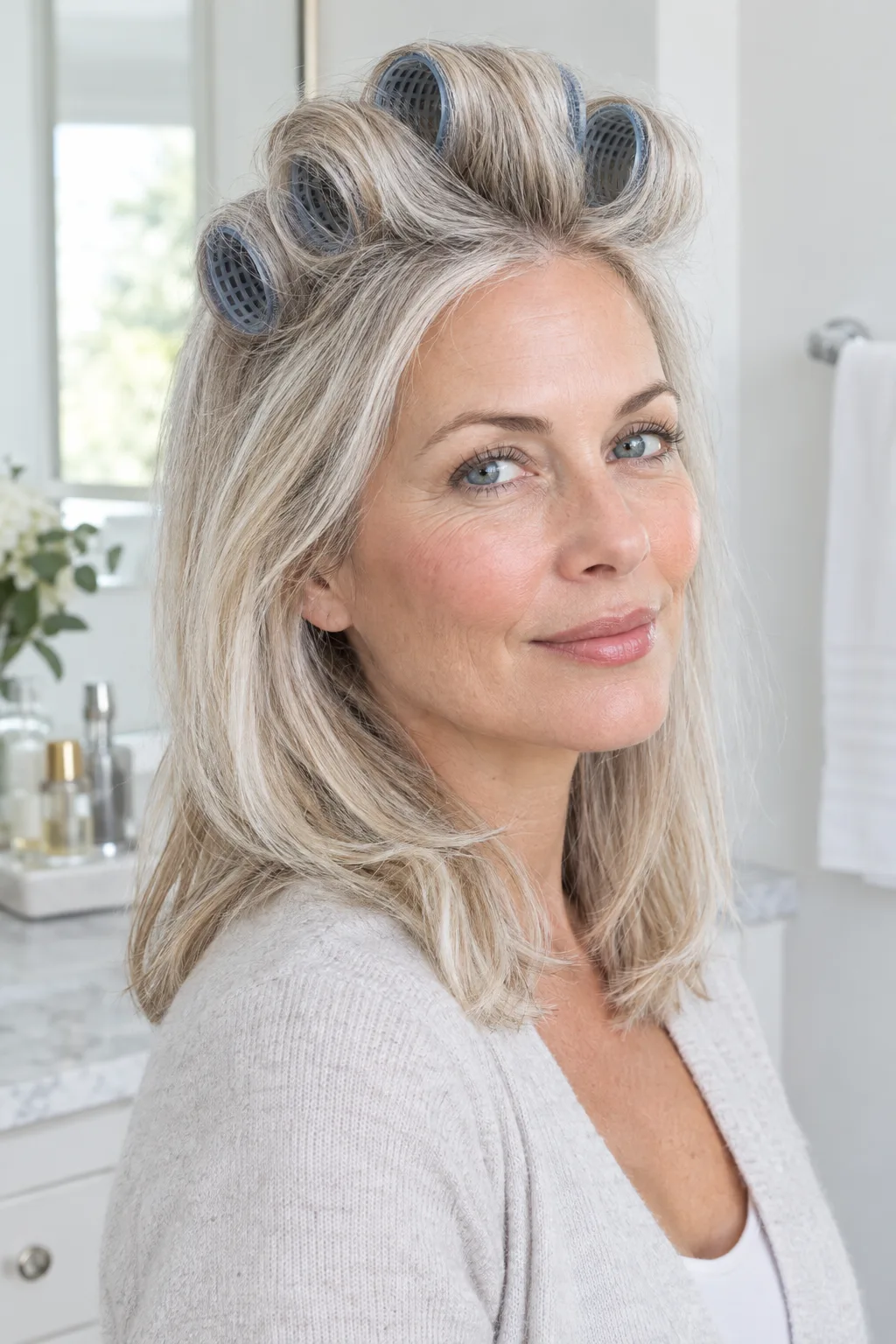
After blow-drying, place two or three large velcro rollers at the crown, roll them up toward the scalp, and leave them in for about 10 minutes while you get ready. Take them out and shake your fingers through the roots for lift that lasts through the day.
Everyday styles that look fuller
Loose waves
Waves add body because a bent strand takes up more space than a straight one. Wrap two-inch sections around a 1-inch to 1¼-inch curling iron on a low or medium setting, leave the last inch of each section out, and loosen the curls with your fingers. Allow 10 to 15 minutes.
Half-up with a lifted crown
Take the top section of your hair and tease it lightly with three or four gentle strokes at the roots. Smooth the top layer over it and secure the section with a clip or soft elastic. The whole thing takes about two minutes, and the lifted crown makes the rest of your hair look thicker.
Loose braids
A loose side braid looks thicker when you tug each section gently outward after braiding, starting at the bottom and working up. This widens the braid without adding any product. Secure it with a soft scrunchie, not a tight elastic.
A low, loose ponytail
A tight ponytail pulls at fine strands and can cause breakage over time. Use a fabric-covered elastic, keep the ponytail low, and pull a little hair out at the crown and around the face to add softness.
Habits that make fine hair look thinner
Brushing hair when it is soaking wet. The American Academy of Dermatology suggests letting fine hair dry a bit before combing.
Using high heat on flat irons and curling irons
Applying conditioner or oil at the roots
Wearing tight ponytails and buns every day
Aggressively backcombing, which roughens the cuticle and causes breakage
When to see a professional
Fine hair is a natural trait, but hair that suddenly gets thinner is not. If your part is widening, you are losing clumps of hair, or you notice bald patches, see a doctor or dermatologist. Hair loss can have causes unrelated to styling, such as hormonal changes, nutrient deficiencies, or medication, and it is easier to treat when it is caught early.
For everyday flatness, the fix is usually lighter products, a cut that keeps the ends dense, and a few minutes spent lifting the roots.
For the care side of things, see our guide on how to repair dry and damaged hair at home.
Keep exploring: bun hairstyles for fine hair and curly haircuts.