How to Repair Dry and Damaged Hair at Home? (Easy Guide)
Dry and damaged hair affects millions of people worldwide. Whether you deal with brittle ends, frizz, or lack of shine, you don’t need expensive salon treatments to fix the problem.
In this guide, we will show you practical, affordable ways to repair damaged hair using products and methods you can easily do at home.
What Causes Dry and Damaged Hair
Your hair becomes dry and damaged for specific reasons. Identifying the cause helps you choose the right repair strategy.
Common Causes of Hair Damage
- Heat styling tools like blow dryers, flat irons, and curling irons
- Chemical treatments including coloring, perms, and relaxers
- Environmental exposure to sun, wind, and pollution
- Over-washing with harsh shampoos that strip natural oils
- Lack of moisture and deep conditioning treatments
- Rough towel drying and aggressive brushing
- Swimming in chlorinated or salt water
- Poor nutrition and dehydration
Your hair structure matters too. Fine and curly hair types naturally struggle more with dryness than thick, straight hair.
Signs Your Hair Needs Repair
Recognizing damaged hair symptoms helps you act before the problem worsens.
| Sign | What It Means |
|---|---|
| Split ends | Hair shaft breaks into multiple pieces |
| Frizz and flyaways | Cuticles raise and moisture escapes |
| Lack of shine | Hair surface becomes rough |
| Brittleness | Hair breaks easily when brushed |
| Tangles | Damaged cuticles catch on each other |
| Dull color | Light can’t reflect properly |
| Limp texture | Hair loses strength and elasticity |
If you notice three or more of these signs, your hair needs immediate attention.
Deep Conditioning Treatments for Hair Repair
Deep conditioning is the foundation of any home hair repair routine. These treatments penetrate the hair shaft and restore moisture and protein.
Natural Deep Conditioning Masks
You can make effective treatments using kitchen ingredients:
Coconut Oil and Honey Mask
* Mix 2 tablespoons coconut oil with 1 tablespoon raw honey
* Apply from mid-length to ends
* Leave on for 20-30 minutes
* Shampoo thoroughly to remove oil
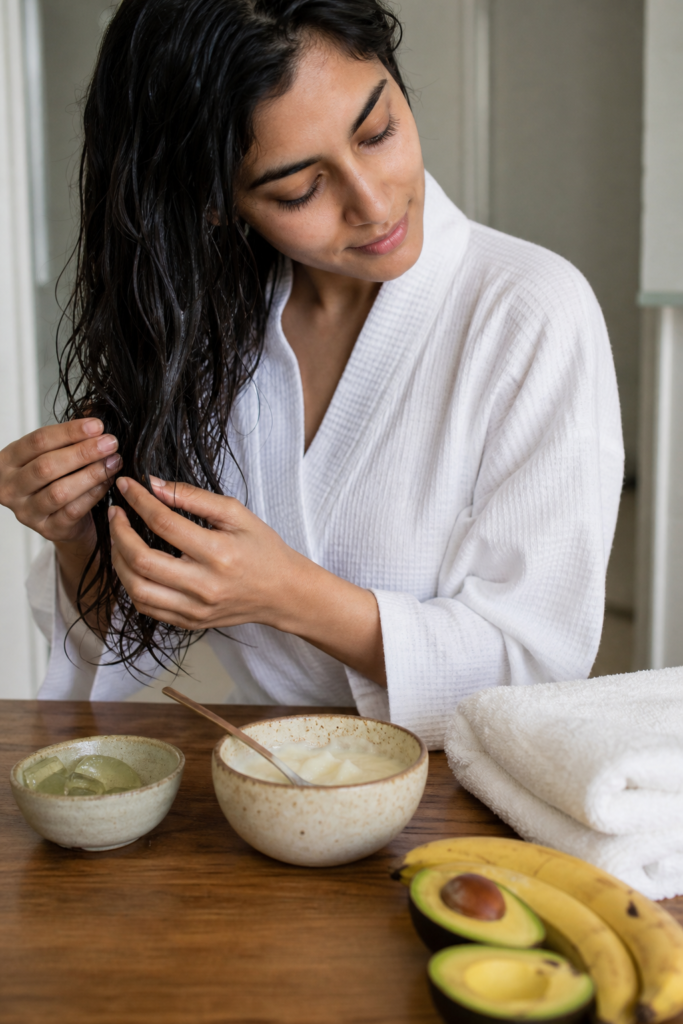
Avocado and Banana Mask
* Blend one ripe avocado with one banana
* Add 1 tablespoon olive oil
* Apply to damp hair
* Wear a shower cap for 15-20 minutes
* Rinse with cool water
Egg and Oil Treatment
* Whisk 2 eggs with 3 tablespoons almond oil
* Apply to damaged sections only
* Cover with a shower cap
* Wait 20 minutes before shampooing
These natural masks work because they contain proteins and fatty acids that repair hair structure from within.
Store-Bought Deep Conditioning Products
Commercial treatments offer convenience and proven results:
- Protein-based conditioners strengthen weak strands
- Moisture-rich creams restore hydration
- Leave-in conditioners provide ongoing protection
- Hair masks work like intensive overnight treatments
- Oil-based serums add shine and smoothness
Choose products based on your hair type. Fine hair needs lightweight formulas, while thick or curly hair handles richer creams.
Moisture-Restoring Techniques
Hydration is essential for repairing dry hair. Water alone won’t fix the problem, so you need to seal moisture into the hair shaft.
The Layering Method
This technique layers products to lock in hydration:
- Apply conditioner to soaking wet hair
- Follow with a lightweight oil or serum
- Use a leave-in conditioner on the ends
- Wrap hair in a microfiber towel for 10 minutes
This method prevents water from evaporating and keeps your hair soft throughout the day.
Hydrating Hair Rinses
- Apple cider vinegar rinse closes cuticles and adds shine
- Green tea rinse provides antioxidants and reduces frizz
- Chamomile rinse soothes scalp and softens strands
- Rice water rinse strengthens and adds protein
Make rinses by steeping tea or vinegar in hot water, cooling it, and pouring over your hair as a final rinse.
Protein Treatments for Strengthening
Protein-rich treatments rebuild the structure of damaged hair. They work by filling in gaps in the hair shaft where damage occurred.
Weekly Protein Treatments
Use protein treatments once or twice weekly if your hair shows significant damage:
- Keratin-based products repair broken bonds in hair
- Collagen treatments add thickness and elasticity
- Plant proteins from beans and grains strengthen gently
- Hydrolyzed proteins penetrate deeper than regular conditioners
Warning: Too much protein causes stiffness and breakage. Balance protein treatments with moisture-rich deep conditioning.
Signs You Need Protein
- Hair feels mushy or stretches too much when wet
- Strands break easily and won’t hold style
- Hair looks dull despite conditioning
- You have heat-damaged or color-treated hair
Changes to Your Daily Hair Routine
How you treat your hair daily matters as much as deep treatments.
Washing Habits That Protect Hair
- Wash hair only 2-3 times weekly to preserve natural oils
- Use lukewarm water instead of hot water, which opens cuticles
- Apply shampoo to scalp only, letting water rinse the rest
- Choose sulfate-free shampoos that clean without stripping
- Focus conditioner on mid-length to ends, not the scalp
Sulfate-free formulas are gentler and preserve the protective oils your hair needs.
Drying and Styling Tips
- Air dry whenever possible instead of blow drying
- If using heat, apply a heat protectant spray first
- Use the lowest heat setting on styling tools
- Dry hair with a microfiber towel instead of rough cotton
- Avoid brushing wet hair, which causes breakage
- Use a wide-tooth comb for detangling
These small changes prevent additional damage while your hair repairs.
Lifestyle Changes That Support Hair Health

Your hair health reflects your overall wellness.
- Drink at least 8 glasses of water daily for hydration
- Eat foods rich in omega-3 fatty acids like salmon and walnuts
- Include biotin-rich foods such as eggs and almonds
- Get adequate sleep so your body repairs itself
- Reduce stress through exercise or meditation
- Take a hair health supplement if your diet lacks nutrients
Healthy hair grows from the inside out, so these changes matter.
When to Trim Damaged Hair
Sometimes the best repair is trimming away the worst damage.
Get a trim every 6-8 weeks if your hair is severely damaged. Cutting off split ends prevents them from traveling up the hair shaft and causing more breakage.
You don’t need to cut much, just 1/4 to 1/2 inch at the ends. Regular small trims are better than waiting and cutting off several inches.
Recovery Timeline and Expectations
Damaged hair repair takes patience. You won’t see results overnight.
- Weeks 1-2: Hair feels softer and looks shinier
- Weeks 3-4: Frizz decreases and tangles ease
- Weeks 5-8: Texture improves noticeably
- Weeks 9-12: Split ends reduce and hair breaks less
Most people need 8-12 weeks of consistent care before seriously damaged hair shows significant improvement.