How to Style Wavy Hair Without Product?
Styling wavy hair does not always require mousse, gel, curl cream, or other styling products. In fact, you can create soft, defined waves using the right washing method, drying technique, haircut, and overnight styling routine.
The key is to work with your natural hair texture instead of trying to force your waves into a completely different shape. With a few simple techniques, you can reduce frizz, improve wave definition, and create natural-looking volume without applying styling products.
If you want even more options, start with our roundup of wavy hairstyles for medium length hair.
Table of Contents
Understand Your Natural Wavy Hair Type
Before choosing a styling method, it helps to understand your natural wave pattern.
Wavy hair generally falls between straight and curly hair and is commonly grouped into three categories:
- Type 2A: fine, loose, S-shaped waves that are easy to weigh down.
- Type 2B: more defined S-waves that start around mid-length, often with some frizz.
- Type 2C: thicker, well-defined waves that start near the root and can include a few loose spirals.
People with Type 2A hair usually need lightweight styling techniques that preserve volume. Those with Type 2B or Type 2C wavy hair may benefit from techniques that encourage stronger curl definition and control frizz.
Your hair’s porosity, density, thickness, and moisture level can also affect how your waves behave.

Start With the Right Washing Routine
Good styling begins in the shower.
If your hair is weighed down by oil, dirt, or buildup, your natural wave pattern may appear flat. Wash your scalp thoroughly while keeping the lengths of your hair hydrated.
Use lukewarm water rather than very hot water because excessive heat can remove natural oils from the scalp and increase dryness.
When shampooing, concentrate mainly on the scalp. Let the shampoo rinse through the rest of your hair rather than rubbing the lengths aggressively.
Apply conditioner mainly from the mid-lengths to the ends.
Avoid Overwashing Wavy Hair
Washing your hair too frequently can make it dry and frizzy.
Many people with naturally wavy hair find that washing every two to three days works well, although the ideal frequency depends on your scalp and lifestyle.
Maintaining your hair’s natural oils can help your waves appear smoother even without styling products.
Detangle Your Hair While It Is Wet
Brushing dry wavy hair is one of the easiest ways to lose wave definition.
Instead, gently detangle your hair while it is wet or damp.
Use:
- A wide-tooth comb
- A detangling brush designed for wet hair
- Your fingers
Start from the ends and slowly work upward toward the roots.
Once your hair begins drying, avoid repeatedly brushing or combing it. This allows the strands to stay grouped together and form more noticeable waves.
Scrunch Your Hair After Washing
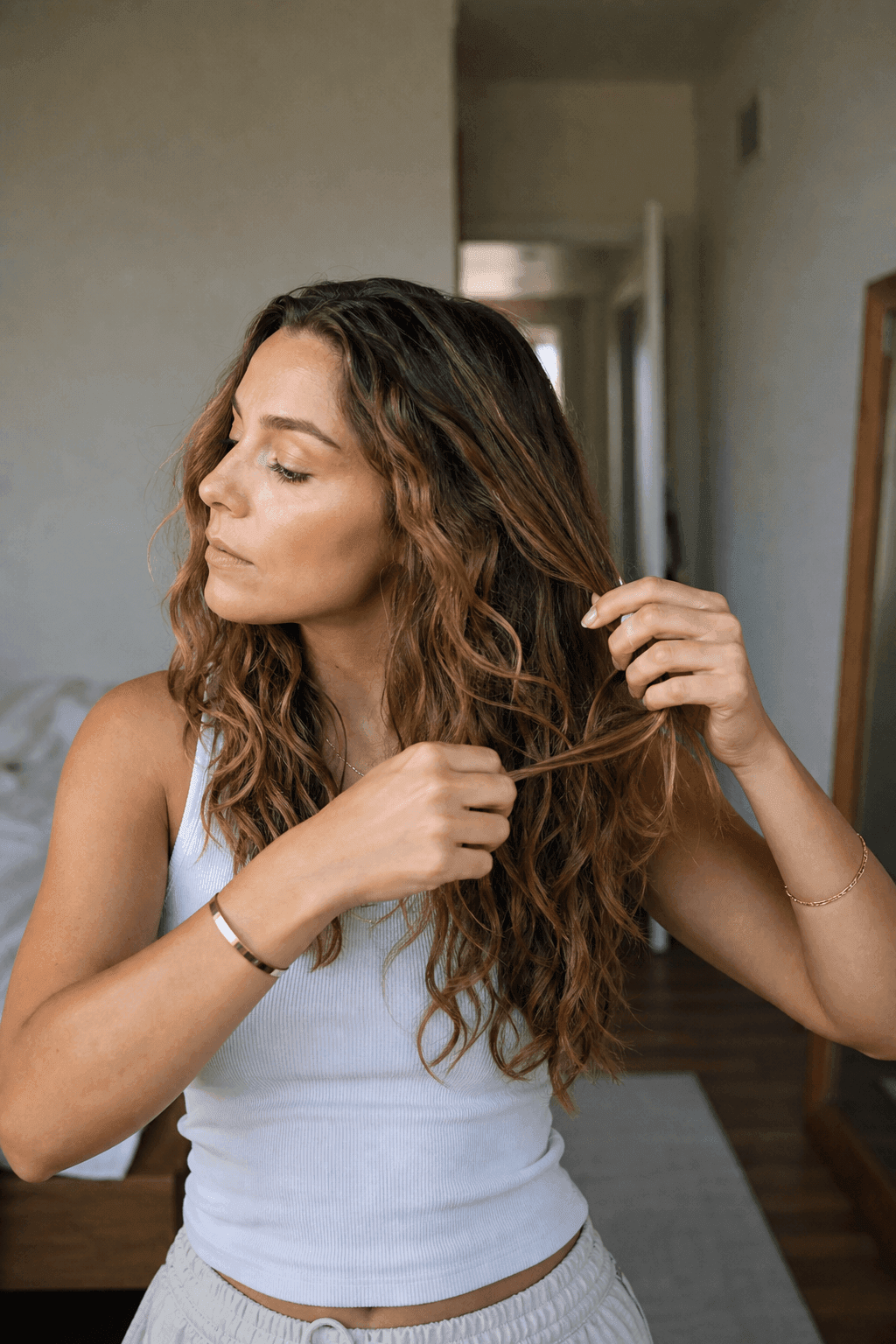
Scrunching is one of the simplest ways to define wavy hair naturally.
After washing and conditioning your hair, gently squeeze out excess water.
Tilt your head slightly forward or to one side. Place the ends of your hair in your palms and push them upward toward your scalp.
Gently squeeze and release.
Repeat this process around your head.
Scrunching encourages your natural S-shaped wave pattern without requiring curl cream, mousse, or gel.
Avoid twisting or squeezing too aggressively because this can create tangles and frizz.
Use a Microfiber Towel or Cotton T-Shirt
Traditional bath towels can rough up the hair cuticle and create frizz.
Instead, use a microfiber towel or a soft cotton T-shirt.
Gently squeeze excess moisture from your hair rather than rubbing it.
This technique helps maintain natural wave clumps while reducing friction.
You can also try plopping, a popular drying technique for wavy and curly hair.

How to Plop Wavy Hair
Place a cotton T-shirt on a flat surface.
Flip your damp hair forward so your waves collect naturally in the center of the shirt.
Wrap the shirt around your head and secure it.
Leave it wrapped for approximately 10 to 30 minutes.
Plopping helps absorb excess water while allowing your waves to maintain their natural shape.
Air-Dry Your Hair Whenever Possible
Air drying is one of the easiest ways to style wavy hair without heat or product.
After scrunching your hair, allow it to dry naturally.
Try not to touch your hair while it dries. Constantly touching or rearranging the strands can separate the wave clumps and create frizz.
If your roots tend to become flat, gently change your part while your hair is still damp.
For example, if you normally wear your hair parted on the left, let it dry slightly toward the right before flipping it back. This can create more natural root volume.
Use a Diffuser Without Styling Products
If you do not have enough time to air-dry your hair, a hair dryer with a diffuser attachment can help.
Set the dryer to low or medium heat and use a low airflow setting.
Place sections of hair inside the diffuser bowl and gently lift them toward the scalp.
Avoid constantly moving the dryer around because strong airflow can create frizz.
Diffusing can enhance your natural wave pattern while giving your hair more volume.
Using a heat protectant is normally recommended when regularly applying heat. If your goal is strictly styling without any products, keep the temperature as low as possible and avoid prolonged heat exposure.
Try Overnight Braids for Defined Waves
Braiding is one of the most reliable heatless wavy hair styling methods.
Start with slightly damp hair.
Divide your hair into two or more sections and create loose braids.
The number of braids will affect the final result.
Two loose braids usually create large, relaxed waves, while several smaller braids produce tighter waves.
Sleep with the braids overnight and gently undo them the next morning.
Instead of brushing your hair, separate the waves carefully with your fingers.
Try a Loose Bun Overnight
A loose bun can create softer waves than braids.
Start with slightly damp hair and gather it into a loose ponytail.
Twist the hair gently and wrap it into a bun. Secure it using a soft scrunchie instead of a tight elastic.
When you release the bun the next morning, shake your hair gently using your fingers.
This method works particularly well for medium-length and long wavy hair.
Choose a Haircut That Supports Natural Waves

Your haircut can make a major difference in how your waves look without styling products.
Heavy, one-length hair can sometimes pull waves downward, especially if your hair is long or thick.
Soft layers can remove excess weight and encourage movement.
Popular haircuts for naturally wavy hair include long layers, face-framing layers, layered lobs, shag haircuts, and shoulder-length layered cuts.
However, extremely short layers can sometimes increase unwanted volume or frizz, particularly with thick Type 2C hair.
Ask your hairstylist to work with your natural wave pattern rather than cutting your hair as if it were completely straight.
Sleep on a Satin or Silk Pillowcase
Your nighttime routine can affect how your hair looks the following morning.
Cotton pillowcases create friction as your hair moves while you sleep. This can disturb wave clumps and increase frizz.
A silk or satin pillowcase provides a smoother surface.
People with longer hair can also loosely gather their hair toward the top of the head using a soft scrunchie. This technique is sometimes called the pineapple method.
It can help protect natural waves overnight and reduce flattening.
Refresh Your Waves With Water
You do not necessarily need styling products to refresh second-day hair.
Lightly mist your hair with water using a spray bottle.
Focus mainly on sections that have become flat or frizzy.
Scrunch the damp sections upward using your hands and allow them to air-dry.
Water can reactivate the natural shape of your waves and help strands group together again.
Avoid completely soaking the hair unless you plan to wash it.
Avoid Common Habits That Make Wavy Hair Frizzy
Even good styling techniques may not work well if your daily habits constantly disturb your natural texture.
Try to avoid brushing your hair when it is completely dry, rubbing it aggressively with a towel, using very hot water, touching it constantly while drying, or sleeping with wet hair loose against a cotton pillowcase.
You should also avoid using very tight hairstyles every day because repeated tension can flatten your wave pattern and put stress on the hairline.
For the care side of things, see our guide on how to transition to gray hair gracefully.
More ideas to try: beach wave hairstyles and frizzy wavy hair ideas.