How to Transition to Gray Hair Gracefully (Without the Awkward Phase)

Deciding to stop coloring your hair is easy. Living with a stripe of silver roots against old dye for a year or more is the hard part, and it is the reason many people give up and book a color appointment halfway through.
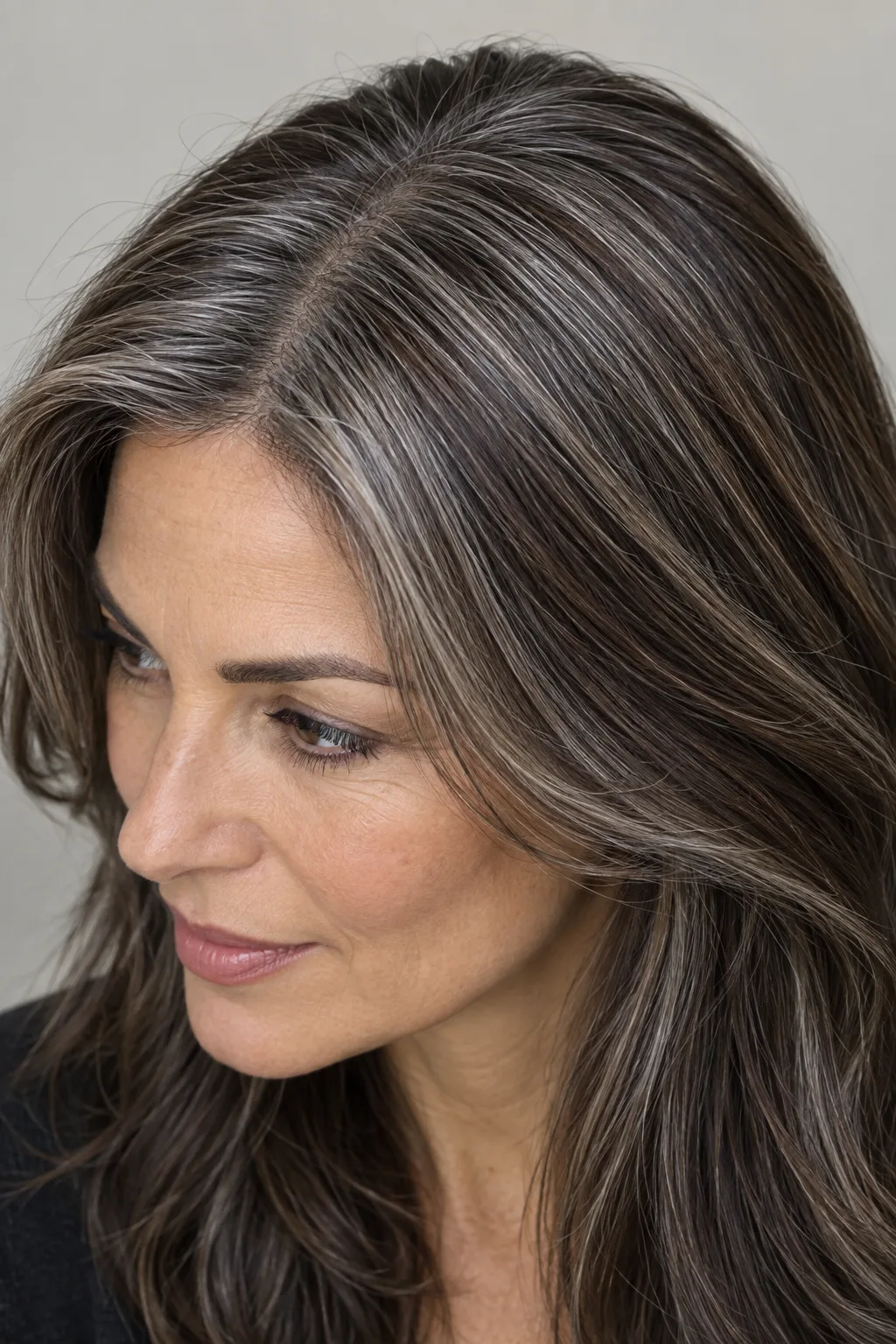
The good news is that the awkward phase is mostly a contrast problem. The sharper the line between your natural gray and your dyed lengths, the more obvious it looks. Every method below works by softening that line, shortening the time you live with it, or both.
This guide walks you through the main ways to go gray, how long each one takes, how to hide regrowth while it happens, and how to care for gray hair once it is fully grown in.
Table of Contents
Why the Grow-Out Phase Looks Awkward
Permanent hair dye does not wash out. It stays in every strand it has touched until that hair is cut off, so your new gray grows in right next to a solid band of color. On dark hair, that band can look like a hard line after only four to six weeks.
Gray hair also often feels different from the hair you had before. Many people notice it is coarser, drier, or wirier, which makes the regrowth stand out in texture as well as color.
Hair grows roughly half an inch a month on average. That means shoulder-length dyed hair can take two years or more to grow out completely if you never cut it. Knowing that number up front helps you pick the method that fits your patience and your hair length.
Choose Your Transition Method
Go Short With a Big Chop
The fastest route is to let two to three inches of gray grow in, then cut off everything that is dyed. A pixie or short crop gets you from dyed to fully natural in about four to six months.
This works best if you already like short hair or have been curious about trying it. It is a harder sell if your hair is long and you are attached to the length. If you want ideas for the cut itself, browse these short hairstyles for women over 50.
Grow It Out With Regular Trims
If you want to keep some length, stop coloring and get a trim every six to eight weeks. Each trim takes off a little more of the dyed ends while the gray grows in at the roots.
This is the slowest method and the one with the most visible line, so it helps to pair it with the concealing tricks later in this guide. A mid-length cut, such as a long bob, is a practical halfway point because it removes a good portion of the old color without going very short.
Blend With Highlights or Lowlights
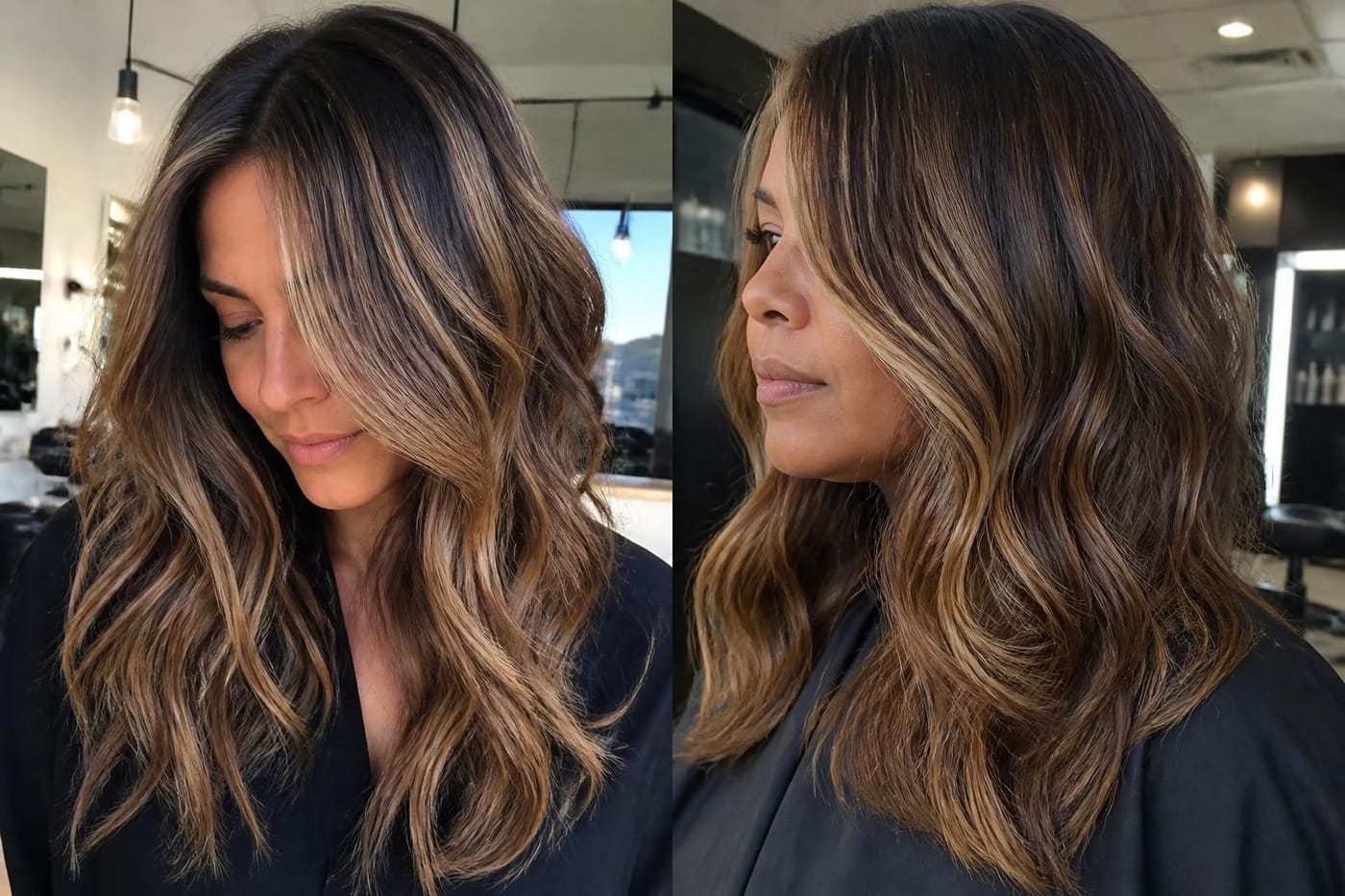
A colorist can weave fine highlights through dyed hair so the silver regrowth blends in instead of stopping at a hard line. This is often called gray blending or herringbone highlighting. On darker hair, lowlights may also be added to keep some depth.
Blending is the most comfortable option for people with long hair, but it is a professional job. Lifting old permanent dye, especially dark brown or black, takes lightener, and doing that at home risks uneven orange patches and breakage. Expect two or three salon visits spaced several weeks apart, and ask for a strand test first.
Soften the Contrast With a Demi-Permanent Gloss
If you are not ready to lighten, a demi-permanent gloss in a shade close to your natural gray or a soft ash can take the edge off the regrowth line. Demi-permanent color fades gradually over about 20 to 28 shampoos, so it does not create a new band the way permanent dye does.
This is a good bridge option if you are mostly gray already and only want to tone down the contrast for a few months.
How to Hide Regrowth While It Grows
Whichever method you choose, a few simple habits make the in-between months easier to live with.
Root touch-up sprays or powders. These wash out with your next shampoo, so they cover the line for special occasions without adding new permanent color.
Change your part. A zigzag part or a deep side part breaks up the stripe along the top of your head.
Add texture. Loose waves or curls scatter light and hide the transition line far better than sleek, straight hair.
Use accessories. Wide headbands, scarves, and hats cover the crown on days when the regrowth bothers you most.
If you would rather hide gray than grow it out for now, these dark hair colors that hide gray hair are worth a look. You can always start the transition later.
How to Care for Gray Hair

Once your gray is fully grown in, a few changes to your routine keep it bright and soft instead of dull and brittle.
Keep Yellow Tones Away
Gray and white hair can pick up a yellow cast from sun, heat styling, hard water, and smoke. A purple shampoo once a week neutralizes that yellow. Leave it on for one to three minutes at first, since overusing it can leave a faint lilac tint on very light silver hair.
Add Moisture Back
Because gray hair often feels drier, use a hydrating conditioner every time you wash and a deep conditioning mask once a week. If your gray is coarse or wiry, a lightweight leave-in or a few drops of hair oil on the ends helps it lie smoother. For a full routine, see our guide on how to repair dry and damaged hair at home.
Protect It From Heat and Sun
High heat can scorch light hair and turn it yellow faster. Keep flat irons and curling irons at a moderate setting, use a heat protectant, and wear a hat for long days outside.
Get a Cut That Shows It Off
Gray hair shows shape and shine well, so a clean, well-maintained cut makes a bigger difference than it did when your hair was colored. A trim every six to ten weeks keeps the ends from looking frayed. For inspiration, try these hairstyles for women over 50.
How Long Does the Transition Take
Timing depends on your method and your starting length.
Big chop: about 4 to 6 months
Blending with highlights: the line is softened within a few salon visits, and the old color grows out fully over 1 to 2 years
Growing out with trims: about 1 year for chin-length hair, and 2 years or more for shoulder length and longer
Pick the route you can live with day to day, not just the fastest one. A method you stick with is better than a quick one you abandon after three months.
To keep your hair in good shape between styles, read our guide on how to stop hair thinning at the crown.
Still deciding? You might also like hairstyles for long hair for women over 40.