How to Get Rid of Dandruff Naturally (Without Harsh Chemicals)

Dandruff is a common scalp condition in which small pieces of skin flake off and land on your shoulders. It is not a sign that you are unclean, and it is rarely serious, but the itch and the white flakes on dark clothes can wear on you.
Many people want to start with gentler options before reaching for a medicated shampoo. Some natural approaches can help, mainly the ones that fix the everyday habits behind flaking. Others have thin evidence behind them, and a few can irritate your scalp if you use them the wrong way.
In this guide, we will cover what usually causes dandruff, which natural methods are worth trying and how to use them safely, and how to tell when it is time to switch to something stronger.
Table of Contents
What causes dandruff
Dandruff has more than one cause, which is why a remedy that works for a friend may do nothing for you. According to the American Academy of Dermatology, it can come from oily skin, your hair care habits, or an underlying medical condition.
The most common contributors include:
Seborrheic dermatitis, an inflammatory reaction that causes greasy, yellowish flakes and redness, and is often linked to a yeast called Malassezia that lives on most scalps
A dry scalp, which tends to produce smaller, whiter flakes along with tight, dry skin
Washing too infrequently, so oil, dead skin, and product build up
Sensitivity to a shampoo, dye, or styling product
Other skin conditions, such as psoriasis, eczema, or a fungal infection of the scalp
Working out which type you have shapes what you should try first. Oily, yellowish flakes point toward a different approach than dry, powdery ones, and a scalp that is red, sore, or thickly scaled needs a professional look.
Natural ways to get rid of dandruff
Start with the first two methods below, since they cost almost nothing and carry the lowest risk. Try one change at a time for two to four weeks so you can tell what is working.
Wash regularly and rinse thoroughly
The simplest fix is to shampoo often enough that oil and dead skin do not pile up. The American Academy of Dermatology suggests that people with fine, straight, or oily hair may need to shampoo daily, while people with coarse, curly, or coily hair can wash as needed.
Use lukewarm rather than hot water, work the shampoo into your scalp and not just your lengths, and rinse until the water runs clear. Shampoo or conditioner left on the scalp can itself cause flaking.
Massage and gently exfoliate your scalp
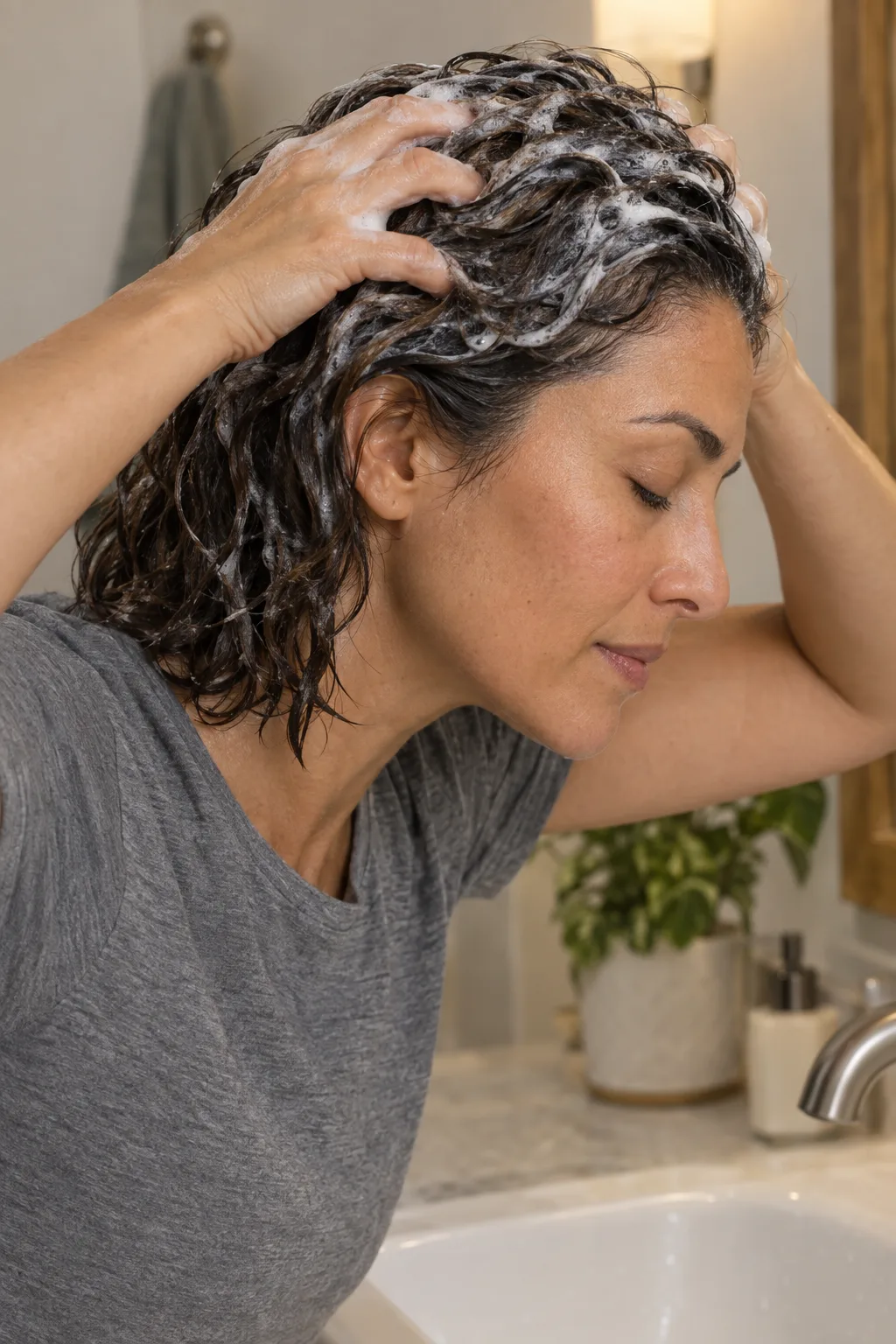
Spend two to three minutes massaging shampoo into your scalp with the pads of your fingers, using small circles. This helps loosen flakes so they rinse away. A soft silicone scalp brush can do the same job.
Never scratch with your nails, and skip harsh scrubs. Roughing up an already irritated scalp can make flaking and itching worse.
Tea tree oil
Tea tree oil has some of the best evidence among natural options. In a study of 126 people, those who washed daily with a 5% tea tree oil shampoo had a clearly greater improvement in dandruff than those using a placebo shampoo. It is a single, fairly small study, so treat it as encouraging rather than settled.
Tea tree oil is also a known cause of allergic skin reactions, so use it carefully. Choose a shampoo that already contains it at the strength on the label instead of mixing your own, never put the undiluted oil on your scalp, and stop using it if you notice burning, redness, or more itching. Do a small patch test on your inner forearm first.
Apple cider vinegar rinse
An apple cider vinegar rinse is popular for dandruff, but there is little good research showing that it works. The idea is that its acidity helps loosen flakes and discourages yeast growth, and some people find their scalp feels less itchy afterward.
If you want to try it, dilute one tablespoon of vinegar in a cup of water, pour it over your scalp after shampooing, leave it for a minute or two, and rinse well. Use it no more than once a week, and skip it if your scalp is cracked, sore, or inflamed, since undiluted or frequent vinegar can irritate.
Aloe vera gel
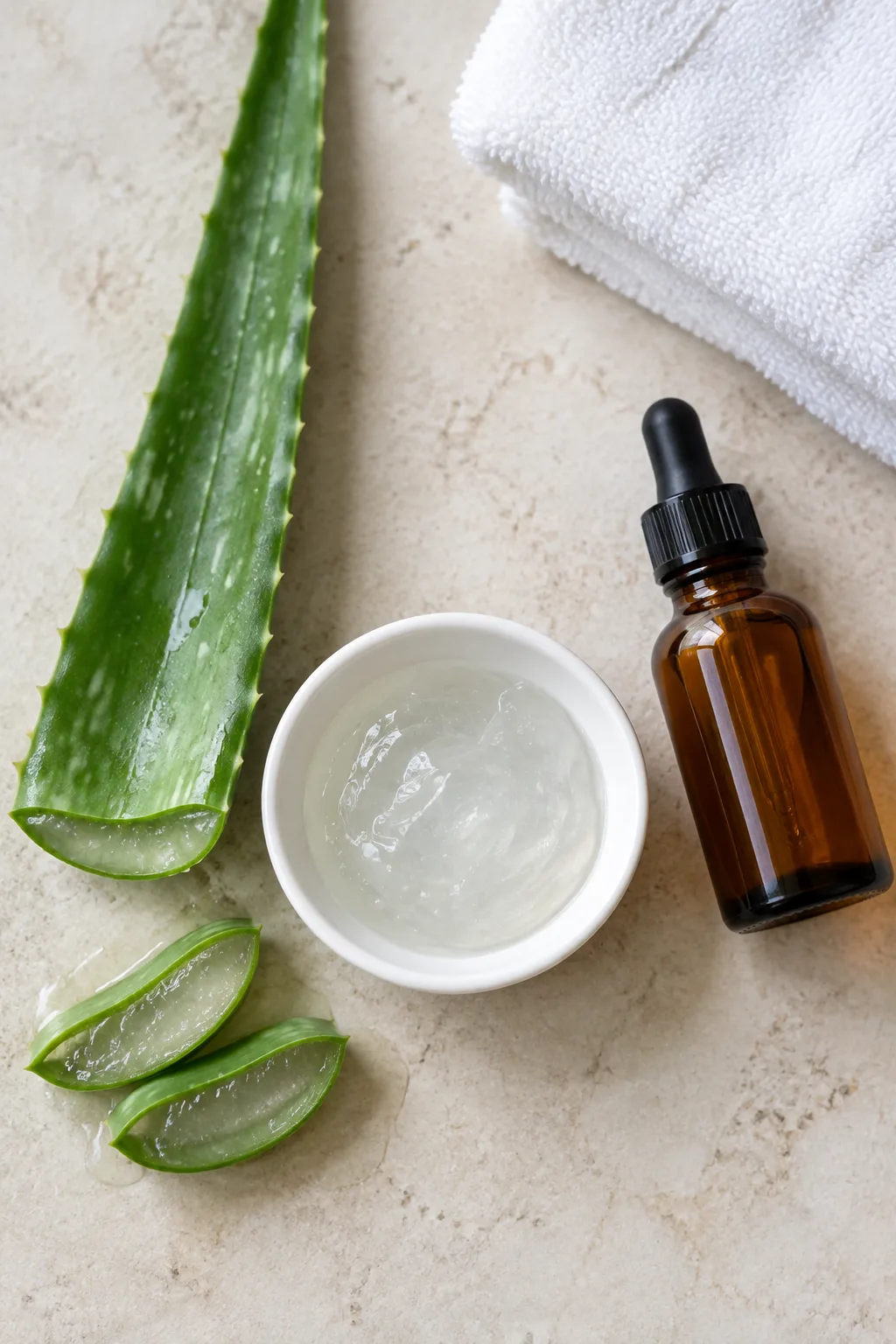
Pure aloe vera gel is soothing and may calm an itchy, dry scalp, though the research on dandruff itself is limited. Choose a gel with no added fragrance or alcohol, massage a thin layer into your scalp, leave it for 15 to 20 minutes, and shampoo it out.
Coconut oil and other oils
A little oil can soften scaly patches and ease the tightness of a dry scalp. The catch is that the yeast linked to dandruff feeds on scalp oils, and some dermatologists caution that heavy oils may make flaking worse for people with an oily or seborrheic scalp.
If your scalp feels dry rather than greasy, warm a small amount, apply it to the scalp about 30 minutes before you wash, and shampoo it out fully. If you get more flakes or itching afterward, stop.
Habits that keep flakes from coming back
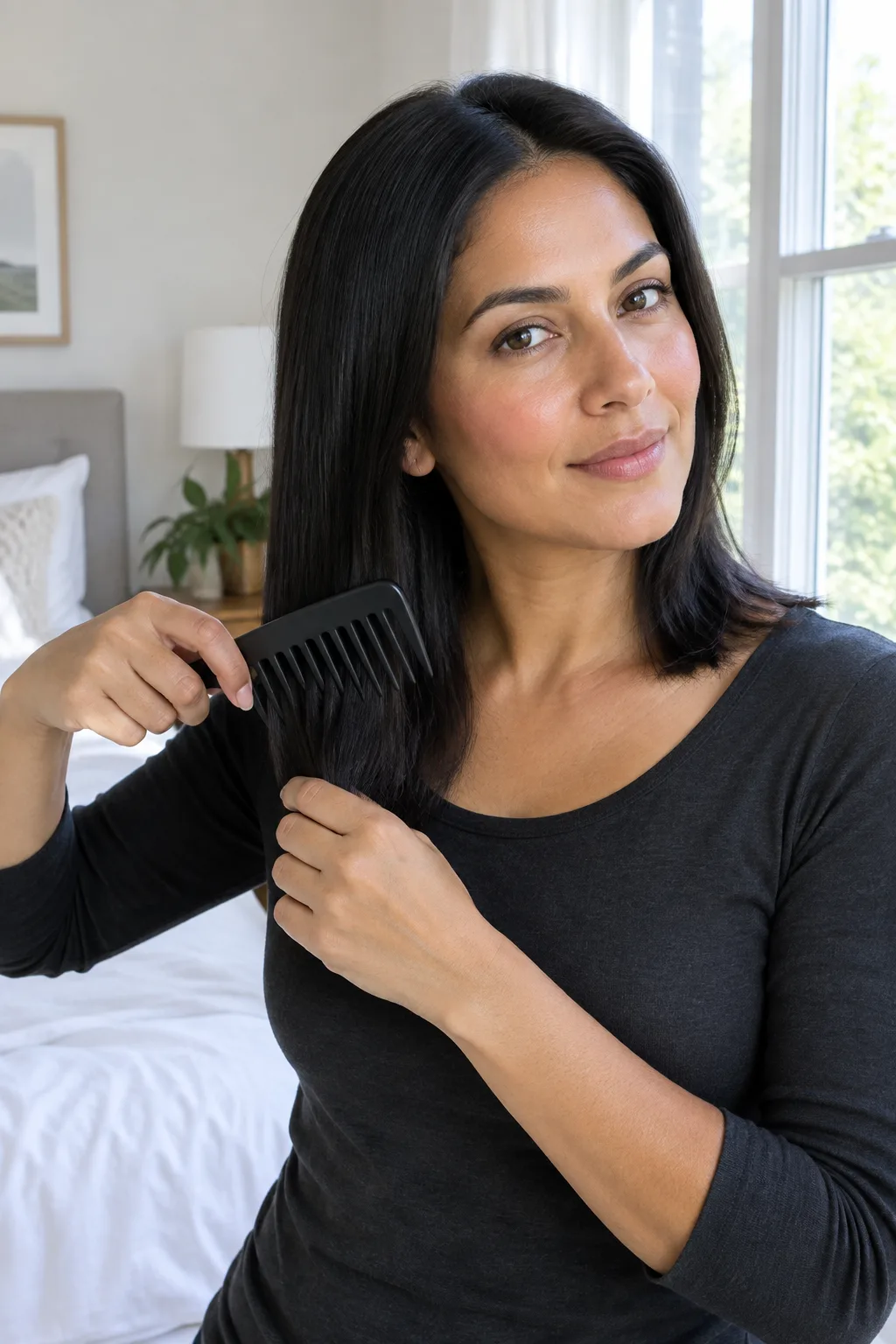
Once your scalp settles, a few small habits help keep it that way:
Limit heavy styling products and dry shampoo, which can build up on the scalp
Wash your brushes and combs weekly, and change your pillowcase once or twice a week
Protect your scalp from strong sun with a hat, since sunburn can cause its own peeling
Manage stress and sleep where you can, as flare-ups often come with stressful stretches
Introduce new hair products one at a time so you can spot a reaction
When natural remedies are not enough
If you have been consistent for about four weeks and see little change, a medicated dandruff shampoo is the next step. These are not natural, but they are the products with the most evidence behind them. The American Academy of Dermatology lists the common active ingredients as zinc pyrithione, selenium sulfide, ketoconazole, salicylic acid, sulfur, and coal tar.
Follow the label. In general, leave the shampoo on your scalp for several minutes before rinsing, and use it about twice a week if you have straight, wavy, or oily hair. If you have curly or coily hair, once a week is often enough, since these shampoos can be drying.
See a doctor or dermatologist if your dandruff does not improve with these steps, or if you notice any of the following:
Redness, swelling, or oozing on the scalp
Thick, silvery, or crusted patches
Pain, or itching severe enough to disturb your sleep
Hair loss along with the flaking
Those signs can point to seborrheic dermatitis, psoriasis, or an infection, all of which respond better to proper treatment than to home remedies. Stop any natural remedy that makes your scalp burn, swell, or itch more.
A good routine makes every look easier, so check out our guide on how to transition to gray hair gracefully.
Still deciding? You might also like elegant cornrow hairstyles for weddings and special events, cornrow rasta hairstyles for every occasion, and easy protective styles for natural hair.