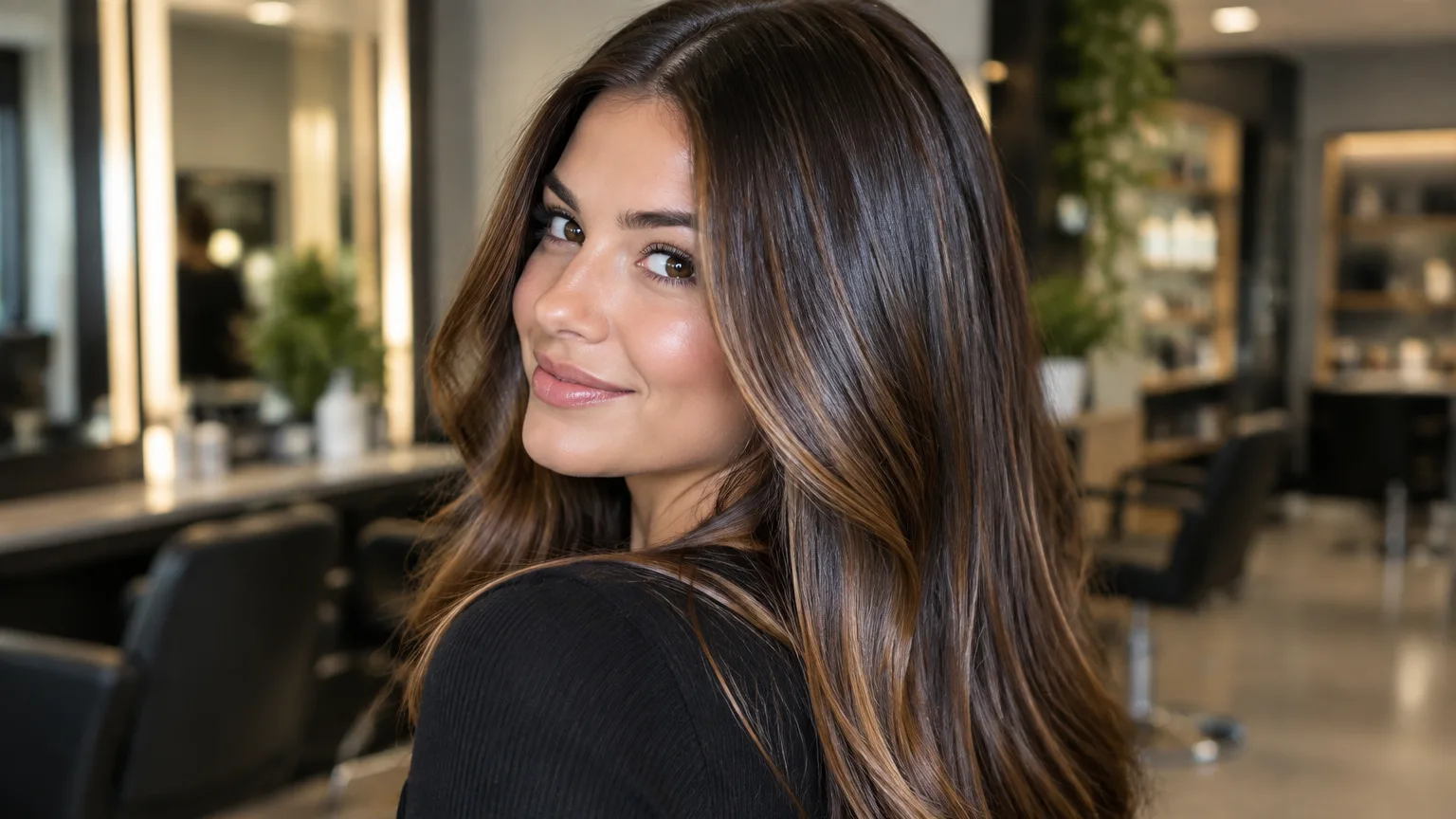
How to Protect Hair From Hard Water Damage

If your hair feels rough and dull no matter which conditioner you buy, or your color fades and turns brassy weeks earlier than it should, your shower water may be part of the problem.
Hard water carries dissolved minerals, mainly calcium and magnesium. They are harmless to drink, but they leave a thin film on hair with every wash. Over weeks and months, that film builds up, and products stop working the way they should.
For a wider range of looks, see our full list of deep plum hair color ideas.
In this guide, we will show you how to tell whether hard water is affecting your hair, how to remove the buildup, and which changes to your routine and your shower actually make a difference.
Table of Contents
Signs Hard Water Is Affecting Your Hair
Mineral buildup does not look the same on everyone, but these are the most common signs.
Hair feels stiff, straw-like, or coated, even right after conditioning
Shampoo does not lather well
Hair looks dull and flat, and loses shine quickly after a wash
Blonde, gray, or highlighted hair turns brassy or slightly green
Color-treated hair fades faster than your colorist expected
Curls lose definition and feel crunchy or tangled
Look around your bathroom too. White, chalky spots on your showerhead, faucets, or glass shower door are a strong clue that your water is hard.
How to Check Your Water Hardness
You do not have to guess. There are two easy ways to find out.
Check your local water report. Most US water utilities publish an annual water quality report, often called a Consumer Confidence Report, that lists hardness. In the UK, water suppliers let you look up hardness by postcode.
Use test strips. Inexpensive water hardness strips from a hardware store give you a reading in under a minute. This is the best option if you use well water.
Water is usually described as soft, moderately hard, hard, or very hard. If yours comes back hard or very hard, the steps below are worth adding to your routine.
Remove Existing Mineral Buildup
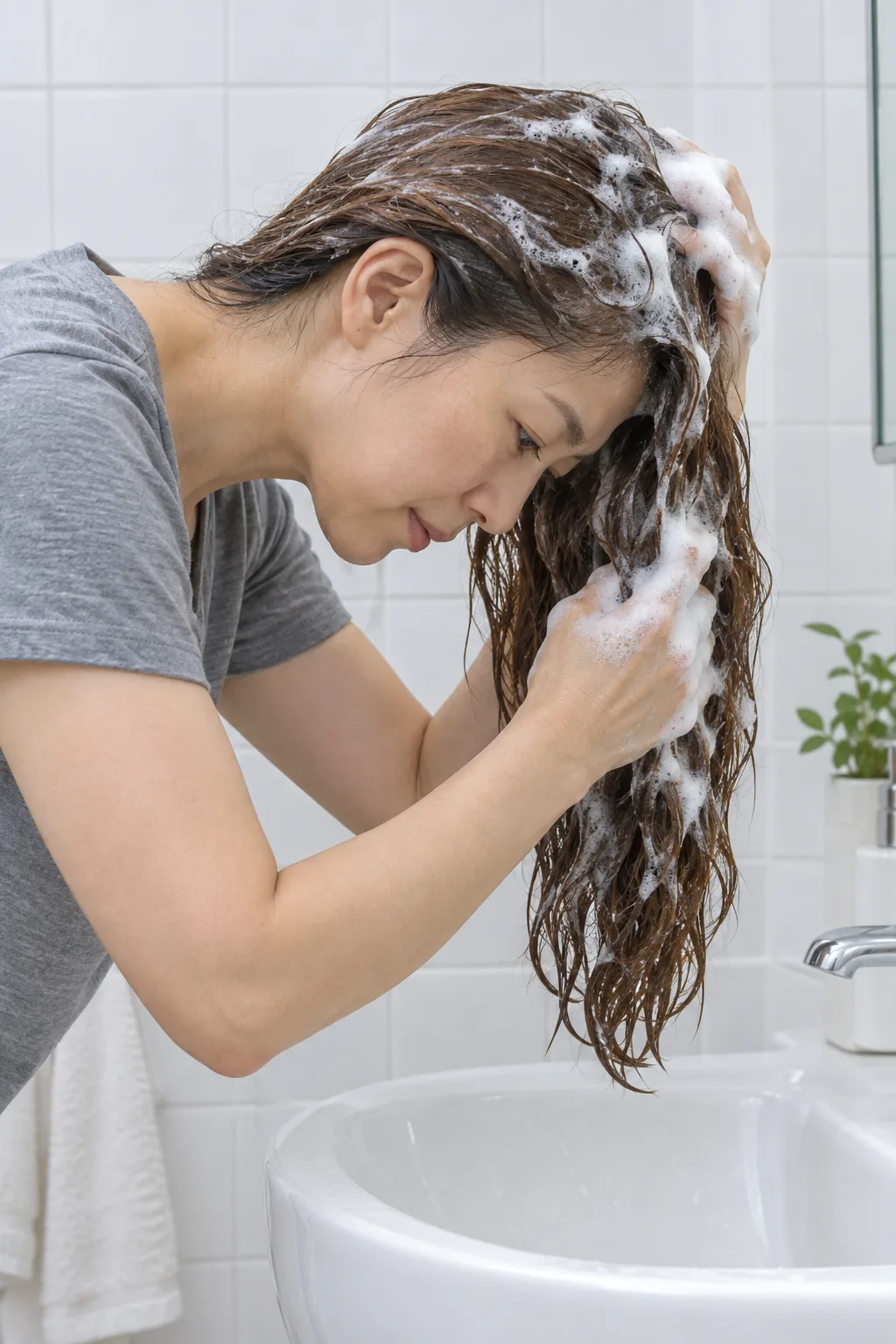
Use a Chelating Shampoo
A regular shampoo washes away oil and dirt, but it does little against minerals. A chelating shampoo contains ingredients, such as EDTA or sodium phytate, that bind to calcium and magnesium so they rinse away.
Use it once every one to two weeks, not every wash. Chelating shampoos are strong and can leave hair dry if overused. Always follow with a rich conditioner or a mask.
Chelating vs. Clarifying Shampoo
These two are often confused. A clarifying shampoo removes product buildup, such as silicones, oils, and styling products. A chelating shampoo targets minerals. Many products do both, so check the label for the word "chelating" or for ingredients like EDTA if hard water is your main concern.
Try a Diluted Vinegar Rinse
A mild acidic rinse can help loosen light mineral deposits and smooth the hair cuticle. Mix one to two tablespoons of apple cider vinegar in a cup of water, pour it over clean hair, leave it for a minute or two, then rinse.
Keep it diluted and use it no more than once a week. Undiluted vinegar can irritate the scalp. This rinse is a gentle extra, not a replacement for a chelating shampoo when buildup is heavy.
Protect Your Hair Going Forward
Condition Every Time You Wash
Minerals roughen the outer layer of the hair strand, which makes it lose moisture faster. Use conditioner after every shampoo and add a deep conditioning mask once a week. If your ends are already rough, our guide on how to treat split ends at home covers how to repair them.
Finish With a Leave-In or Oil
A lightweight leave-in conditioner or a few drops of hair oil on damp ends adds a light layer between your hair and the next wash. It also helps with the frizz that hard water often causes. For more on that, see how to fix frizzy hair.
Wash a Little Less Often
Every wash deposits a bit more mineral residue. If your scalp tolerates it, stretching washes by a day, with dry shampoo in between, reduces how much hard water touches your hair each week.
Give Colored Hair Extra Care
Minerals can react with hair color and make it turn brassy or fade faster. Use a chelating treatment before a color appointment so the new color goes onto clean hair, and ask your colorist whether they offer an in-salon mineral treatment. For blonde and gray hair, a purple shampoo once a week counters yellow tones.
Do Shower Filters Work
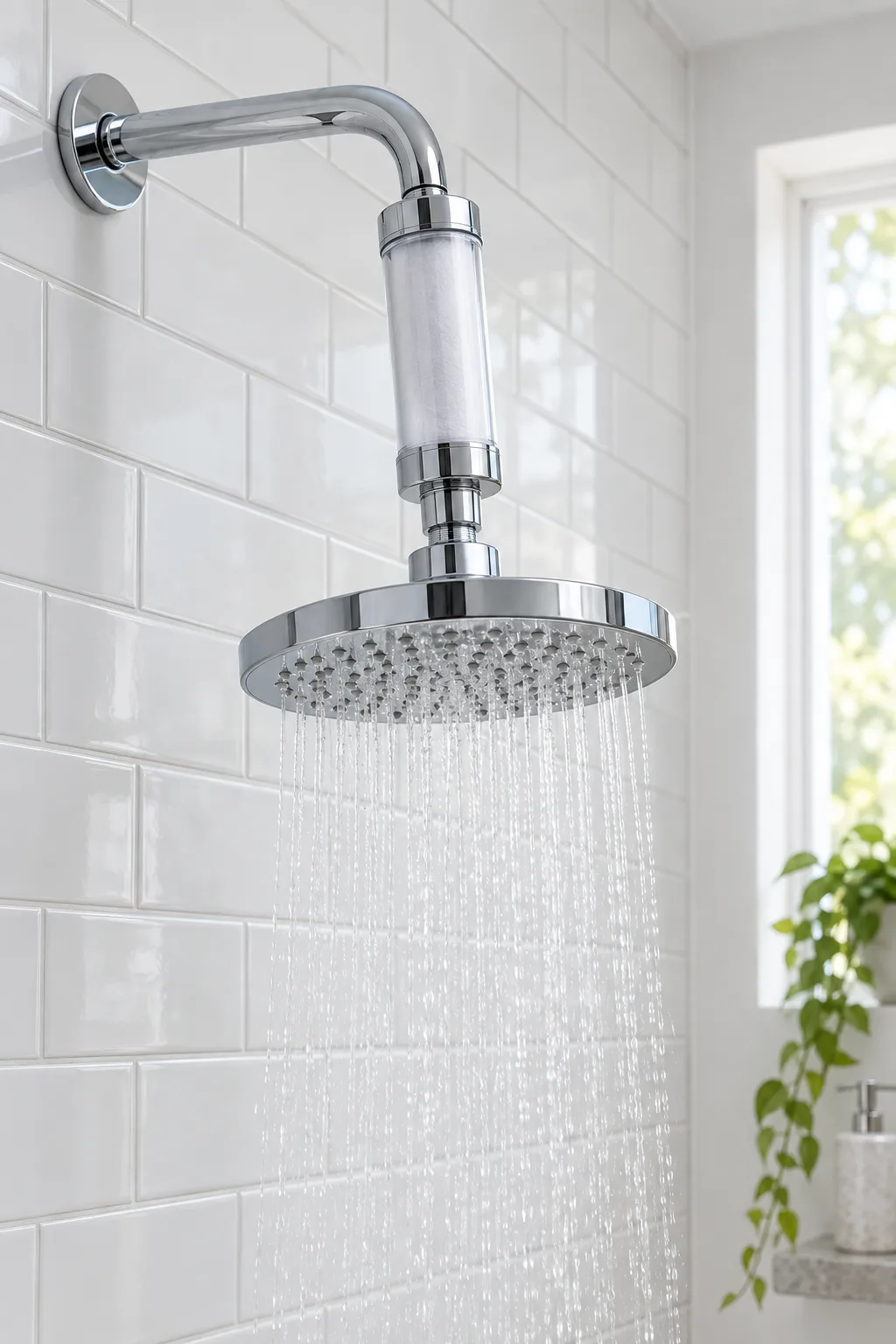
Shower filters are popular for hard water, but it helps to know what they can and cannot do.
Most showerhead filters reduce chlorine, which can dry out hair and fade color. Many use materials like vitamin C or KDF media for this.
Few showerhead filters remove much calcium or magnesium. Water moves through them too quickly for significant softening. Check the manufacturer's test data before trusting a hard water claim.
A whole-house water softener is the only reliable way to truly soften your water. It is a bigger investment and usually needs a plumber, but it also protects your pipes and appliances.
If you rent or cannot install a softener, a filter for chlorine plus a regular chelating shampoo is a practical middle ground.
A Simple Hard Water Hair Routine
Every wash: gentle shampoo, followed by conditioner
Once a week: deep conditioning mask, and a diluted vinegar rinse if you like it
Every one to two weeks: chelating shampoo, followed by a mask
Before a color appointment: chelating wash a day or two ahead
Give it three to four weeks before judging the results. Once the old buildup is gone and you stop adding new layers, most people notice softer hair, better lather, and color that holds its tone longer.
To keep your hair in good shape between styles, read our guide on how to do peekaboo hair color at home.
More ideas to try: dark blonde hair color ideas for every skin tone and ginger hair color ideas.