
How to Stop Hair Thinning at the Crown: What Actually Works

Thinning at the crown is easy to miss until a photo taken from above, or a glance in a second mirror, shows more scalp than you expected. It can feel alarming, especially when the rest of your hair still looks full.
There is a lot of noise online about crown thinning, from miracle oils to expensive supplements. Some of it helps a little, most of it does very little, and a few habits can quietly make the problem worse.
For a wider range of looks, see our full list of hairstyles for women over 50.
This guide sorts what has real evidence behind it from what does not, explains when to see a dermatologist, and covers the styling habits and cuts that make a thin crown far less noticeable while you treat it.
Table of Contents
Why Hair Thins at the Crown
The crown is one of the most common places for thinning to show, and a few different causes can be behind it.
Pattern hair loss. In both women and men, hereditary hair loss is the most common cause. In women it often shows as a widening part and thinning across the top and crown rather than a bald patch.
Shedding after stress, illness, or childbirth. A big physical or emotional stress can push many hairs into the shedding phase at once, usually showing up two to three months later. This type often improves on its own.
Tension from hairstyles. Tight ponytails, buns, and braids pulled toward the crown can damage follicles over time.
Hormonal and health changes. Menopause, thyroid problems, and low iron levels can all play a part.
Because the causes are so different, the right fix depends on which one you have. That is why a diagnosis matters more than any product.
See a Dermatologist Early
If you notice your crown or part getting thinner, book an appointment with a board-certified dermatologist sooner rather than later. According to the American Academy of Dermatology, treatment for pattern hair loss works best when it is started at the first sign of thinning.
A dermatologist can look at your scalp closely, ask about your health history, and order blood tests if needed. This rules out conditions that can look like ordinary thinning but need different treatment. See a doctor right away if the thinning comes with itching, pain, redness, scaling, or sudden patchy bald spots.
Treatments With Real Evidence
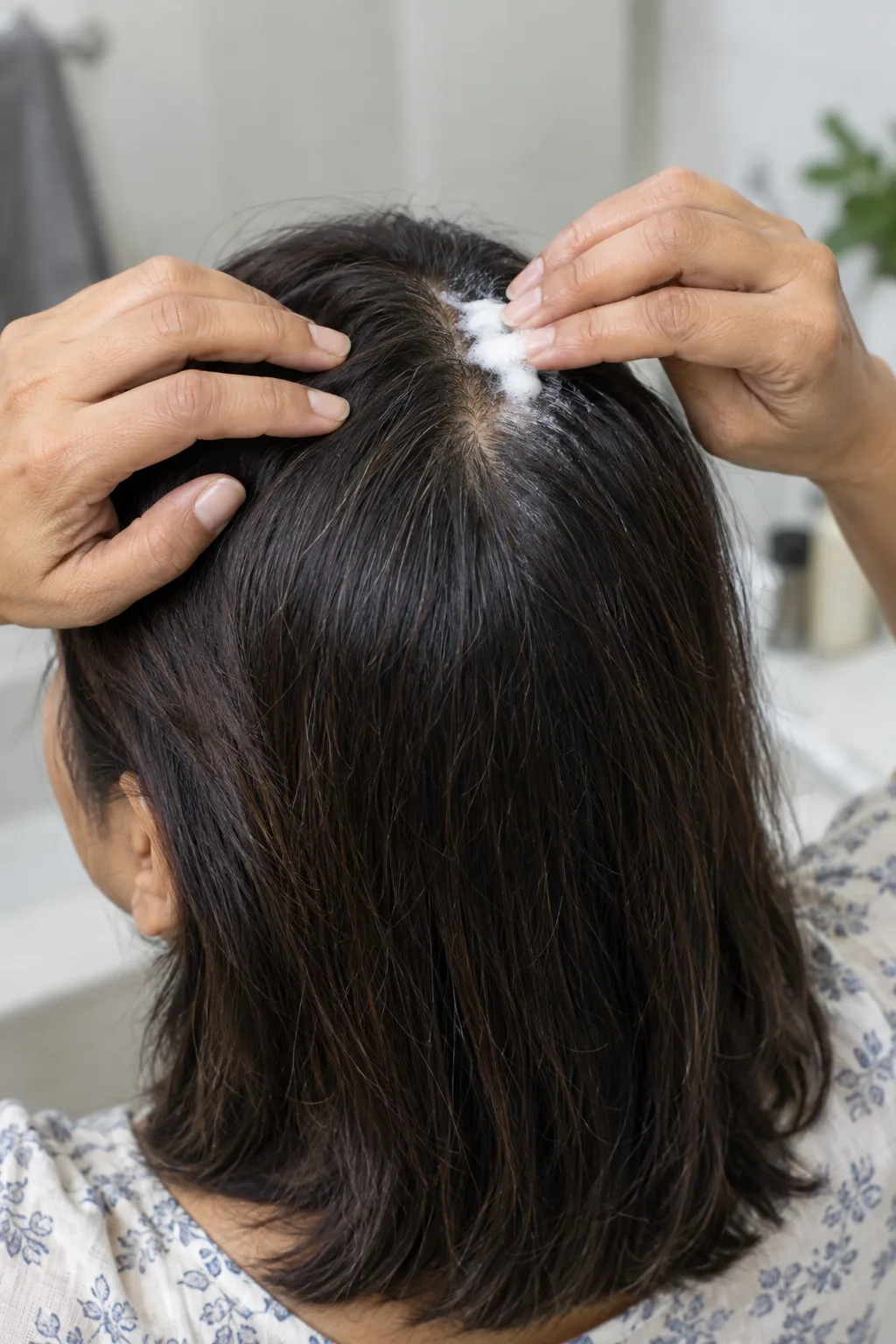
Minoxidil
Minoxidil is the best-studied over-the-counter option. It is FDA-approved for pattern hair loss in women in 2% and 5% strengths, and it comes as a liquid or foam you apply directly to the scalp.
It takes patience. The AAD notes that you need to use it continuously for about six to 12 months before you can tell how well it is working. Some people notice extra shedding in the first few weeks, which usually settles. If you stop using it, the hair it helped keep tends to shed again over the following months.
Prescription Options
If minoxidil alone is not enough, a dermatologist may suggest prescription medicines, such as spironolactone for some women. These are not right for everyone, particularly during pregnancy, so they are strictly a conversation to have with your doctor.
In-Office and Device Treatments
Low-level laser devices and platelet-rich plasma (PRP) injections are both offered for thinning hair. Research on them is still developing, and they can be expensive, so ask your dermatologist whether they make sense for your type of hair loss before paying for either.
What Has Weaker Evidence
Some popular options are not harmful, but the evidence for them is limited.
Rosemary oil. A small study compared it with low-strength minoxidil, but that is not enough to call it a proven treatment. If you want to try it, our guide on how to make rosemary oil for hair shows how to dilute it safely.
Biotin and hair supplements. These mainly help people who are actually deficient, which is uncommon. High doses of biotin can also interfere with some blood test results, so tell your doctor if you take it.
Scalp massage. It feels good and is harmless, but it should be treated as a nice extra, not a treatment on its own.
Habits That Protect the Crown
These everyday changes will not reverse pattern hair loss, but they stop you from adding breakage and tension on top of it.
Loosen your ponytails and buns. Wear them lower and looser, and switch positions from day to day so the crown is not always under tension.
Swap elastics for gentler ties. Fabric scrunchies and spiral ties grip with less pulling than thin rubber bands.
Go easy on heat. Keep hot tools on a moderate setting and use a heat protectant.
Eat enough protein and iron. Hair needs both to grow. If you suspect you are low on iron, ask your doctor for a blood test rather than guessing with supplements.
Protect your scalp from the sun. A thin crown lets more sunlight reach the skin, so wear a hat or use a scalp sunscreen spray on long days outside.
For more everyday growth habits, see these simple tips to help your hair grow faster.
How to Style a Thin Crown
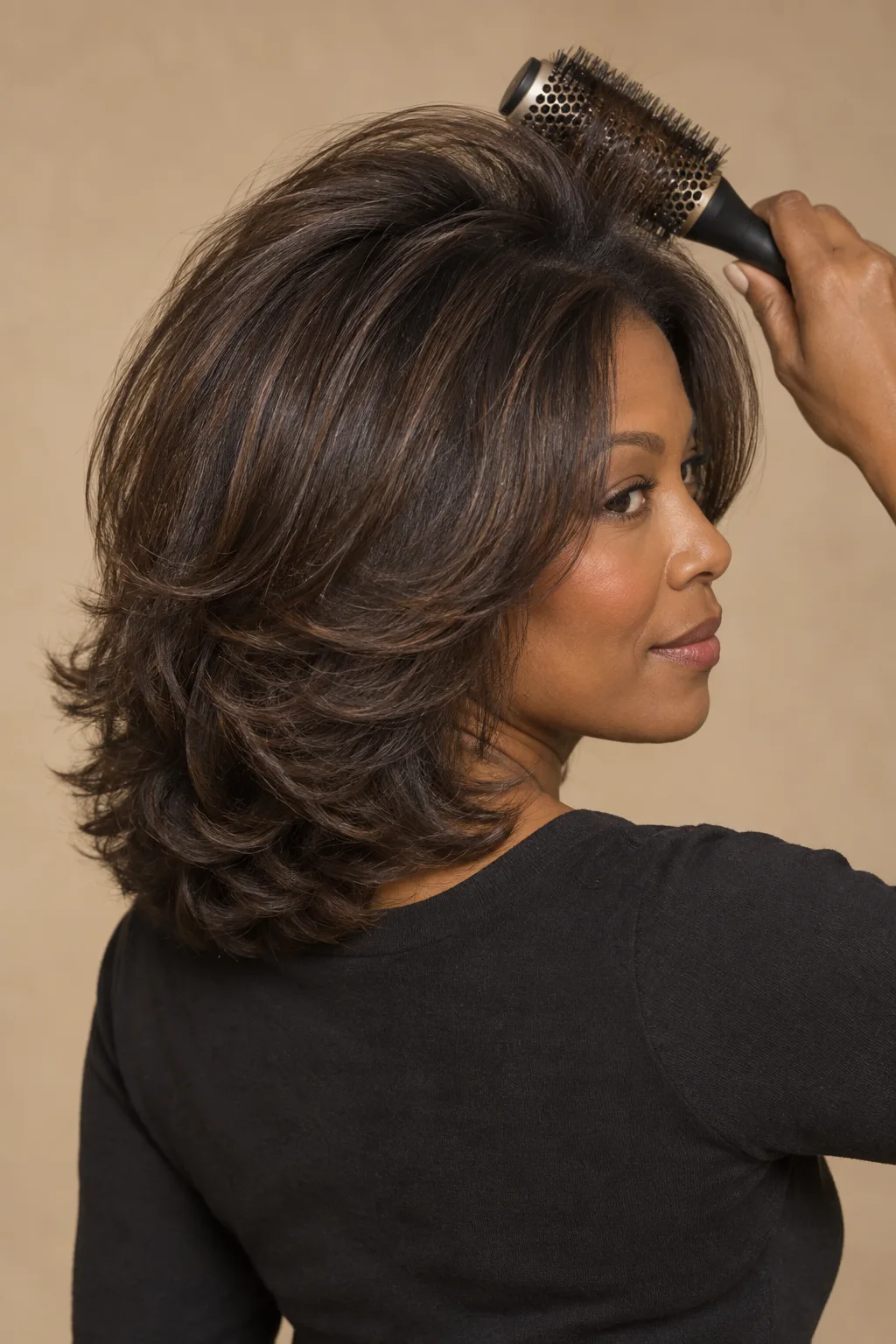
While treatment does its slow work, a few styling tricks make a thin crown much less visible.
Change Your Part
A part that has been in the same place for years often looks wider than the rest of your scalp. Shifting it an inch to the side, or trying a zigzag part, covers the thinner area with hair that has not been flattened in the same direction.
Blow-Dry for Lift
Apply a lightweight volumizing mousse or root-lift spray at the roots, then blow-dry the crown in the opposite direction to how it usually falls. Flip it back just before it is fully dry. This builds lift that hides scalp for most of the day.
Pick a Cut With Layers
Long, one-length hair weighs down the crown and makes it lie flat. Shorter layers around the crown add movement and fullness. For cut ideas, look at these layered hairstyles that make fine hair look fuller or pixie haircuts that add volume to thin hair.
Use Root Cover Products
Tinted root powders and hair-building fibers in a shade close to your hair color reduce the contrast between hair and scalp. They wash out with shampoo, so they are safe to use alongside treatments. Apply them after any scalp treatment has fully dried.
Set Realistic Expectations
Crown thinning rarely changes quickly in either direction. Take a photo of your crown in the same light every month so you can compare progress fairly instead of judging it in the mirror each day.
The realistic goal for most people is to slow or stop further thinning, with some regrowth as a bonus. Starting early, sticking with a treatment for at least six months, and protecting your hair from extra damage gives you the best chance of keeping the hair you have.
A good routine makes every look easier, so check out our guide on how to transition to gray hair gracefully.
Keep exploring: long hairstyles and short wolfcut mullet hairstyles for fine thin hair.